
White House resilience strategy is broad by design, but the hard part still lives in implementation
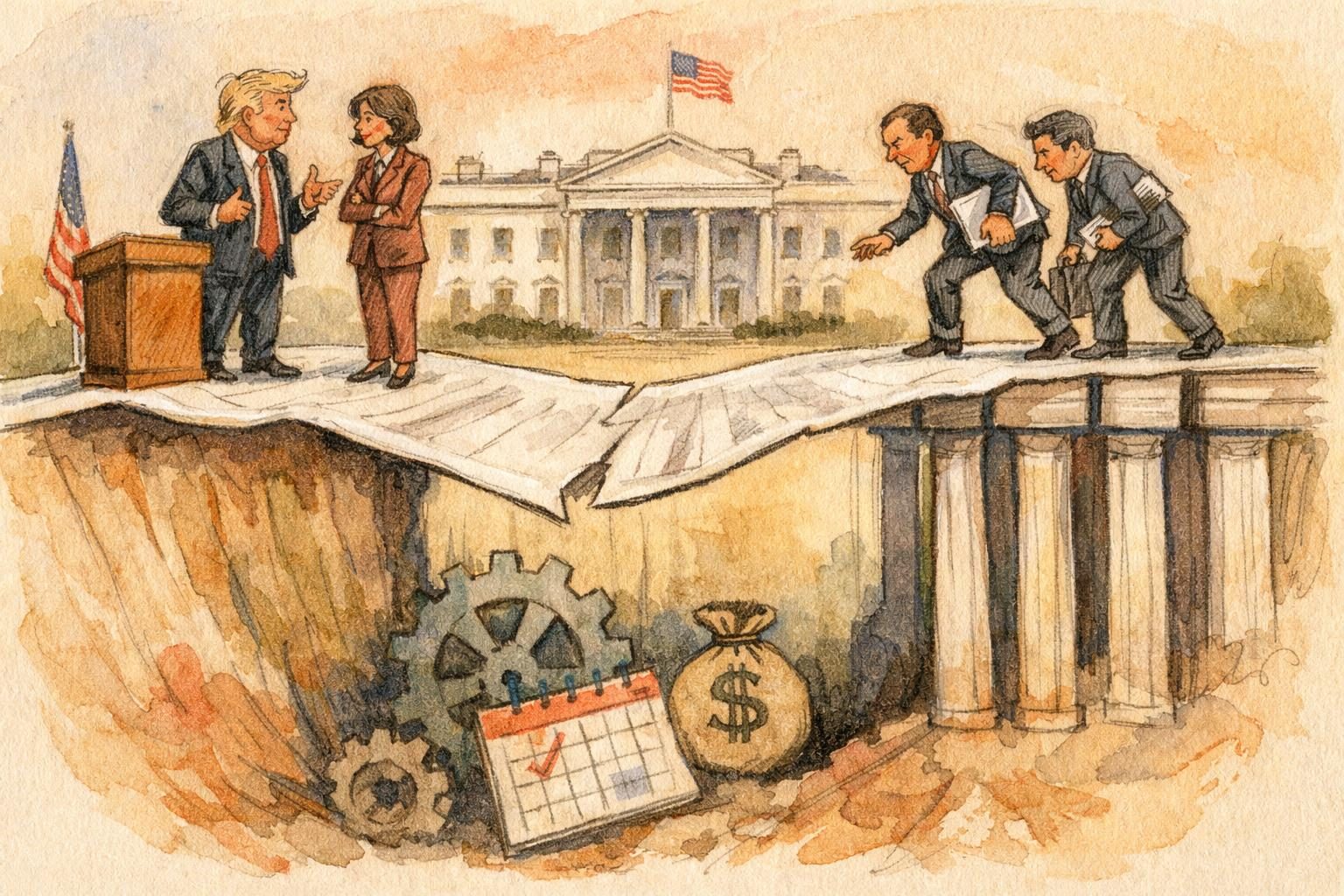
The White House on June 23 unveiled President Trump’s America First Resilience Strategy, presenting it as a broad national framework meant to make the country better able to withstand disruption. The document is not a blank sheet, and it is not merely rhetorical fluff. According to the White House, the strategy is organized around four transformational tenets and four core resilience domains, with an explicit appeal to citizens, industry, state and local governments, and the federal government itself. That structure gives the rollout more shape than the kind of one-paragraph political slogan that often passes for a policy announcement. Still, the main impression is that of a framework built to encompass a lot of territory without yet telling anyone exactly what to do next.
That distinction matters because resilience is not something a White House proclamation can create on its own. A strategy only becomes operational when agencies receive instructions, budgets are aligned, timelines are set, and success is defined in a way that can be measured. The June 23 release points to coordination across government and outside partners, but coordination is only the first step. If the administration wants this to change how supply chains are hardened, how infrastructure is protected, or how recovery is handled after a shock, the implementation details will have to be much sharper than the umbrella language in the announcement. Which agencies are responsible? What standards will they follow? How will the government know whether the effort is actually reducing vulnerability? Those are the questions that determine whether a strategy becomes policy or remains a press-release artifact. Without answers, the plan stays at the level of aspiration while the hard work gets pushed off to later guidance, later rules, or later administrations.
That does not mean the document is meaningless. A broad strategy can serve a purpose if the White House is trying to establish a common vocabulary before the executive branch starts sorting through the mechanics. Washington often prefers to set the frame first and fill in the machinery afterward, especially when a policy area crosses multiple agencies and touches both public and private actors. In some cases, that kind of sequencing can help the government move faster than a fully specified interagency process would allow. It gives the administration a way to signal priorities, align political expectations, and give agencies a mandate to begin drafting their own plans. But it also has a familiar downside: the farther the real work gets deferred, the more it becomes exposed to budget fights, legal constraints, bureaucratic delay, and the simple problem of attention drift. A resilience strategy can be easy to announce and difficult to sustain, especially if the administration has not yet shown how the framework will be financed or enforced.
For now, the strongest case for the new strategy is that it creates an organizing label for a very broad policy area. The White House can now point to a defined architecture that sounds more serious than a slogan and more ambitious than a one-off directive. Yet that is also the limitation. The document appears to sit mostly at the level of structure and intent, while the operational burden is shifted downward to agencies and other actors who will have to translate vision into rules, standards, and spending choices. That is where the real test begins. The next layer will have to show whether the administration is preparing a working program or simply creating a polished umbrella under which a lot of different actions can be grouped. Until the follow-on guidance appears, the strategy should be read for what it is: a map of a destination, not evidence that the road has been built.
Comments
Threaded replies, voting, and reports are live. New users still go through screening on their first approved comments.
Log in to comment
No comments yet. Be the first reasonably on-topic person here.