
The Supreme Court hasn’t answered Trump’s CNN delay bid yet
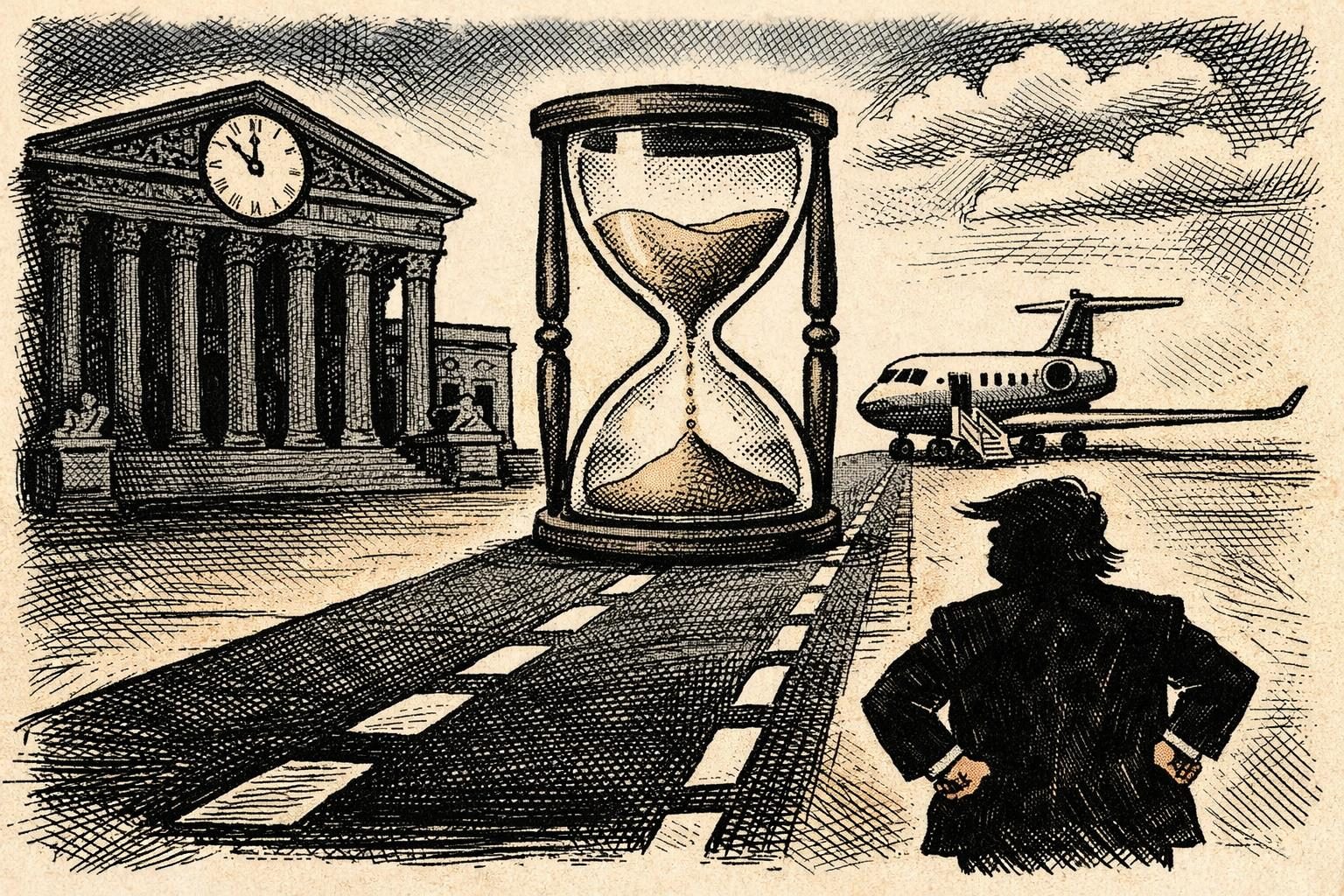
The Supreme Court’s docket gives a very simple answer to a question that has been getting dressed up as something bigger: Trump asked for more time, and the Court has not yet said whether he gets it. That is the cleanest reading of the record in docket 25A1357, and it is the only reading that does not smuggle in a conclusion the justices have not actually issued. The July 1 filing was submitted to Justice Clarence Thomas in his role as circuit justice for the Eleventh Circuit, and the paper trail shows an application for another extension, not an order granting one. What is already known is that Thomas previously entered a June 5 order extending the deadline to July 15, 2026. What is not known is whether the Court will now give Trump another round of breathing room. Until that happens, the case remains exactly where the docket says it is: pending.
That may sound like the sort of procedural detail only court watchers and deadline-obsessed litigators care about, but in Trump cases the gaps between filing, request, and ruling are often where the real political narrative gets manufactured. A request for more time can easily be spun as momentum, even when it is nothing more than a request for more time. The distinction matters because a filed application carries no guarantee of success, and a pending application is not a stealth win. It is a question waiting for an answer. The docket does not show any order on the July 1 application, so there is no basis for saying the Supreme Court has approved the additional delay. That may frustrate anyone looking for a cleaner headline, but it is the legally accurate posture. Trump wants an extension beyond the already-granted July 15 date, and as of now he only has the asking part.
The underlying motion seeks to push the cert deadline out to August 14, which would buy roughly another month beyond the current extension. That request alone suggests the litigation is not moving on a neat, fixed timetable, and it also suggests the campaign around timing remains a meaningful part of the strategy. A second request for more time after an earlier extension is not rare in appellate practice, but it does invite questions about whether the case is more complicated than the filing wants to admit or whether the delay itself is the point. Neither possibility is especially flattering. If the record is unusually tangled, that raises questions about how prepared the legal posture was in the first place. If the point is to stretch the schedule, then the delay becomes a tactical asset, not a byproduct. Either way, the application is not proof of success. It is proof that the deadline has become part of the fight.
There is also a broader institutional lesson in the way this docket is playing out. When a litigant comes back to the Court asking for more time, the move can be read as confidence in the merits, but it can just as easily reflect anxiety about the calendar and the consequences of being forced to confront them. In a high-stakes case, timing can matter almost as much as substance because a later ruling can change the practical and political meaning of the same legal issue. That is especially true when delay itself can be repackaged as progress, which is a familiar Trump tactic whether the underlying case is moving well or badly. So the uncertainty here is not trivial. It is the story. The Supreme Court has not yet answered the July 1 request, the June 5 extension remains the operative deadline, and any claim that another extension has already been granted would be more projection than reporting. For now, the honest take is the least dramatic one: Trump is still waiting to find out whether the Court will let him keep extending the clock.
Comments
Threaded replies, voting, and reports are live. New users still go through screening on their first approved comments.
Log in to comment
No comments yet. Be the first reasonably on-topic person here.