
Justice Department rejects ICC jurisdiction over Americans
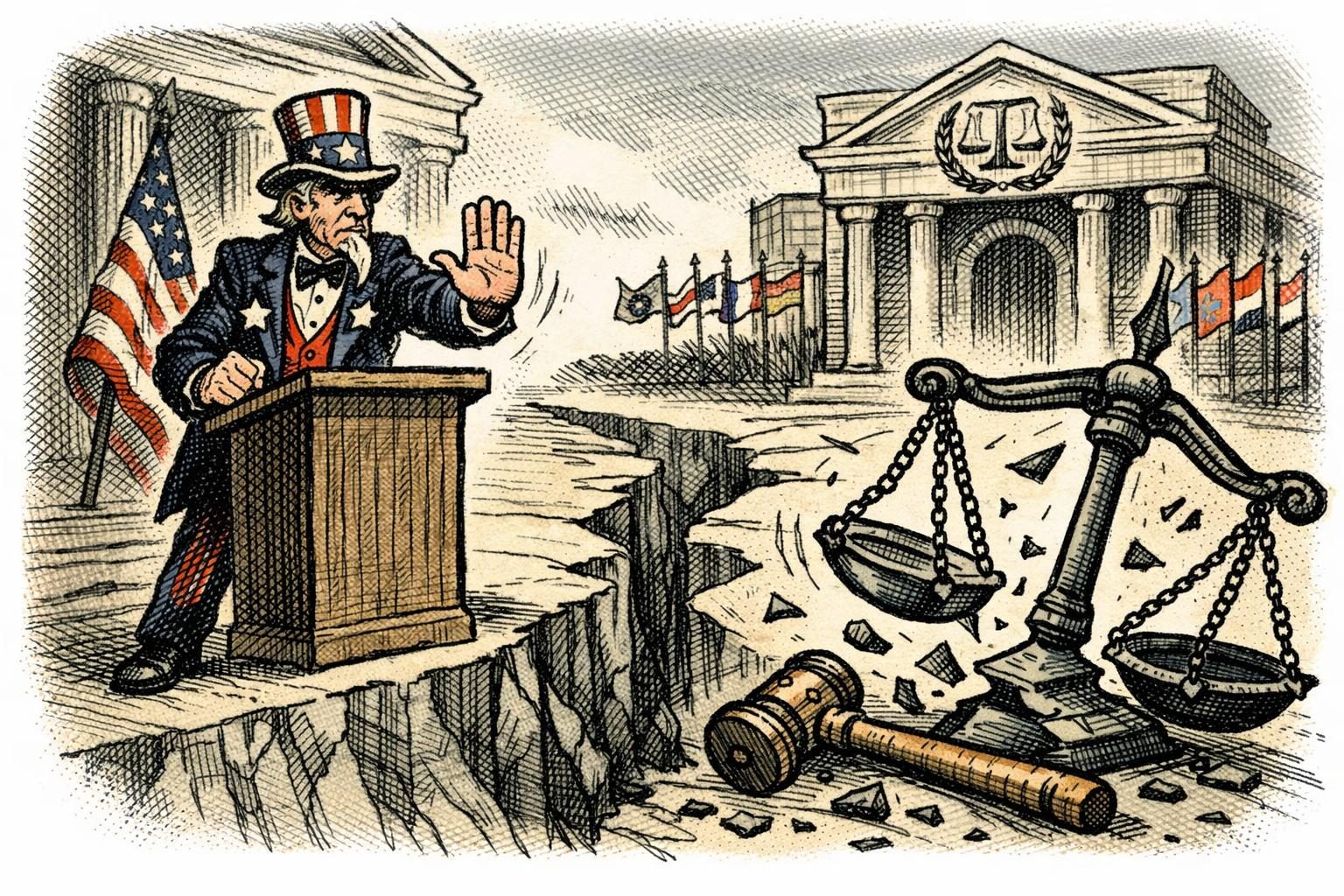
The Justice Department said on July 2 that it rejects any claim by the International Criminal Court to exercise jurisdiction over Americans. In a letter sent to the court’s president, Acting Attorney General Todd Blanche wrote that the United States is not a party to the Rome Statute, has never consented to the court’s authority, and therefore says the ICC has no jurisdiction over U.S. persons anywhere in the world. The department’s press release said the same thing in plainer language: the administration is not treating ICC authority over Americans as a live question, but as a line it does not recognize.
The letter goes further than a narrow jurisdictional objection. Blanche called the ICC’s asserted authority illegitimate and unlawful, and said the court has acted in an increasingly lawless and illegitimate manner. Those are the department’s words, not a neutral legal finding. But they are also part of the official record now, which matters because the administration is not just disputing a case or two; it is announcing a broader refusal to accept the court’s reach over U.S. persons.
The Justice Department also anchored its position in the American Servicemembers’ Protection Act, the 2002 law that expressly repudiates ICC jurisdiction over U.S. persons and prohibits cooperation with the court. The letter says the United States will not cooperate with any ICC investigation, inquiry, summons, or proceeding, will not extradite or transfer any U.S. person to the court, and will oppose efforts by other countries to do so. That is an explicit policy choice, not a rhetorical flourish: if another country hands over an American to the ICC, Washington says it will push back.
None of this settles the wider legal debate beyond the administration’s own position. The ICC can still claim its own authority on its own terms, and other governments can decide for themselves how closely they want to work with it. But the Justice Department’s message is clear enough. The United States is not only rejecting ICC jurisdiction over Americans; it is promising noncooperation as a default response and framing any contrary claim as an affront to sovereignty.
Comments
Threaded replies, voting, and reports are live. New users still go through screening on their first approved comments.
Log in to comment
No comments yet. Be the first reasonably on-topic person here.