
South Lawn spectacle and helipad talk keep blurring the line between White House and Trump brand
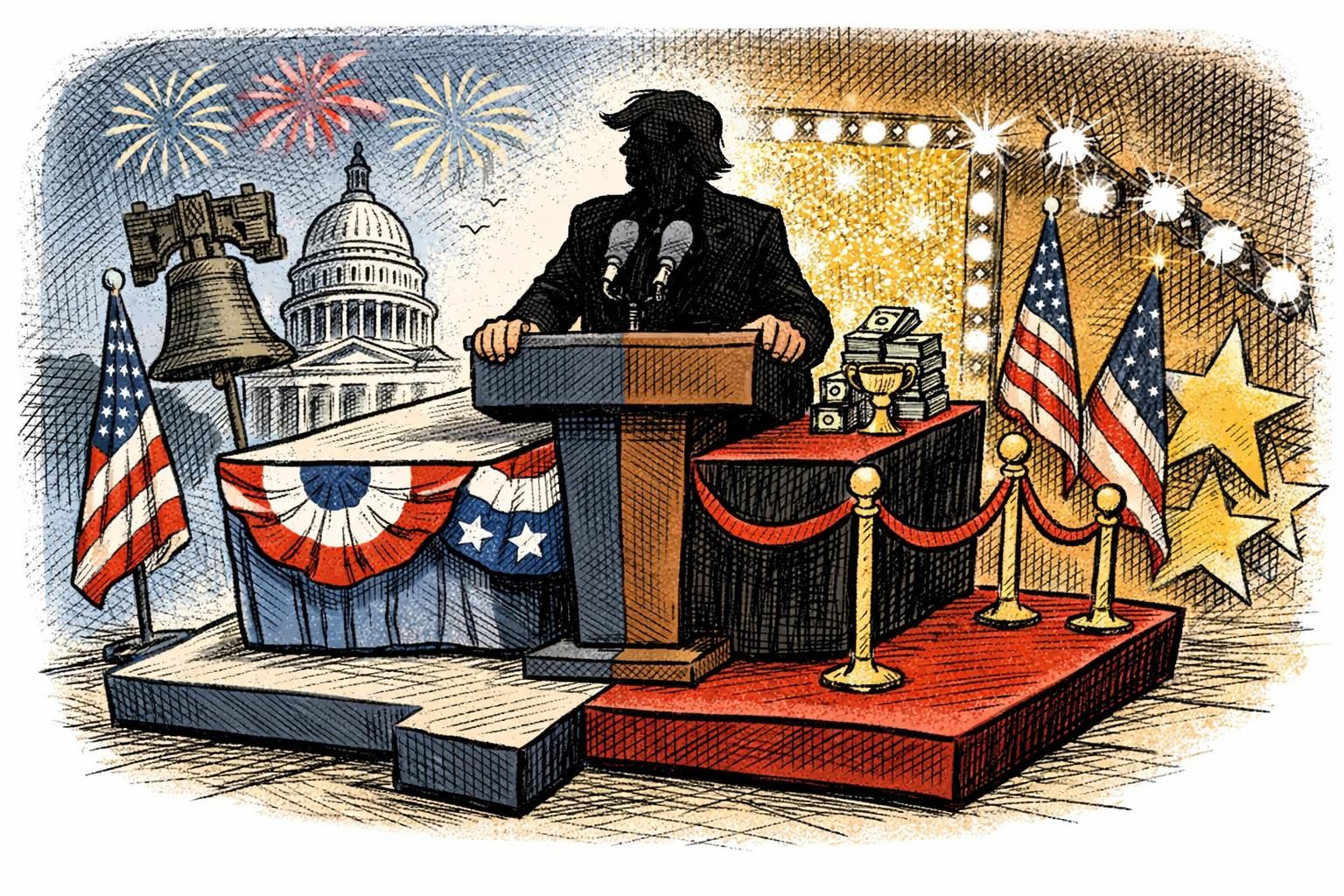
The Trump White House spent the holiday stretch doing what it has made into a recognizable habit: turning the presidency into a backdrop for high-visibility spectacle. On June 14, the White House hosted UFC Freedom 250 on the South Lawn, a partisan-coded event wrapped in patriotic imagery. Then on Saturday, July 4, the administration folded fireworks and a formal America 250 celebration into the semiquincentennial rollout. On Monday, July 6, Trump announced a new granite helipad project for Marine One. Each move can be defended on its own terms. Taken together, they reinforce a pattern in which the White House increasingly looks like a place being staged, branded, and visually managed for Trump’s preferred image.
The administration has every incentive to argue that the nation’s 250th anniversary should feel large and memorable. The White House has publicly framed America 250 as a yearlong national celebration, not a one-off party, and the July 4 program was clearly meant to read as a civic milestone. Fireworks over the National Mall are not unusual, and a president wanting a more functional landing setup for Marine One is not automatically newsworthy for the wrong reasons. But the criticism here is less about any single event than about the cumulative effect. The more the White House grounds are used for dramatic set pieces, the more the presidency starts to feel like a custom display case for Trump-era politics.
That is what makes the South Lawn UFC event matter in this larger picture. It was not a July 4 weekend event; it happened in mid-June, on June 14, and it already showed how quickly the White House can be converted into a stage for an audience-first spectacle. The Independence Day programming did not invent that tendency. It extended it. The July 4 celebration was official, patriotic, and entirely within the presidency’s ceremonial powers. Still, when a White House that has already hosted a combat-sports event on the lawn then rolls directly into a semiquincentennial fireworks show and follows that with a visible infrastructure announcement, the boundaries between governance, showmanship, and image-making start to look thinner than usual.
Supporters will say this is exactly what a confident presidency should look like: big, visible, and unembarrassed about American symbols. There is some truth in that. National anniversaries should not be timid, and presidents of both parties have long used the White House to project authority and patriotism. But Trump’s style has never been content to let ceremony stand on its own. He tends to treat attention as proof of strength, and spectacle as evidence that the institution is working. That can be an effective political instinct. It can also create the impression that public office is being arranged around a private brand.
The helipad announcement sharpened that impression because it arrived just after the holiday-pageant period and because it involved another visible change to the White House complex. A landing area for Marine One may well be practical. The timing, though, made it easy to read as part of the same visual project: the White House not merely as the seat of government, but as a continuously updated Trump set. No one has to claim that every flag, fireworks display, or slab of new granite is improper to notice the larger pattern. The issue is repetition. Over time, the building starts to look less like a public institution that hosts events and more like a platform that exists to be seen in a very particular way.
Comments
Threaded replies, voting, and reports are live. New users still go through screening on their first approved comments.
Log in to comment
No comments yet. Be the first reasonably on-topic person here.