
America 250 rollout puts the White House on a long patriotic clock
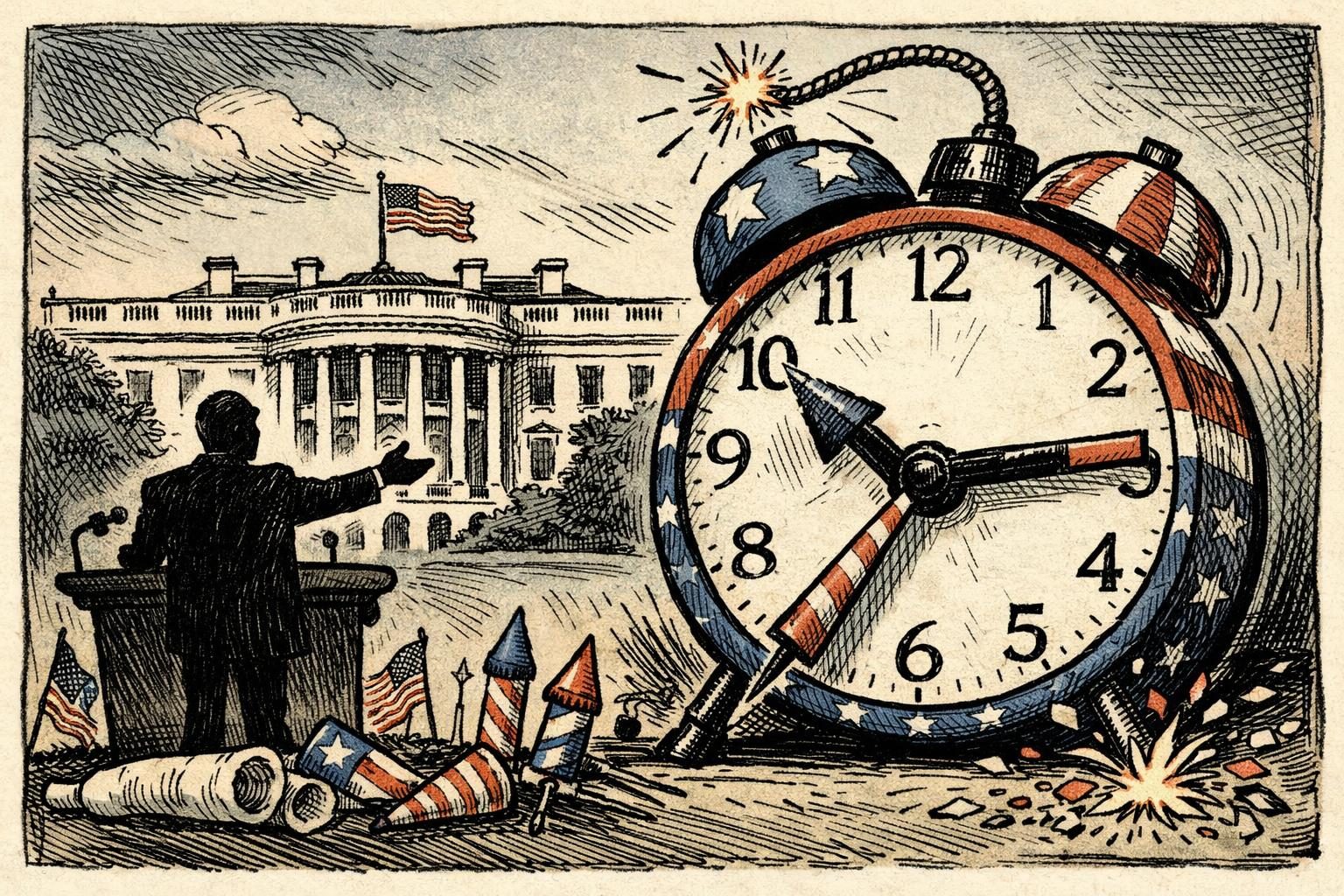
The White House has turned America’s 250th birthday into something larger than a single ceremonial date, and that appears to be the point. Under the banner of Freedom 250, the administration is framing the semiquincentennial as a rolling national project that began on Memorial Day 2025 and is scheduled to run through the end of 2026. That timeline gives the president and his staff an unusually long runway to wrap official events, public-facing partnerships, and presidential imagery around the same patriotic theme. It also means the celebration is not being treated as a one-off commemoration, but as an extended governing and branding opportunity. For an administration that likes to merge spectacle with message discipline, the structure is almost tailor-made.
The official materials set out a broad enough outline to encompass many kinds of programming. The Salute to America 250 Task Force is described as the vehicle for the yearlong effort, with events and partnerships built around the nation’s semiquincentennial. That kind of umbrella allows the White House to place a wide range of appearances under a single historic label, whether the setting is formal, ceremonial, or politically convenient. It also creates space for a lot of interpretation, because a year-and-a-half of patriotic branding can absorb many different kinds of visuals and venues without ever seeming off-message. The result is a framework that is highly official and extremely flexible. In practical terms, that flexibility is what makes the rollout matter politically as much as historically.
The July 3 proclamation sharpened the calendar even further by formally designating July 4, 2026, as the 250th anniversary of the adoption of the Declaration of Independence. That is a notable act of presidential recognition, even if the date itself does not require any special legal invention. By attaching a formal proclamation to the moment, the White House gives the anniversary an additional layer of authority and symbolism. It also provides a clear reference point for the rest of the semiquincentennial messaging, letting the administration present the day as the centerpiece of a much larger national observance. None of this changes the underlying historical fact of the anniversary, of course, but it does change how the White House can stage it. A proclamation, especially one issued immediately before the holiday, helps turn the day into a presidentially curated event rather than merely a date on the calendar.
That matters because a broad patriotic campaign can easily become a political stage, even when it is wrapped in neutral language about heritage and unity. The White House has effectively built itself a long patriotic clock, one that can keep ticking through public ceremonies, policy messaging, and visual displays until the end of 2026. The longer the clock runs, the more room there is for the administration to staple current politics to historical reverence without having to announce that it is doing so. That is the brand-blur problem in miniature: the official language sounds civic-minded, but the surrounding presentation can still be highly self-serving. A semiquincentennial is naturally a moment for national pride, yet it is also a perfect setting for a president who wants to place himself at the center of that pride. The line between honoring the country and promoting the people running it can get very thin very quickly.
There is nothing unusual about presidents trying to associate themselves with national milestones, but the scale of this one gives the White House more room than usual. America 250 is not just another commemorative plaque or one-day parade. It is a whole administrative frame, supported by official materials and a formal proclamation, and broad enough to swallow a great deal of pageantry. That means the administration can keep returning to the same patriotic well without needing to justify each appearance separately. It also means the White House has secured a durable, ready-made backdrop for speeches, events, and photo opportunities well beyond Independence Day itself. In other words, the semiquincentennial is not merely being marked; it is being operationalized. And once a national anniversary becomes an operational asset, the politics are never far behind.
The upshot is that the White House has found a way to make a once-in-a-generation celebration last almost two years, while keeping the meaning loose enough to suit a variety of purposes. The formal dates are clear enough, and the historical milestone is real enough, that the whole effort has a legitimate public face. But the scale and structure also give the president a lot of latitude to attach his own image to the occasion. That is what makes the rollout worth watching: not because the anniversary is in dispute, but because the machinery around it is so expansive. The celebration can be sincerely national and strategically political at the same time. And with a patriotic umbrella that large, the White House can keep stepping under it whenever it wants.
Comments
Threaded replies, voting, and reports are live. New users still go through screening on their first approved comments.
Log in to comment
No comments yet. Be the first reasonably on-topic person here.