
Trump’s government still cannot resist turning policy into a brand event
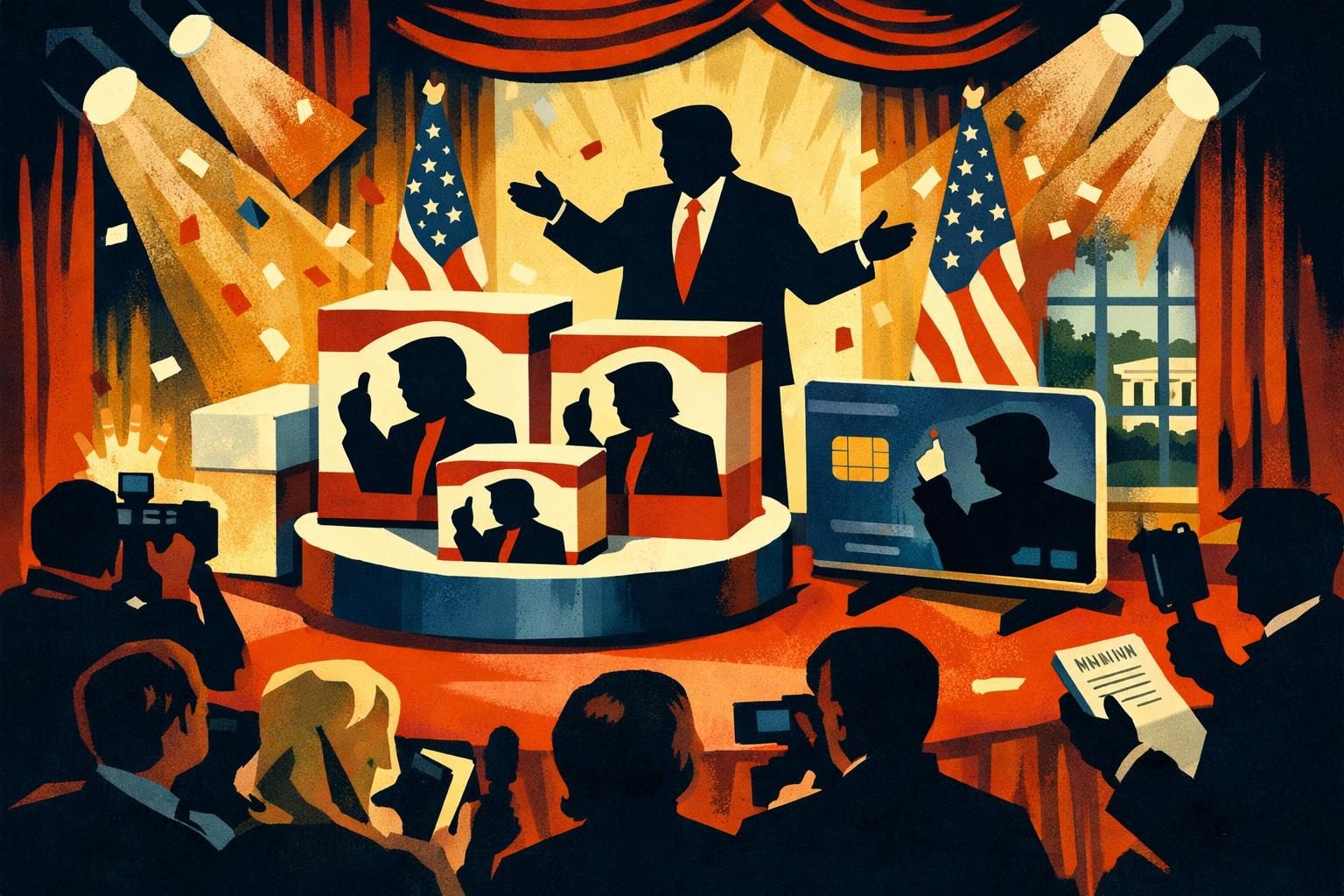
The Trump Accounts rollout is a real policy announcement, but it also offered another clean example of how aggressively this White House likes to turn governing into branding. Treasury says the program and its accompanying app went live on July 4, 2026, and the administration followed up with an Oval Office event on July 6 that was staged like a public relations set piece rather than a routine policy update. The ceremony included an opening-bell motif tied to the New York Stock Exchange and Nasdaq, a visual flourish meant to make the president the unmistakable center of gravity. The program itself is not imaginary; it exists, and it is operating. But the presentation was clearly designed to sell Donald Trump as much as it was designed to explain the accounts.
That matters because the actual policy mechanics are supposed to be the point. According to Treasury and the official Trump Accounts site, the program is a tax-advantaged savings vehicle for children, free to open and paired with a $1,000 federal seed deposit for eligible children born between January 1, 2025, and December 31, 2028. Parents are supposed to be able to enroll, contribute, and track the account through the app, which means the basic questions are practical ones: can people understand the program, can they get into it, and does it function without unnecessary friction? Those are the issues that will determine whether Trump Accounts become a useful benefit or just another federal initiative that sounds good in a speech. The Oval Office spectacle does not answer any of that. What it does instead is wrap the program in a president-first aesthetic that makes the rollout feel less like public administration and more like a product launch. That may be effective politics. It is not the same thing as helping families navigate a new savings tool.
There is also a broader institutional cost to this style, and it goes beyond taste. When a government benefit is launched as a brand event, the line between policy and promotion gets thinner than it should be. Supporters can argue that any new program needs a big debut to cut through the noise and attract attention, and that is not a trivial point in a crowded media environment. But the more the rollout is built around the leader’s image, the more the public is invited to remember the spectacle instead of the substance. That can be especially corrosive when the program’s success will ultimately depend on ordinary administrative questions like whether the app is easy to use, whether contributions are simple, whether eligible families can figure out how to participate, and whether the promised benefits actually reach the people they are meant to help. The administration could have foregrounded those details. Instead, it foregrounded Trump himself. That decision sends its own message: even routine government services are expected to wear the president’s name tag.
For now, the fallout is mostly reputational, but that does not make it insignificant. The launch reinforces a pattern that has become one of the defining habits of Trump’s second-term governing style: the policy comes first only in the sense that it exists, while the branding arrives immediately behind it trying to win the frame. That may thrill loyalists who prefer politics as spectacle, and there is no doubt that the White House understands the power of visual theater. But it also gives critics an easy and durable line of attack: the administration appears more interested in the optics of achievement than in the boring work of making programs usable and trustworthy. Trump Accounts may still turn out to be genuinely helpful for families, and they may become a successful part of the federal toolkit. If that happens, it will be because the mechanics hold up, not because the opening bells were loud. Until then, the administration’s real accomplishment here may be proving, once again, that even a children’s savings plan can be turned into a starring role for Donald Trump.
Comments
Threaded replies, voting, and reports are live. New users still go through screening on their first approved comments.
Log in to comment
No comments yet. Be the first reasonably on-topic person here.