
Trump’s pollution exemption for a narrow set of chemical plants comes wrapped in security language
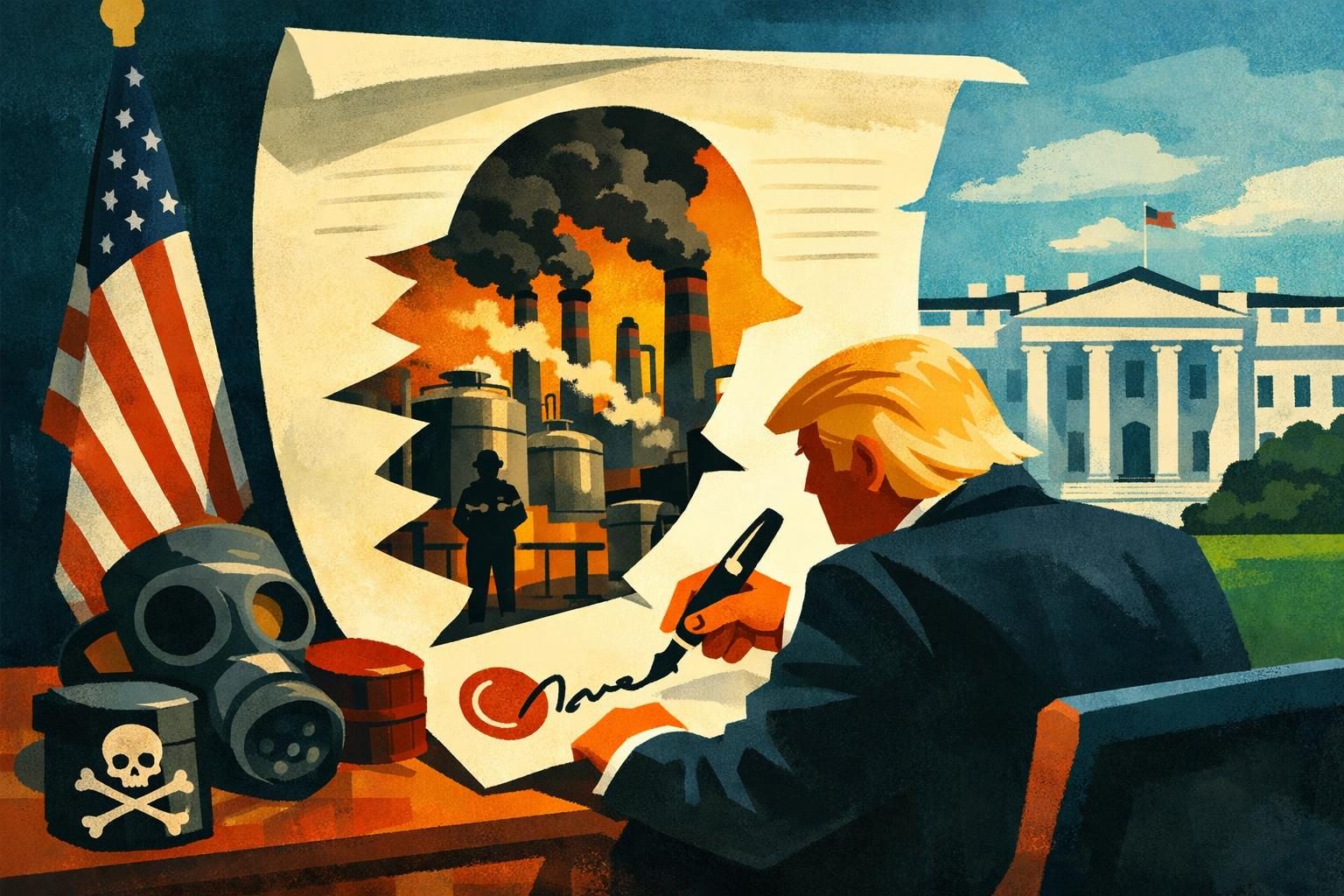
The key date here is July 9, 2026, the date on the proclamation. The White House posted it on July 13, but the legal text is the thing that matters: this is not a broad rewrite of federal pollution law. It is a narrow presidential exemption under Clean Air Act Section 112(i)(4) for listed stationary sources in Annex I, and it gives those facilities two extra years to meet specific compliance deadlines under the HON rule.
That distinction matters because the administration’s public messaging is much bigger than the actual legal effect. The White House describes the action as a move to support American chemical manufacturing security, and its fact sheet ties the exemption to downstream uses in semiconductors, medical sterilization, defense, agriculture, health care, and advanced manufacturing. But the proclamation itself is limited to the sources and requirements it names. It does not suspend the Clean Air Act across the board, and it does not create a sector-wide pass for every chemical plant.
EPA’s guidance on presidential exemptions under Section 112 says the statute allows this kind of relief for up to two years when the legal conditions are met. That is the lane the administration is using here. The practical result is a delay, not a repeal. The facilities covered by Annex I get more time on the identified HON-rule obligations; everyone else stays outside the order.
That is why the politics of the announcement are doing so much work. The White House wants the exemption to read as a national-security measure, not as what it is on paper: a targeted compliance delay for a defined list of sources. Supporters can argue the extra time helps keep plants operating while they work through expensive upgrades. Critics will read the same move as a familiar regulatory favor, dressed up in the language of industrial strength. Both can be true at once. The legal effect is modest and specific, while the rhetoric around it is broad and patriotic.
So the story is not that Trump erased pollution rules for the chemical industry. It is that the administration used a narrow statutory escape hatch to give a listed group of facilities more time to meet a set of pollution deadlines, then sold that choice as a move to protect American manufacturing security. The gap between the legal text and the promotional language is the whole point.
Comments
Threaded replies, voting, and reports are live. New users still go through screening on their first approved comments.
Log in to comment
No comments yet. Be the first reasonably on-topic person here.