
Trump’s “Radical Left Terrorism” Campaign Is a Blunt Instrument in a Bulletproof Vest
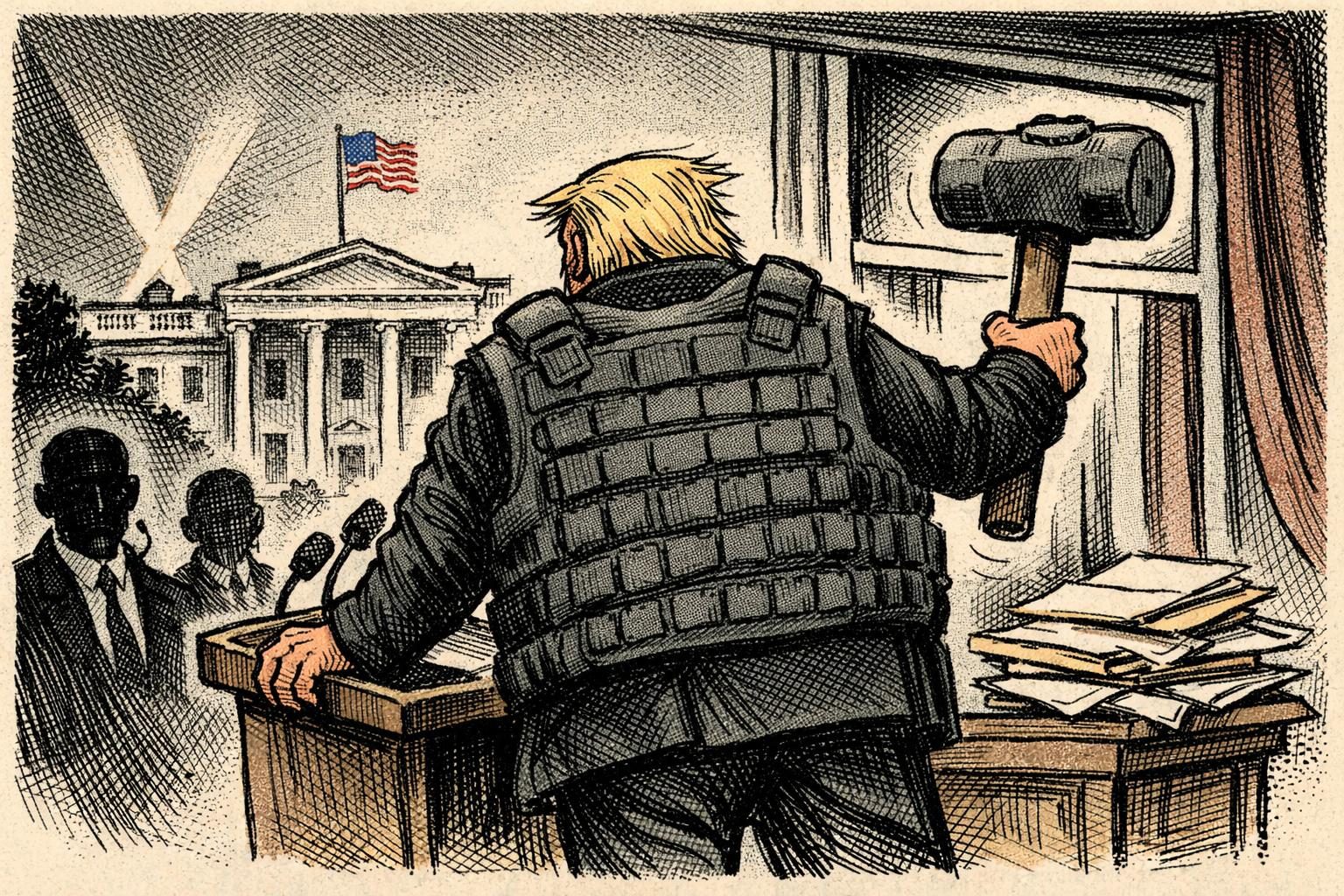
The White House on July 16, 2026, said the Trump administration had convened senior officials from governments around the world to launch what it called an “unprecedented global offensive” against “Radical Left terrorism.” The same day, the White House also posted a video of President Trump delivering an address to the nation. Those are the confirmed events. The rest is the administration’s own framing, and the public record has to be read with that in mind. ([whitehouse.gov](https://www.whitehouse.gov/releases/2026/07/trump-administration-unleashes-global-campaign-to-crush-radical-left-terrorism/))
In the official release, the White House cast the effort as a transnational counterterrorism push and said far-left extremism would be treated with the same seriousness the administration says it applies to jihadist terrorism. The release also attributed remarks to Secretary of State Marco Rubio, Treasury Secretary Scott Bessent, and Homeland Security Advisor Stephen Miller, each of whom used the White House platform to describe left-wing violence as organized, cross-border, and dangerous. That is the administration’s case, not an independent evidentiary finding in the release itself. ([whitehouse.gov](https://www.whitehouse.gov/releases/2026/07/trump-administration-unleashes-global-campaign-to-crush-radical-left-terrorism/))
The text goes further in its rhetoric than in its documentation. It says Rubio described shared encrypted channels, safe houses, and transnational funding networks; it says Treasury is expanding work on illicit finance and tax-exempt structures; and it says the administration is treating the issue as an organized threat. But the release does not lay out a public operational plan, a formal legal definition of “Radical Left terrorism,” or a set of measurable benchmarks for the campaign. ([whitehouse.gov](https://www.whitehouse.gov/releases/2026/07/trump-administration-unleashes-global-campaign-to-crush-radical-left-terrorism/))
It also does not describe new surveillance powers, new investigative rules, or new data-collection programs. That matters, because counterterrorism language can signal policy without proving policy. The White House has published a declaration and a political-security frame. It has not, in the public materials released that day, shown the guardrails that would separate an actual enforcement effort from a broad message campaign. ([whitehouse.gov](https://www.whitehouse.gov/releases/2026/07/trump-administration-unleashes-global-campaign-to-crush-radical-left-terrorism/))
That gap is where the politics lives. A terrorism label can sharpen attention on real violence. It can also blur the line between criminal acts and protected speech, protest, organizing, or partisan opposition. The White House release does not resolve that tension; it sharpens it. For now, the public evidence shows the administration choosing a hard-edged label and an international stage. It does not yet show the full machinery behind the label. ([whitehouse.gov](https://www.whitehouse.gov/releases/2026/07/trump-administration-unleashes-global-campaign-to-crush-radical-left-terrorism/))
Comments
Threaded replies, voting, and reports are live. New users still go through screening on their first approved comments.
Log in to comment
No comments yet. Be the first reasonably on-topic person here.