
Trump’s declassification stunt revived the election conspiracy machine
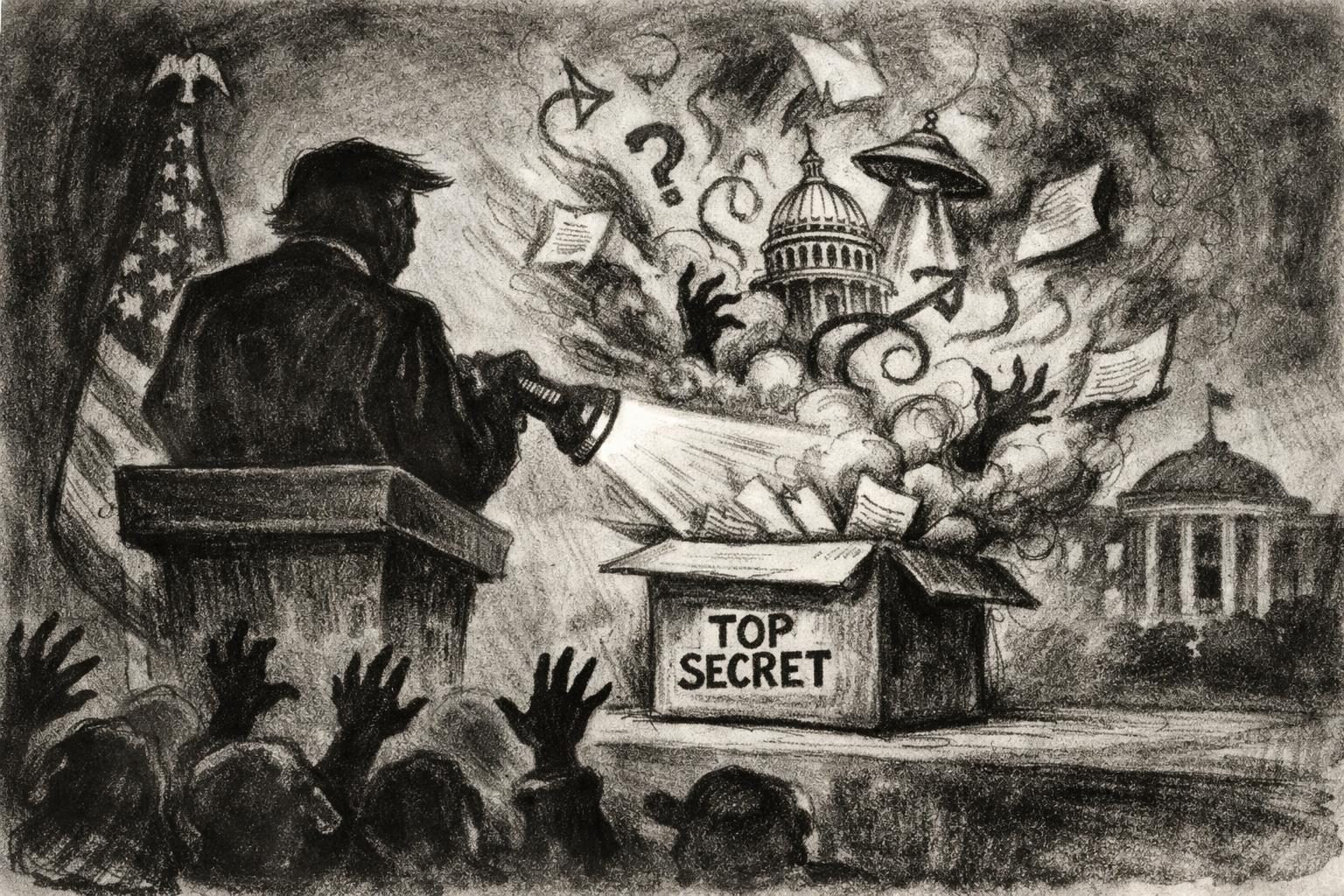
Donald Trump’s latest declassification move arrived with the kind of fanfare that has become a signature of his political style: huge claims, broad insinuations, and an unmistakable invitation for supporters to treat the release as proof that the president has uncovered something explosive. The White House framed the material as evidence of foreign election interference and of intelligence officials suppressing critical information from Trump and the public. That framing did a lot of work before anyone had a chance to examine the documents themselves. It also set the stage for the familiar Trump cycle in which the announcement matters almost as much as the substance, and sometimes more. In practical terms, the release did not simply disclose information; it reintroduced an old political habit of turning uncertainty into a weapon.
None of this means election security is not a legitimate issue. It is. The risk of foreign interference, the integrity of voting systems, and the handling of intelligence about those threats are all matters the public has every reason to care about. The problem is the manner in which the administration chose to present the material, with language that strongly suggested hidden wrongdoing before the evidence could be independently assessed in context. A declassification event can serve the public interest when it gives people a fuller understanding of how institutions work and where they may have failed. It becomes something else when it is staged as a revelation and packaged to produce instant conclusions. In that setting, even documents that may contain important details can end up functioning more like props in a political performance than tools for accountability.
That is the political danger here, and it is bigger than one release. When a president describes intelligence in apocalyptic or conspiratorial terms, the range for honest interpretation narrows fast. Supporters are encouraged to see a smoking gun, skeptics are pushed into the role of defenders of a compromised establishment, and everyone else is left trying to sort genuine evidence from rhetorical excess. Trump’s allies were predictably quick to praise the move, which was always likely given that the White House had already cast the release in a way designed to energize that audience. But the larger effect is to keep the conspiracy machine running. If every disclosure is treated as vindication of the president’s suspicions, then every disagreement inside the national-security apparatus becomes another test of loyalty. That is corrosive for any administration, and especially dangerous when the subject is intelligence, where careful judgment and institutional independence are supposed to matter more than applause lines.
The deeper pattern is classic Trump messaging: take a serious institutional issue, wrap it in theatrical certainty, and rely on the political adrenaline to do the rest. The administration gets to claim it is exposing hidden truths, while critics are forced to argue not only about the underlying facts but also about whether the presentation has already distorted them. That is a convenient setup for a president who thrives on conflict and prefers loyalty battles to boring process questions. It is also a poor bargain for the public. The more the White House treats declassification as a stage-managed spectacle, the harder it becomes to distinguish documented failures from speculative narratives and rhetorical overreach. In the short term, the strategy can generate attention and keep Trump’s base engaged. In the long term, it risks teaching the public to view intelligence disputes as evidence of sabotage, to see professional disagreement as political betrayal, and to treat every inconvenient assessment as part of a coverup.
That is why this latest rollout matters even if the documents ultimately contain some legitimate concerns. If the administration truly wants to demonstrate that information was mishandled or withheld, it needs more than a dramatic announcement and a set of loaded talking points. It needs a full chain of evidence, enough context for the claims to be tested, and some willingness to let the material stand on its own without pre-selling the conclusion. Instead, the White House chose a method that practically guarantees suspicion will harden on both sides: believers will feel confirmed, opponents will assume selective disclosure, and the middle will be asked to navigate a pile of claims that may not be proportional to what has actually been shown. That is the real screwup. It takes a subject that already deserves careful scrutiny and turns it into another loyalty drama, one more way to blur the line between transparency and political theater. If the result is that genuine concerns about election security get buried under another layer of partisan spectacle, then the country is left with less trust, not more, and with another round of the same old Trump-era game: raise the temperature, call it disclosure, and let the chaos do the rest.
Comments
Threaded replies, voting, and reports are live. New users still go through screening on their first approved comments.
Log in to comment
No comments yet. Be the first reasonably on-topic person here.