
Trump’s intelligence spectacle runs straight into a credibility problem
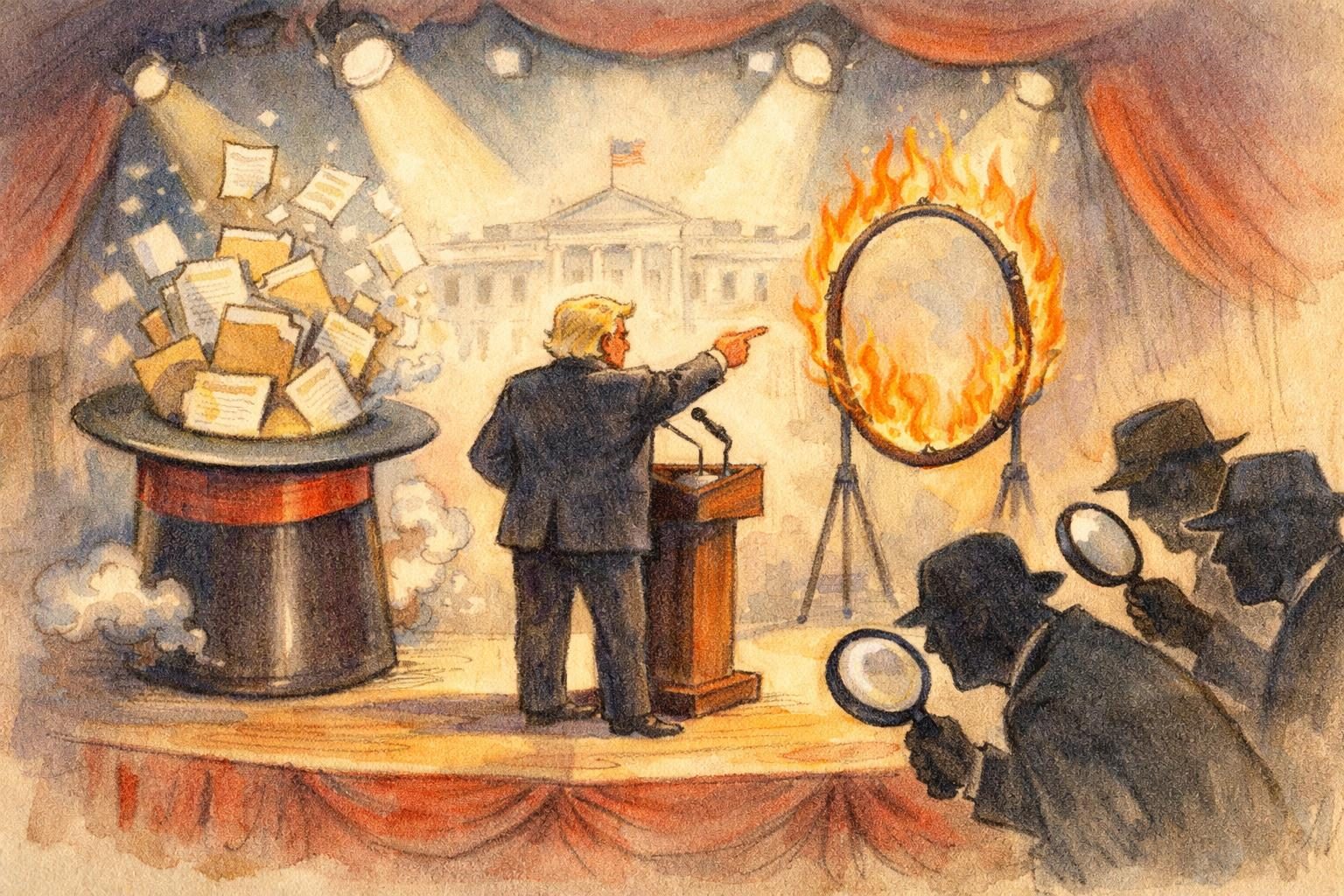
On July 28, the Trump White House tried to turn a declassification push into a national-security moment with the kind of staging that all but guarantees a fight over tone before anyone gets to the substance. The administration said it was releasing intelligence tied to foreign election interference and what it described as years of “deep state suppression” and concealment. In the White House’s version of events, the move was a corrective, a long-delayed disclosure meant to expose how sensitive information had been handled behind closed doors and why the public had not been told sooner. The message was not subtle. It was pitched as proof that foreign actors had compromised election systems and that prior officials had sat on damaging information. That framing may energize supporters who already believe the system is stacked against them, but it also sets a very high bar for proof, because claims that dramatic invite immediate scrutiny of every word, every document, and every omission.
The problem is not simply that the White House is asserting wrongdoing. Governments are supposed to disclose serious intelligence when the public interest demands it, and election security is exactly the sort of area where transparency can matter. The problem is how aggressively the administration wrapped the release in political language that made it look less like a careful briefing and more like a rally speech with classified material attached. Instead of narrowing the case to specific documents or a clearly bounded factual claim, the rollout leaned into sweeping accusations about suppression, coverup, and sabotage. That approach may be useful for building a narrative, but it blurs the line between evidence and performance. Once that line starts to disappear, the audience is left to guess whether the White House is revealing something new or simply presenting old grievances in a more dramatic package. For a subject as sensitive as election interference, where public trust is part of the security apparatus itself, that is a risky way to communicate.
It also creates an obvious credibility trap. If the released material is narrower than the rhetoric suggested, critics will immediately say the administration overplayed its hand. If the documents show real concerns but do not fully support the broadest claims, the rollout will be attacked as political theater built around partial truth. If agencies, courts, or outside reviewers later push back on the strongest assertions, the White House will have made the job of defending the release much harder by choosing language that sounded more like indictment than disclosure. None of that means the underlying intelligence is meaningless, and none of it proves the claims are wrong. But the burden of proof rises sharply when a White House casts a release as a bombshell before the public has had a chance to see what is actually there. The administration’s defenders can argue that prior officials minimized important information or failed to disclose it in good faith. That argument may have merit in part, but it does not erase the fact that the current rollout encouraged people to think in absolutes before the evidence had been tested in any meaningful way.
That is why the spectacle risks becoming self-defeating. The administration appears to want the release to do two things at once: establish that foreign interference was serious and present Trump as the leader finally willing to say out loud what others supposedly buried. Those are politically useful goals, but they are not the same as building confidence in election security. If the White House wants the public to trust the disclosure, it needs the presentation to feel disciplined, precise, and verifiable. Instead, the chosen style invites people to choose sides based on whether they trust Trump’s instincts, not whether they have examined the underlying intelligence. That is how a disclosure gets converted into a partisan loyalty test. The administration may win attention by presenting the material as explosive, but attention is not the same thing as credibility. And in a fight over election systems, credibility is the whole point. If the public cannot tell where the facts end and the messaging begins, the White House has not clarified the issue so much as complicated it.
The longer-term consequence is that the administration has boxed itself into a difficult position. If later disclosures are less dramatic than the initial claims implied, opponents will say the White House oversold the story for political effect. If verification takes time, critics will point to the delay as evidence that the rollout was more about theater than accountability. If the material is eventually borne out, the White House will still have to overcome the damage done by the first presentation, which trained the public to view the whole effort through a partisan lens. That is the familiar Trump-world contradiction: turn up the volume to project force, then act surprised when the noise makes it harder to hear the substance. The administration may believe it is exposing buried truths and forcing a reckoning over how intelligence was handled. It may even be right on some of the facts. But by packaging a serious disclosure like a political spectacle, it has made the central question less about what the documents show and more about whether the White House can be trusted to present them honestly. In the end, that is the credibility problem the administration created for itself: the louder the bombshell, the more the public has to wonder whether it is seeing evidence or just a show.
Comments
Threaded replies, voting, and reports are live. New users still go through screening on their first approved comments.
Log in to comment
No comments yet. Be the first reasonably on-topic person here.