
Trump’s declassification rollout still overstates what the documents show
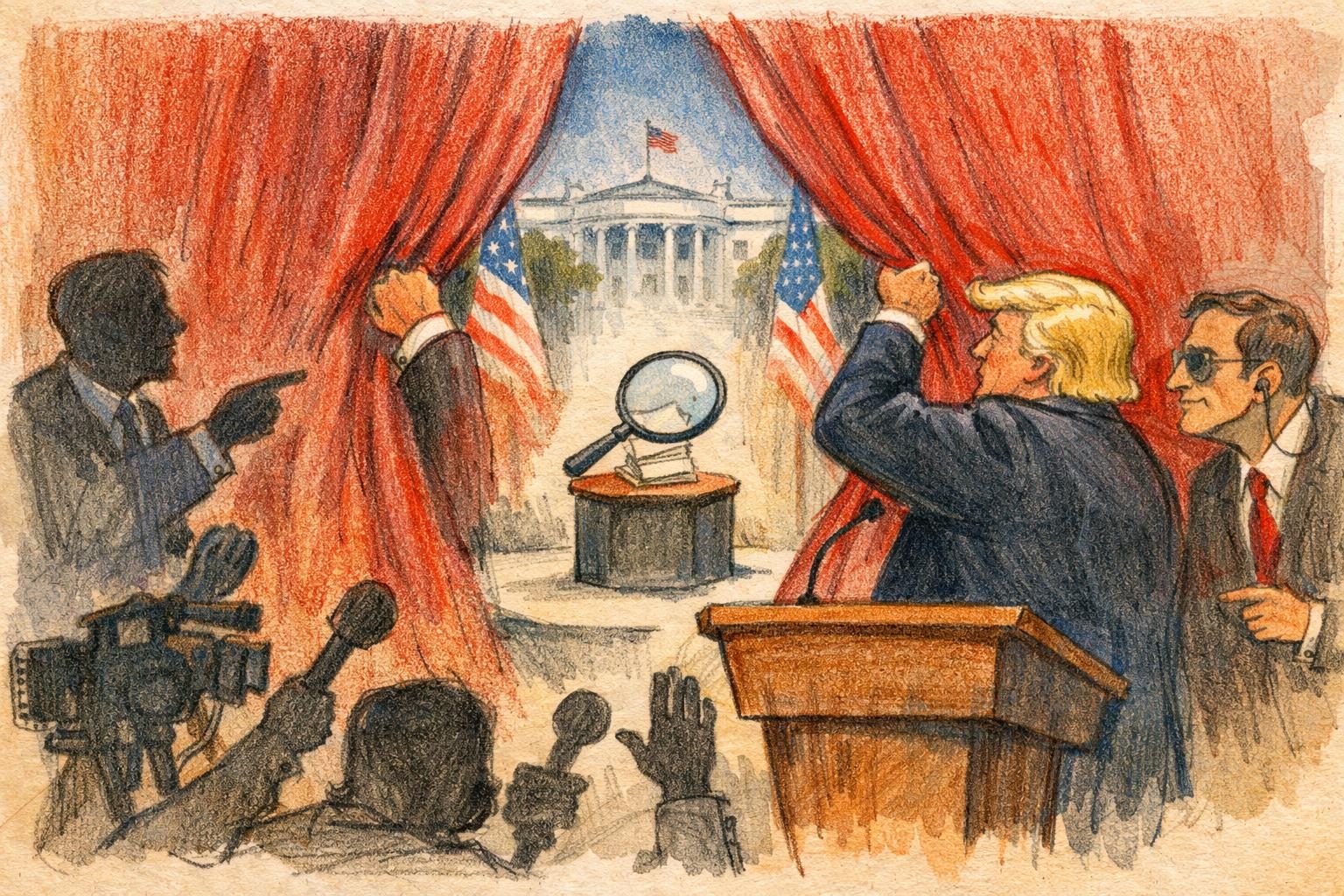
Donald Trump’s July 17 White House rollout of declassified material on election security and foreign influence was packaged like a political bombshell, but the substance of the records does not appear to support the size of the claims being made about them. The administration’s public-facing language presented the release as a dramatic corrective to years of hidden wrongdoing, with the implicit promise that the paperwork would finally settle arguments about foreign interference and some broader institutional suppression. That is a very different thing from proving that votes were altered, that election outcomes were changed, or that a deep-state conspiracy has been substantiated. The gulf between those claims and what the documents actually show is the central problem. Declassification can matter, and transparency can be valuable, but neither one turns ambiguous records into conclusive evidence just because a president says so. In this case, the rollout reads less like a clean disclosure and more like a performance designed to make the audience feel that a revelation has been completed before the record has actually been read.
That overreach matters because the White House did not simply make material available and leave it there. It wrapped the release in a much larger story about vindication, as if the documents themselves had already answered questions that, at best, they mostly reopen. The messaging around the event was maximalist, treating the release as proof that hidden systems had finally been exposed and that the administration had broken through some kind of bureaucratic wall. That kind of framing is politically useful because it offers supporters a tidy drama: Trump fights the secret machine, the secret machine cracks, and the truth is rescued at the last possible moment. But public records do not always cooperate with that script. They can show confusion, omission, internal disagreement, and even bad judgment without proving the existence of a coordinated coverup. When a White House tries to sell that kind of material as if it were a smoking gun, it raises the suspicion that the story is being built around the documents rather than the documents around the story. The problem is not that the release happened. The problem is that the branding appears to promise a level of certainty that the material itself does not deliver.
That distinction is not a minor semantic quibble. It goes to the core of how government disclosures are supposed to work and how much faith the public can place in them afterward. If the administration keeps presenting partial, disputed, or incomplete records as settled proof of a sweeping hidden plot, it risks training people to see every future disclosure as propaganda first and evidence second. That would be a bad trade for a White House that wants its transparency efforts to be taken seriously. It would also make it harder to distinguish between documents that actually reveal wrongdoing and documents that merely feed a preexisting political narrative. The White House appears to be trying to use declassification as both a substantive act and a communications weapon, which is understandable in a political sense but dangerous in a credibility sense. Once the promotional language outruns the paper trail, critics do not need to invent much of a rebuttal. They only need to point out that the documents do not say what the podium claims they say. In that sense, the administration’s own spin is doing the work of the opposition.
Trump’s allies are likely to argue that the mere act of declassifying and releasing the records is itself a victory, and there is some truth to that narrower point. Opening records that had previously been sealed or treated as sensitive can be a legitimate public service, especially when the topic is as charged as election integrity or foreign meddling. But that basic proposition is not the same as saying the release proves a sweeping theory of hidden manipulation. The administration invited the public to see more than a disclosure; it invited them to see a verdict. The available material, at least based on the White House’s own promotion of it, looks far closer to a collection of notes, disputes, and familiar grievances than to the decisive proof of a grand conspiracy. That is why the rollout starts to look like a self-inflicted political wound. Instead of letting the records add texture to a complicated subject, the White House dressed them up as an answer to questions they could not actually settle. The result is not just a missed opportunity but a deeper problem for the president’s credibility. If the administration keeps inflating every document dump into a historic unmasking, it will eventually find that the public stops believing the unmasking part and starts assuming the dump is mostly theater. That is how a transparency move becomes a showboat, and how a showboat ends up sinking under the weight of its own exaggerations.
Comments
Threaded replies, voting, and reports are live. New users still go through screening on their first approved comments.
Log in to comment
No comments yet. Be the first reasonably on-topic person here.