
The administration widened the immigration dragnet, and the legal fight is already sharpening
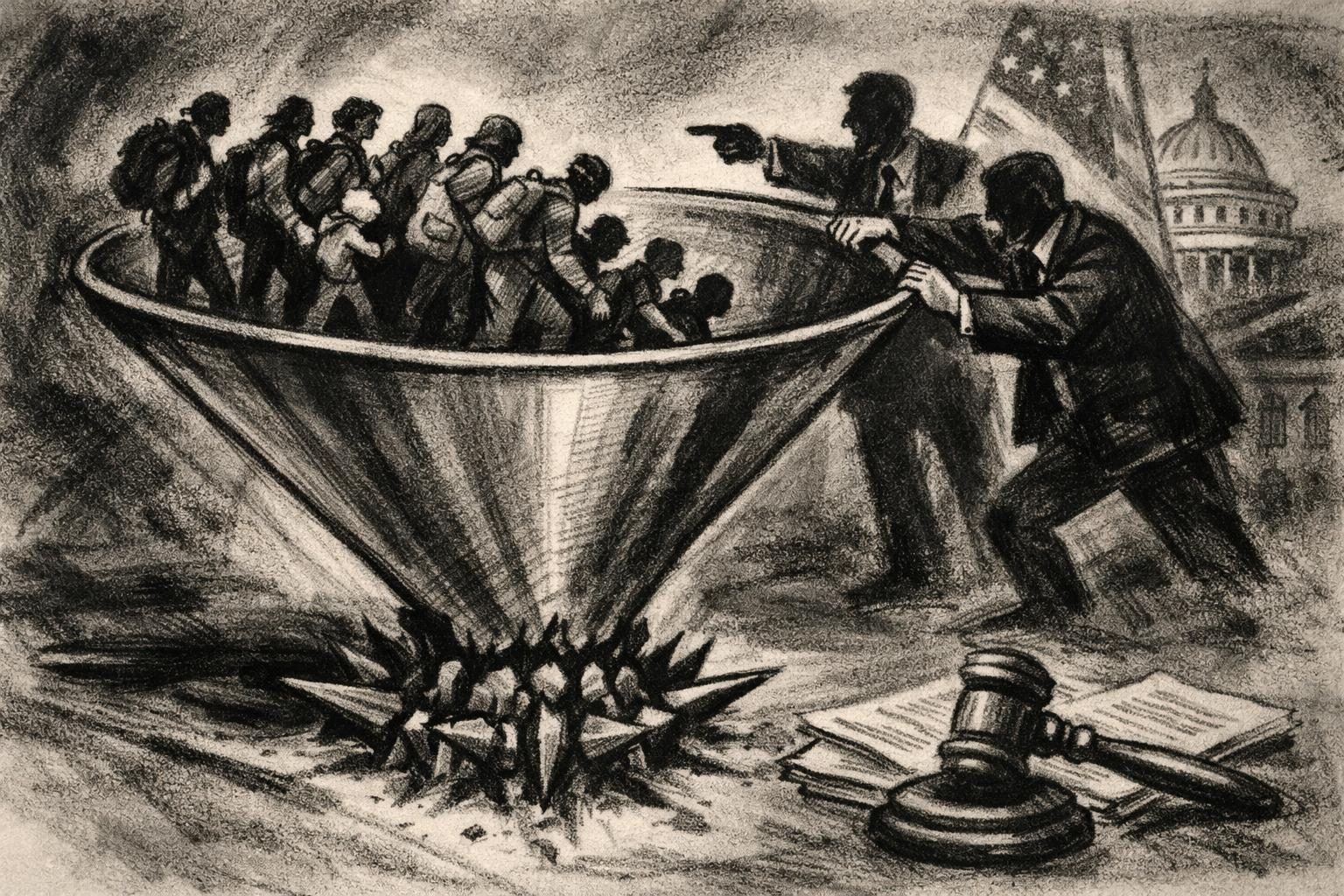
The administration’s latest immigration move is not the kind of development that produces immediate images of chaos at an airport or in a detention center, but it may prove more consequential than a flashier enforcement action. On July 20, the government issued a final rule that rescinds the 2022 public-charge regulation and restores a broader reading of the discretion officers can use when judging whether an immigrant is likely to rely on public benefits. The rule was published in the Federal Register and is scheduled to take effect on September 18, giving the policy a clear timeline and putting the legal and administrative machinery in motion now, even if the day-to-day effects will take longer to surface. In practical terms, the change matters because public-charge determinations can influence whether people are allowed to enter, adjust status, or otherwise continue their path through an already punishing immigration system. In political terms, it signals that the administration is willing to lean harder into a standard that critics have long argued is vague, punitive, and easy to apply unevenly.
The government says it is restoring what it sees as the proper breadth of statutory discretion, and that framing is central to the debate now starting to build around the rule. Supporters of the change are likely to say it simply brings policy back into line with the law and allows officers to consider the real risks and costs associated with benefit dependence. Opponents see something very different: a government handing front-line adjudicators a wider set of tools to infer dependence from poverty, disability, family circumstance, or other markers that are not the same as actual misuse of public aid. That is why the fight around public charge has always been more than a debate over benefits; it is a debate over who gets counted as undesirable before they have even had a fair chance to prove otherwise. The language of self-reliance may sound neutral, but in immigration law it often becomes a proxy for class sorting, with more room for bias and more room for fear. That concern is not abstract, because the people affected are often those already navigating language barriers, unstable work, mixed-status households, and complicated eligibility rules that can change from one administration to the next.
The broader significance of the rule is that it fits into a larger pattern of using federal power not just to manage immigration, but to make the system more intimidating and less predictable. Immigration law is already dense with discretion, and discretion is not automatically a virtue when it is concentrated in a system that decides whether families can live together, work legally, or remain in the country. The new rule appears to widen that discretionary space at the very point where predictable standards would do the most to reduce arbitrary outcomes. That gives the policy a distinctly coercive edge, even if it is packaged in bureaucratic language about administration and statutory interpretation. A public-charge standard that is looser and more subjective is almost certain to produce more uncertainty at every step of the process, because applicants and their lawyers will have to guess not only what the rule says, but how individual officers are likely to apply it. That is how administrative ambiguity turns into a practical barrier, and how a rule that looks technical on paper can end up affecting housing decisions, employment plans, family reunification, and the willingness of people to interact with government at all.
The legal fight, for all intents and purposes, is already beginning, even if the sharper arguments have not yet fully entered the courts. The publication of the final rule makes it much easier for advocates, attorneys, employers, and state officials to organize around a concrete target, and it gives opponents a clear basis to argue that the government has stretched the statute too far or relied on reasoning that is too broad to survive scrutiny. That matters because the real-world consequences of a public-charge change usually arrive in layers. First come the formal notices, then the revised guidance, then the cautious advice from lawyers, then the behavior changes from families who decide not to apply for benefits or status adjustments because they are unsure how they will be judged. By the time those downstream effects show up, the policy may already have done its work by making people more hesitant and more afraid. That is why this kind of rule often becomes a test not only of immigration law, but of how much discretionary power the executive branch can exercise before the courts decide it has crossed a line. For now, the administration has set a harsher baseline and invited the next round of litigation and resistance. Whether the rule ultimately survives in full or gets narrowed by the courts, the immediate political message is unmistakable: the government is choosing to make the immigration system less forgiving, more subjective, and far less predictable for the people most exposed to its judgment.
Comments
Threaded replies, voting, and reports are live. New users still go through screening on their first approved comments.
Log in to comment
No comments yet. Be the first reasonably on-topic person here.