
Trump Keeps Escalating the Trade Fight With Canada
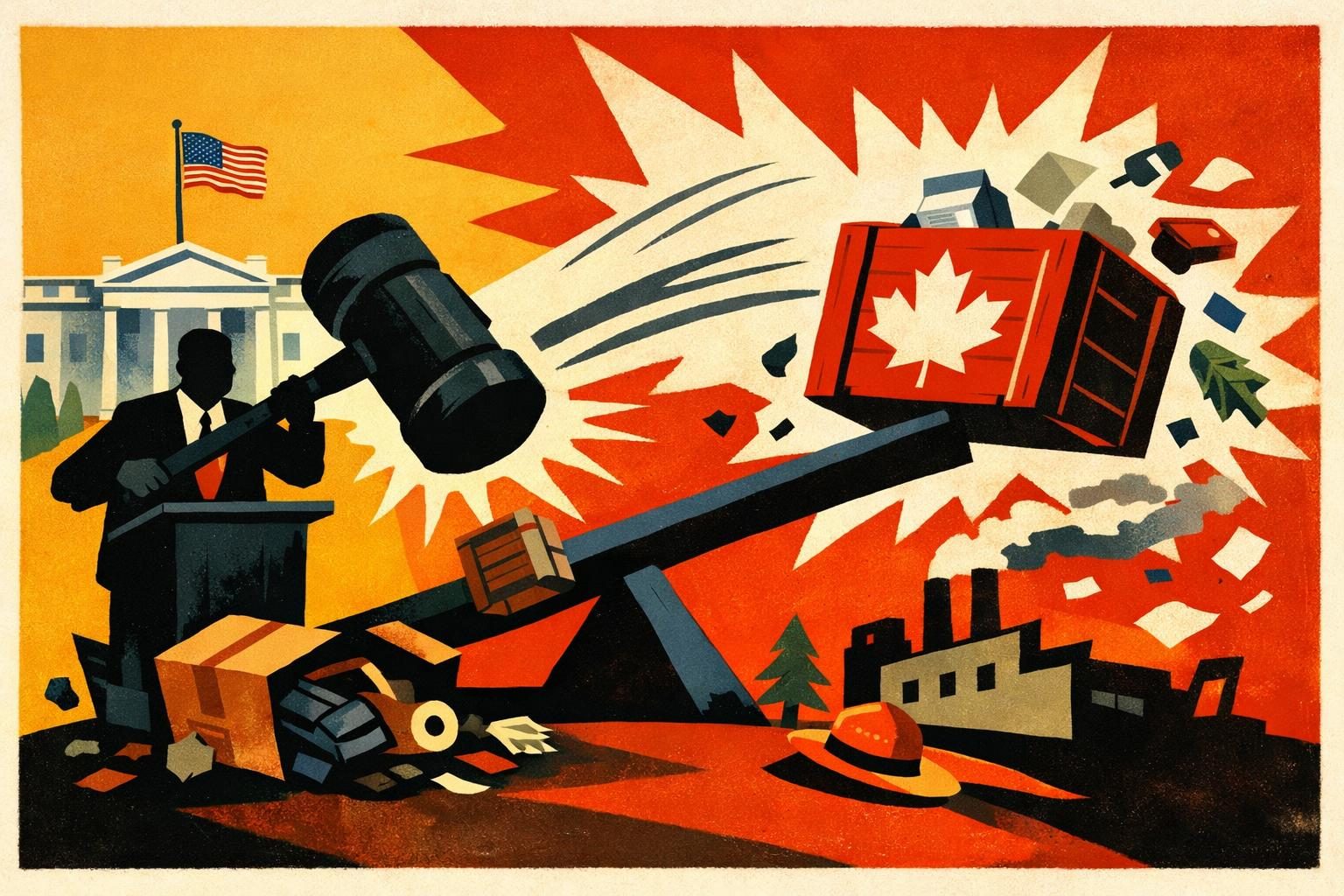
President Donald Trump has once again chosen tariff escalation as his preferred way to stage a show of force, and this time Canada is the target in the crosshairs. On July 20, the administration announced three new Section 338 actions that impose additional 50 percent duties on selected Canadian imports, with the changes scheduled to take effect on August 19, 2026. The White House says the move is meant to answer what it describes as discriminatory treatment of U.S. commerce in motor vehicles, alcoholic beverages, and dairy. That may sound like a narrowly tailored response to a few longstanding disputes, but the actual policy is far more blunt than the rhetoric suggests. It is a broad tariff threat aimed at a deeply integrated trading relationship, and it lands in a North American economy where even small disruptions can ripple quickly through supply chains, pricing, and production schedules.
The administration’s own documents show that the pressure is aimed at three very different sectors at once. One order targets imported passenger vehicles and auto parts, another goes after alcoholic beverages, and a third focuses on dairy products. U.S. Trade Representative Jamieson Greer framed the decision as an effort to level the playing field for American exporters and protect U.S. workers, farmers, and businesses. That is the official case, and it is not hard to understand why the White House wants to argue that Canadian market barriers or regulatory practices deserve a response. But the tool it chose is still the economic equivalent of punching the wall because the door is stuck. A 50 percent tariff is not a polite warning shot. It is a major cost shock for importers, distributors, manufacturers, retailers, and ultimately consumers who will likely pay more if the duties actually go into effect. It also makes trade policy feel less like rule-bound negotiation and more like mood-driven brinkmanship.
That is the part of the move that makes the whole thing look less like disciplined strategy and more like another round of tariff tantrum politics. Canada is not a random test case. It is one of the United States’ closest trading partners, and the two economies are so entangled that tariff escalation almost never stays neatly contained in one category or one border crossing. Auto parts move back and forth repeatedly before a vehicle is finished. Dairy and beverage markets are sensitive to price changes and distribution bottlenecks. Retailers and manufacturers do not get to pretend those links do not exist just because the White House wants to sound tough. If the duties are implemented on August 19, the most immediate effect will probably be uncertainty, with businesses scrambling to reprice contracts, assess inventory exposure, and decide whether they need to absorb the hit or pass it along. The longer-term effect could be retaliation or counterpressure from Canada, which would turn a dispute over market access into another expensive round of economic theater.
The broader political problem is that Trump keeps treating tariffs as proof of strength while teaching markets to expect policy whiplash instead of stability. That may be useful for a president who wants to project dominance, but it is a lousy way to run trade policy if the goal is predictability. The White House says it is acting to defend fairness, and fairness is a real argument in international commerce. But fairness does not replace consistency, and consistency is what companies need if they are going to plan investments, source components, and keep prices steady. The administration is also operating in a legal and political environment where tariff powers remain contentious, which makes each new move feel like both a pressure tactic and a test of how far Trump can push executive authority. So the Canada action is not just another tariff announcement. It is part of a larger pattern in which the administration uses tariffs to signal toughness, accepts the immediate economic disruption as collateral damage, and then frames the mess as leverage. That may satisfy the politics of the moment. It does not make the policy any less volatile, and businesses on both sides of the border will notice the difference long before any victory speech is delivered.
Comments
Threaded replies, voting, and reports are live. New users still go through screening on their first approved comments.
Log in to comment
No comments yet. Be the first reasonably on-topic person here.