
Trump’s tariff surge risks more price shock and retaliation
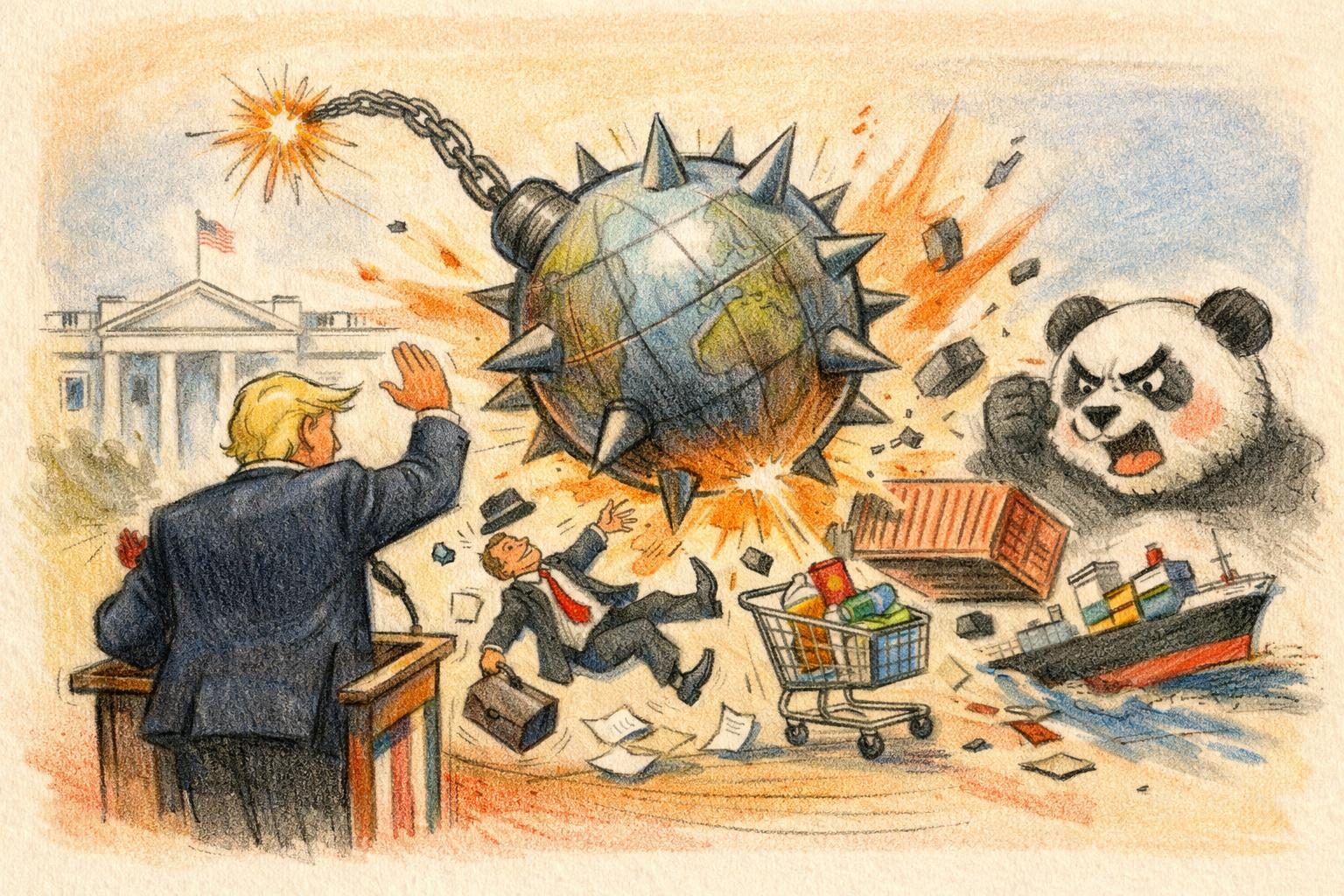
Donald Trump’s latest tariff surge is being sold as a show of strength, a kind of industrial muscle flex meant to prove that the White House is finally putting American producers first. That pitch is tidy, patriotic, and politically useful. It is also incomplete. Tariffs do not land like slogans; they land like bills. Once import duties rise, the costs do not stay politely on the border where the administration would prefer to keep them. They move through supply chains, pricing decisions, inventory plans, shipping contracts, and consumer budgets, often in ways that are difficult to see at first and harder to reverse later. The result is a policy that can look decisive in a statement and messy in practice, especially for businesses that depend on foreign inputs, overseas assembly, or stable cross-border trade rules.
The administration’s public argument is that tougher tariffs will shield domestic industries, force a better deal from trading partners, and encourage more production at home. In theory, that case has some political appeal because it offers a simple story with clear villains and obvious winners. In practice, the story is much less neat. Import-heavy companies may be forced to absorb part of the added cost, pass it along to customers, or scramble to find alternative suppliers, each option carrying its own damage. Retailers can see margin pressure. Manufacturers can face higher input costs on everything from components to packaging. Consumers can end up paying more at the register even if the tariff is technically aimed at foreign sellers. And because many supply chains are interconnected, one tariff can create a chain reaction that reaches businesses far removed from the original target. That is why trade fights often produce more friction than the political messaging suggests, even when officials insist the short-term pain will be worth it.
The risk of retaliation is just as real as the risk of higher prices. When the United States imposes new duties, affected trading partners are rarely eager to absorb the blow quietly, particularly when the tariffs are framed as a direct challenge to their exports. Canada is already being pulled into the latest round of tension, with the administration’s trade office issuing a statement about the president imposing Section 338 tariffs on Canadian goods. That alone signals a renewed willingness to use tariff authority aggressively, even with a close ally and major trading partner. Once tariffs expand, the likelihood grows that other governments will answer with their own penalties, targeted at politically sensitive American industries. That can hit farmers, manufacturers, and exporters who depend on access to foreign markets and who may have little control over the policy fight that put them in the crosshairs. A retaliation cycle does not require a dramatic breakdown in diplomacy; it can build through a series of measured responses that still leave real damage behind.
What makes this round especially awkward for the White House is the gap between the message and the mechanics. The administration wants tariffs to read as evidence of toughness and economic discipline, but the practical effects point in a different direction. There is no guarantee that the added duties will produce a major manufacturing revival, and there is a good chance they will instead function as another layer of cost and uncertainty on top of an already volatile trade environment. Businesses do not make long-term investment decisions based on rhetoric alone. They look for predictability, access to inputs, and confidence that rules will not change abruptly. When tariffs are expanded or reworked in a fast-moving way, companies are forced to hedge, delay, or reprice. That can slow hiring, complicate expansion plans, and make supply chains less efficient. Supporters of the policy may say that some disruption is the price of rebuilding domestic capacity, but that argument does not erase the immediate consequence that someone has to pay first, and often that someone is not the foreign producer the tariff was supposed to target.
There is also a political problem buried inside the economic one. Tariffs can sound good in a headline because they suggest action without requiring the government to write a subsidy check or pass a complicated industrial policy package. But the effects are diffuse and can be harder for the public to trace, which allows officials to claim success even as costs creep upward in the background. That disconnect tends to become more obvious when businesses begin adjusting prices, when suppliers warn about delays, or when trading partners answer back. At that point, the policy is no longer an abstract promise of leverage. It is a real-world tax on commerce with visible side effects. The White House may still argue that the long-term payoff will justify the discomfort, and it may be right that some domestic sectors benefit from the pressure. But the latest escalation is another reminder that tariff politics rarely stays inside the neat frame that presidents prefer. The blowback can show up as inflation pressure, strained relationships, and retaliatory trade barriers, all while the administration insists the whole thing is simply a path to American strength.
Comments
Threaded replies, voting, and reports are live. New users still go through screening on their first approved comments.
Log in to comment
No comments yet. Be the first reasonably on-topic person here.