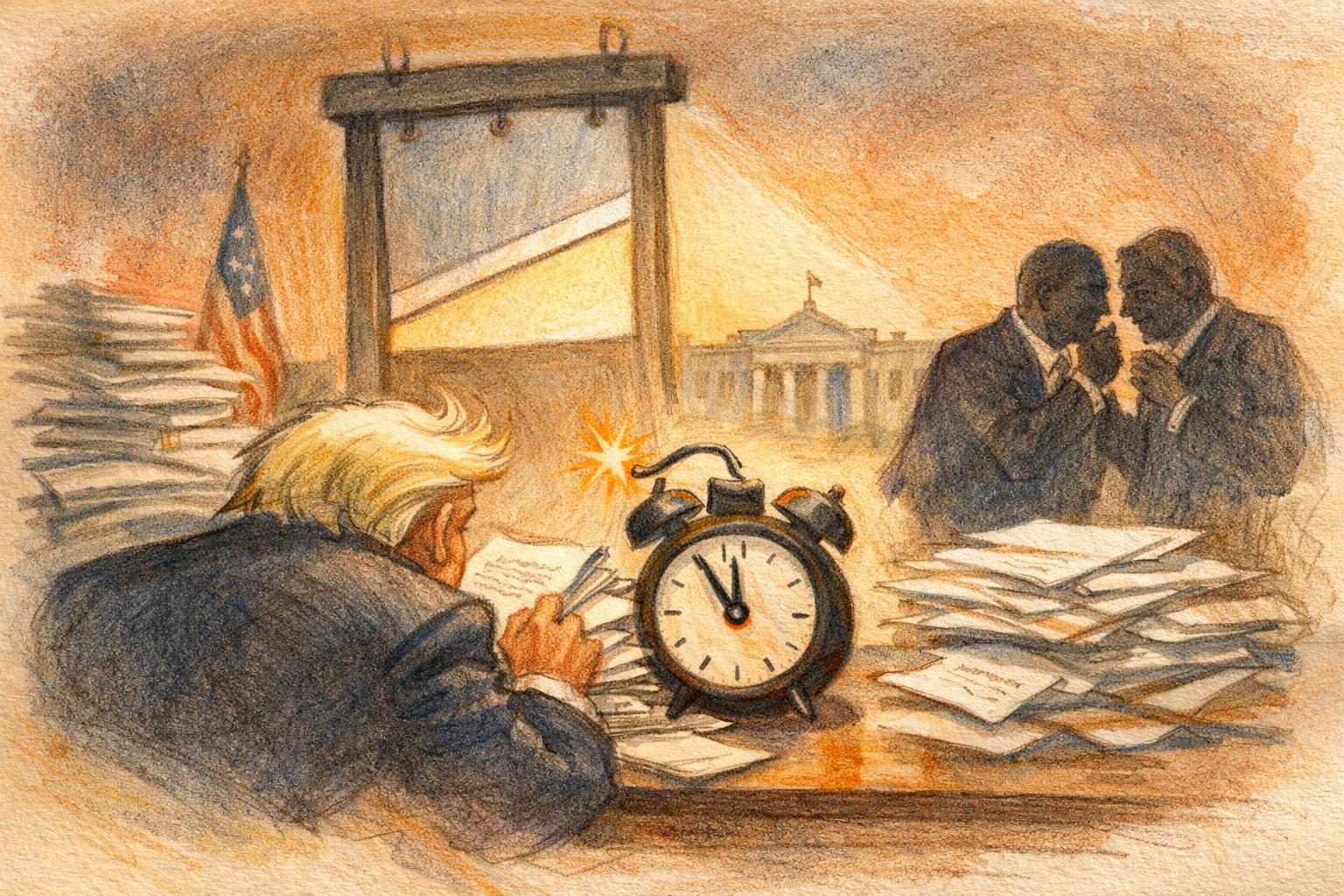
Trump-world heads into a filing deadline that could expose more campaign cash drama
July 20 was one of those campaign-finance dates that looks routine until it isn’t. The Federal Election Commission had set it as a reporting deadline for monthly filers, including presidential campaign committees, political action committees, and party committees that had to disclose June activity. On paper, that is the kind of date that belongs in a compliance calendar, not a front page. In practice, it is exactly the sort of deadline that can turn into a public accounting of who is raising money, who is burning through it, and who is leaving paperwork until the last possible minute. For Trump-world, where the political operation stretches across multiple committees, vendors, legal obligations, and outside allies, those disclosures can matter as much for the signal they send as for the numbers they contain. The deadline itself did not automatically point to any specific problem, and no particular late filing had already surfaced as of the cutoff in question. But it created the conditions for one of the oldest rituals in modern politics: the moment when a sprawling campaign machine has to stop talking about momentum and start filing receipts.
The FEC’s July notice leaves little ambiguity about the mechanics of the process. Electronic reports had to be received and validated by 11:59 p.m. Eastern on the due date, which means the system is built around actual deadlines rather than elastic ones. That matters because campaign finance disclosure is not supposed to be a choose-your-own-adventure exercise. Committees that file monthly have to account for what came in during June, what went out, and what remains on hand, and those reports become part of the public record on a schedule that does not wait for convenient political timing. For Trump-aligned committees, that can be especially awkward because every filing tends to be read as a proxy for strength or strain. Strong fundraising can be packaged as proof that the base is still energized. Weak numbers can raise immediate questions about donor fatigue, cash burn, overhead, and whether the public image is outrunning the bank balance. A clean, timely filing would not generate headlines for long. A messy one, even if the problem is procedural rather than substantive, can open the door to questions about whether the operation is keeping up with its own promises.
That is why a dull reporting deadline deserves more attention than it usually gets. Trump-world has long been associated with a political style that favors swagger, speed, and confrontation over patient compliance. That does not mean every related committee is in trouble, and it does not mean every filing should be treated as suspicious. It does mean that the disclosure process becomes one of the few places where the sprawling political ecosystem has to speak in plain numbers. Those numbers are often more revealing than the rhetoric. A committee can raise a large sum and still be carrying heavy legal bills, vendor obligations, and operating costs that eat into reserves. A fundraising haul can look impressive while cash on hand remains under pressure. A committee can be flush enough to project confidence but still be vulnerable if its spending rate outpaces incoming money. The reporting deadline is therefore not just an administrative checkpoint. It is a stress test, one that can show whether the machinery is functioning smoothly or merely performing strength in public while the accounting tells a different story in private. And because these reports are filed on a fixed schedule, they are hard to spin away once they land. Donors, rivals, strategists, and watchdogs all know how to read them, which is why even routine filings can quickly take on outsized political meaning.
For now, the story is less about scandal than about pressure. July 20 was a watch item because it was the kind of date that can expose disclosure headaches even before any obvious failure appears. That is especially true in a Trump-era political environment where fundraising theatrics and compliance risks often travel together. If the filings landed on time and looked orderly, the whole episode would likely fade into the background as another administrative checkpoint. If they were late, incomplete, or confusing, the implications could become sharper fast, because in politics the appearance of disorder often matters almost as much as the disorder itself. The public does not need a dramatic revelation to notice when a political operation seems sloppy with its own finances. Sometimes all it takes is a deadline, a missing line item, or a report that does not quite add up. That is the uneasy logic of campaign finance: the paperwork rarely feels important until it starts catching up with the story the operation has been telling about itself. In Trump-world, where image and money are constantly intertwined, the filing calendar can become a kind of reality check. And when that reality check arrives, the numbers do the talking whether anyone wants them to or not.
Comments
Threaded replies, voting, and reports are live. New users still go through screening on their first approved comments.
Log in to comment
No comments yet. Be the first reasonably on-topic person here.