
The White House keeps turning the Smithsonian into a culture-war punching bag
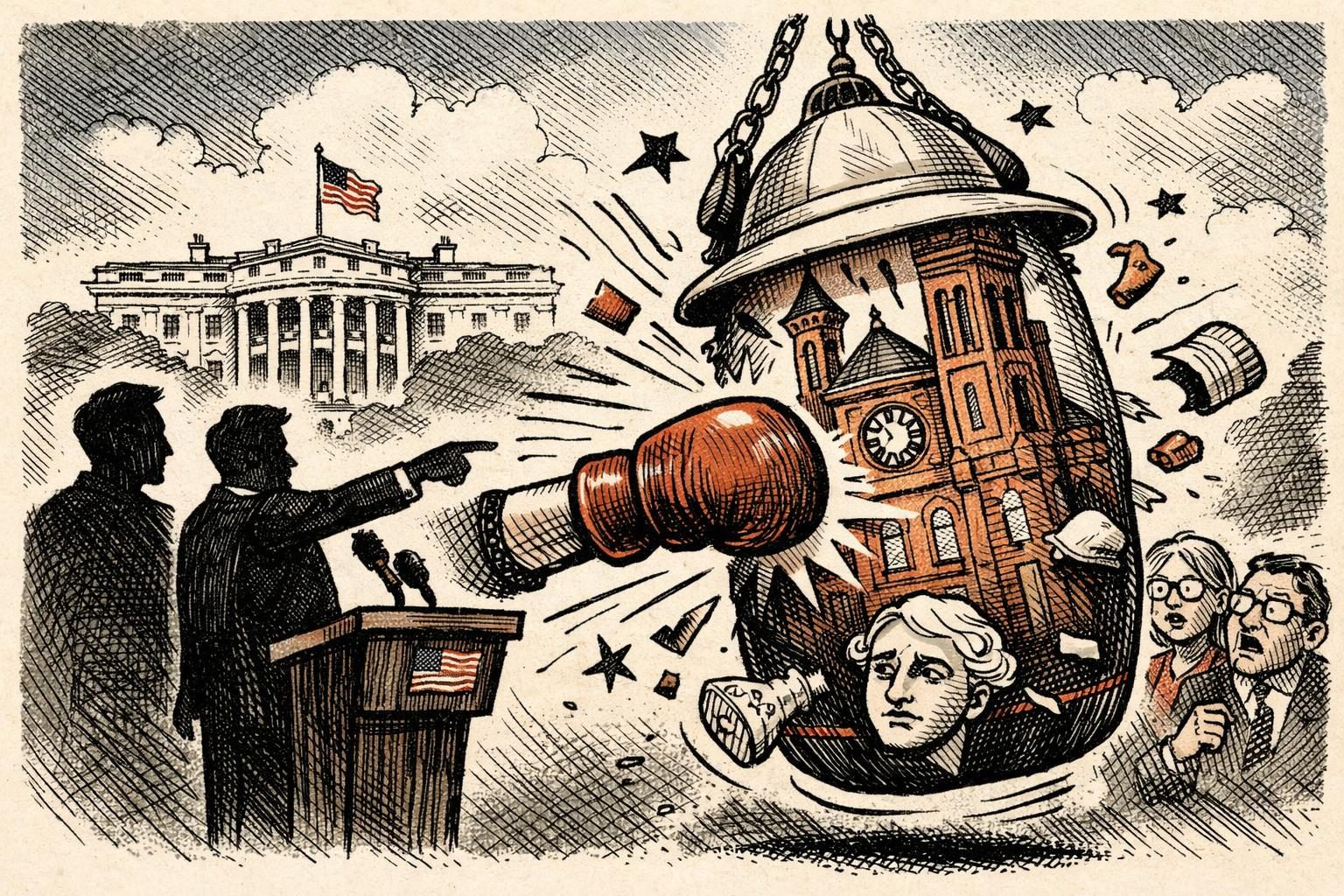
The White House has kept pressing its case that the Smithsonian needs a top-down reset, presenting the campaign as an effort to “restore trust” in an institution that most people still think of as a place for learning, not a battleground for political therapy. That framing is doing a lot of work. It suggests that the problem is not the administration’s own appetite for steering cultural debate, but an alleged crisis inside a museum system built to collect, preserve, and interpret the country’s history in public view. The result is a familiar move in modern politics: declare a civic institution suspicious, then offer federal supervision as the cure. It sounds procedural when it is described in official language, but the underlying impulse is plainly ideological. The government is not just talking about museums as repositories of objects. It is talking about them as sites of power, and about who gets to decide what counts as a legitimate national story.
That is why the latest Smithsonian-related push lands as more than a symbolic skirmish. Museums are not decorative side projects or neutral amusement parks for tourists. They are among the few places where a country’s conflicts over memory, identity, and accountability are made visible in physical form. What gets displayed, what gets labeled, and what gets left out all shape the public understanding of history. When political leaders imply that trust can be rebuilt by scrubbing away unwelcome material, they are not proposing a more honest account of the past. They are proposing a managed one. That may be dressed up as stewardship, but stewardship normally means protecting an institution’s mission, not bending it to satisfy the mood of the moment. The administration’s choice of language is therefore revealing. “Restoring trust” sounds calm, constructive, and civic-minded. In practice, though, it can function as a warning shot to curators, historians, educators, and administrators who may suddenly find themselves expected to anticipate what will offend the people in charge. The prospect is not a healthier public conversation about history. It is a narrower one.
The political logic here should be easy to recognize, even if the administration insists otherwise. This is part of a broader culture-war pattern in which expertise is treated as arrogance, institutional independence is treated as disloyalty, and complexity is treated as a threat to patriotic branding. The Smithsonian becomes useful in that fight because it is both visible and symbolic. It is large enough to matter and prestigious enough to carry the weight of a national argument. That makes it an ideal target for leaders who want to demonstrate that they can discipline institutions they dislike without having to say openly that they are trying to shape memory from above. Critics will likely see the effort as another extension of the same political tendency that has aimed at universities, libraries, archives, and other places where inconvenient facts tend to survive longer than campaign slogans. Supporters may argue that public institutions should not be insulated from scrutiny, and that is true in the abstract. But scrutiny is not the same thing as control. A healthy republic can ask hard questions about exhibits, funding priorities, and interpretive choices without turning history into a loyalty test. What makes this moment different is the apparent assumption that a federal intervention can make an institution trustworthy by making it more compliant. That is not reform. It is editorial power with a patriotic seal on it.
The fallout from that approach may unfold slowly, but it is likely to be familiar. Staff members can end up working under a cloud of uncertainty about what kind of interpretation will be tolerated and what kind will invite political blowback. Curators may become more cautious, not because the record has changed, but because the incentives have. Exhibits that once would have been discussed on scholarly terms can be dragged into a spectacle of grievance, with politicians treating labels and displays as if they were campaign ads for the wrong side. The public then gets a louder argument about whether the nation is being sufficiently celebrated and a quieter one about whether the nation is being accurately described. That distinction matters. A museum is supposed to widen the frame, not flatten it into applause lines. The administration can keep calling this accountability, and its critics can keep calling it censorship by committee, and both labels will continue to serve the political fight. But the deeper issue is simpler: when government officials decide that trust in history must be restored by policing memory, they are asking the public to trust power more than evidence. That is a very odd prescription for a country already struggling with credibility, and it is unlikely to make the Smithsonian a healthier institution. It is more likely to turn one of the nation’s most recognizable public archives into yet another venue for partisan performance, where the real contest is not over what happened, but over who gets to say what Americans are allowed to remember.
Comments
Threaded replies, voting, and reports are live. New users still go through screening on their first approved comments.
Log in to comment
No comments yet. Be the first reasonably on-topic person here.