
White House turns nuclear innovation into a big-swing energy pitch with plenty left to prove
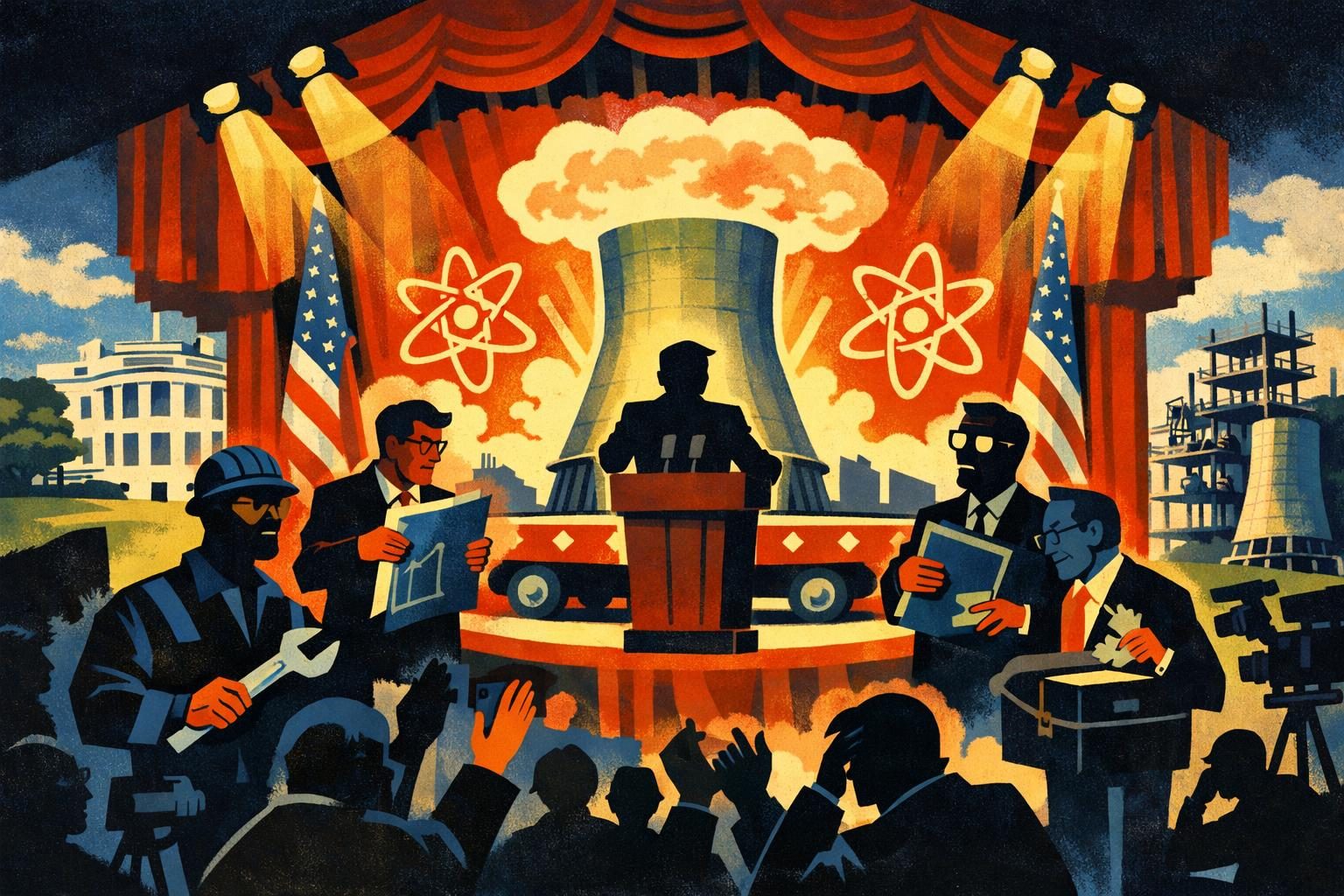
President Trump used a July 24 White House appearance on nuclear innovation to do what he does best: turn a complicated policy file into a sweeping, high-voltage pitch about national revival. The message was not subtle. Advanced nuclear power, in the administration’s telling, is not just another energy option but a tool for restoring industrial strength, meeting the electricity needs of AI and data centers, and proving that the United States can still build big, durable things on its own timetable. That framing has obvious political appeal, especially at a moment when electricity demand is rising and grid operators are warning about the need for more reliable generation. Nuclear power is, in fact, one of the few sources of carbon-free electricity that can run around the clock and supply large amounts of firm power. But the gap between that strategic promise and the reality of actually getting new reactors built is still enormous, and the White House appearance did nothing to narrow it. The administration can sell the idea. It cannot, by force of rhetoric, make nuclear construction quicker, cheaper, or simpler.
That is the central tension running through the whole rollout. Nuclear energy sits in a strange place in American politics: it is easy to describe as futuristic, essential, and patriotic, but brutally difficult to deliver at scale. Every serious project has to make it through a slow choreography of licensing, engineering, financing, and construction, all while keeping utilities, regulators, lenders, and contractors aligned over years of work. Any one of those steps can stall a project, and several often do. That is why nuclear announcements tend to sound bigger than the underlying milestones they describe. The White House can create momentum, and momentum matters. It can encourage investors, embolden states, and give the industry a sense that federal leadership is finally behind it. But momentum is not output, and enthusiasm is not a reactor. The administration’s best-case scenario is that the event helps lower the political and financial barriers that have long made nuclear development such an exercise in patience. The worst case is that the announcement becomes another example of Washington talking about energy abundance while the actual projects remain trapped in the same bottlenecks that have slowed the sector for decades.
The administration’s broader style makes this kind of event almost inevitable. Trump tends to treat industrial policy as a form of stagecraft, where the announcement itself is part of the governing. That approach can be effective when the goal is to signal direction, reward a favored industry, or create the impression of movement in a system that often feels inert. Nuclear is especially useful for that purpose because it lets the White House talk about security, jobs, technological leadership, and energy dominance all at once. Those are powerful themes, and they are not made up out of thin air. The United States does need more dependable electricity supply if it wants to support manufacturing growth, electrification, and the energy demands of computing infrastructure. It also makes sense for any administration to look for ways to preserve and expand the country’s nuclear expertise, especially after years in which the sector has struggled to add new capacity. Still, the danger is that the rhetoric outruns the machinery of government. A presidential event can spotlight the industry, but it cannot substitute for the unglamorous work of permitting, engineering, and capital formation. Supporters will argue that this is exactly the kind of presidential attention nuclear has long lacked. Critics will counter that the administration is using the prestige of the office to inflate a story that remains dependent on institutions and markets it cannot simply command.
That is why the real test of the July 24 appearance will come much later, and in less theatrical places than the White House briefing room. If projects advance, if financing lines up, if licensing moves more quickly without sacrificing safety, and if builders can deliver on time, Trump will likely present the outcome as proof that his approach worked. If projects stall, overrun their budgets, or get bogged down in the usual maze of approvals and public skepticism, the administration will be left defending a pitch that sounded transformative but produced only limited progress. There is no easy middle ground here because nuclear is one of those sectors where political excitement can be genuine and still not be enough. That is what makes the president’s embrace of the technology both serious and risky. It may help shift the atmosphere around advanced reactors, and that in itself is not trivial. But the underlying bottlenecks have not gone away, and they remain stubbornly physical: permits, financing, engineering, and time. The White House can frame nuclear as a centerpiece of energy dominance. It still has to prove that the country can actually build the thing."}]}
Comments
Threaded replies, voting, and reports are live. New users still go through screening on their first approved comments.
Log in to comment
No comments yet. Be the first reasonably on-topic person here.