
Michigan’s manufacturing victory lap still has the same old hole in it
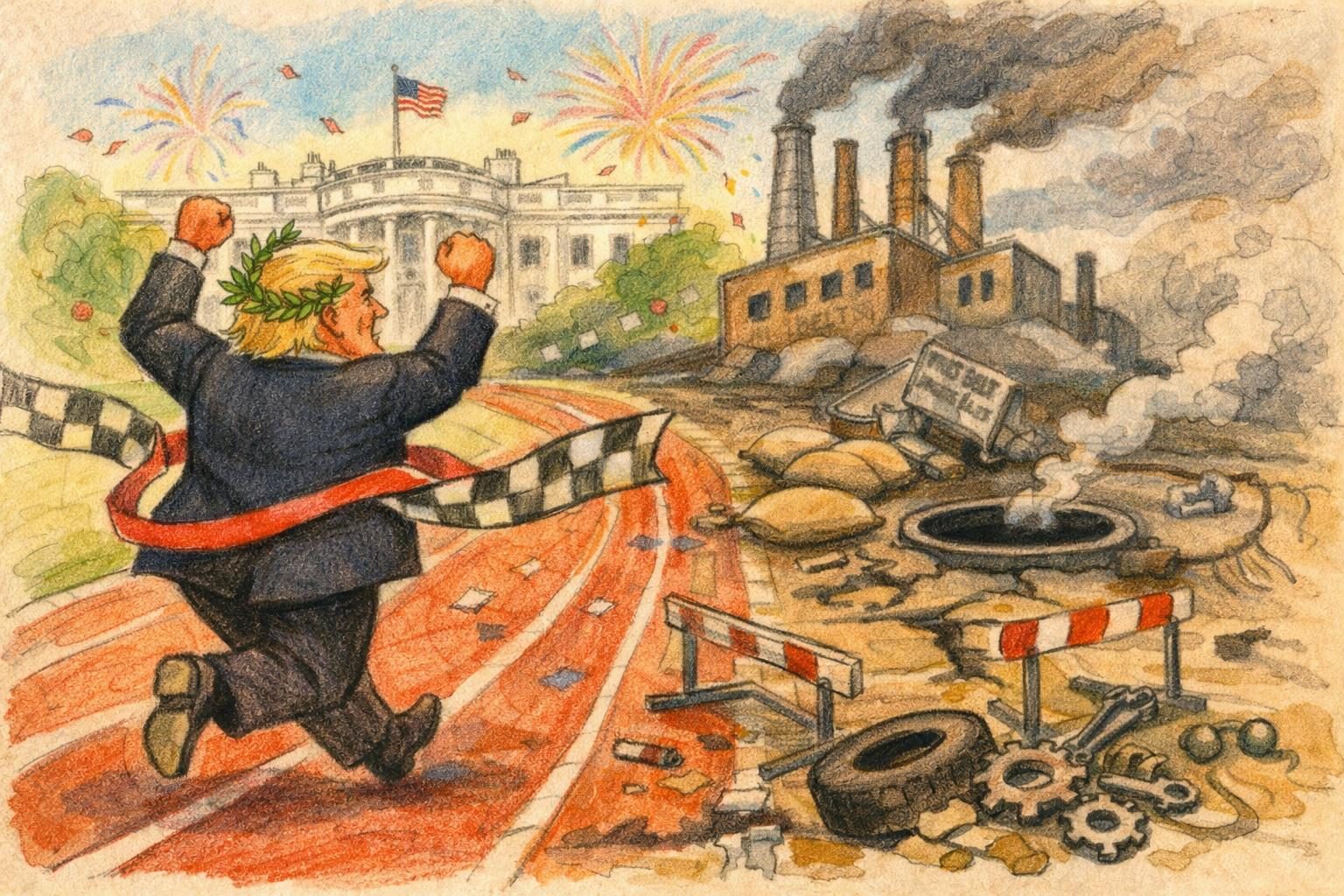
Donald Trump’s July 27 stop in Michigan was packaged like a campaign-style victory lap, and the White House clearly wanted it to land that way. The setting mattered: Michigan remains one of the country’s most symbolically important manufacturing states, where factory jobs still carry political and cultural weight far beyond their raw numbers. Trump used the visit to argue that his tariff strategy is helping bring American manufacturing back, especially in the auto sector, and he cast that as proof that his trade agenda is already paying off. It was a familiar message, built around a simple promise that sounds good in a plant town: tariff foreign competition, reward domestic production, and force companies to make more things in the United States. That line has real appeal when delivered in the industrial Midwest, where voters have heard for years that globalization was supposed to make everything better while local communities were left to absorb the costs. The problem is that applause in a rally hall is not the same thing as evidence that a policy is broadly working, durably working, or working in a way that outweighs the damage it creates along the way.
That gap is where the White House’s Michigan pitch starts to wobble. The administration keeps leaning on selected manufacturing gains as though a few visible wins can settle the larger debate over tariffs. A plant expansion here, a corporate announcement there, or a high-profile event with a politically useful backdrop may all be real developments, but they do not automatically prove that the country is in the middle of a genuine manufacturing renaissance. To establish that kind of claim, the administration would need to show more than isolated examples. It would have to demonstrate that the gains are broad across regions and industries, not just concentrated in a few headline-friendly sectors. It would also need to show that the benefits are lasting, rather than a short-term reaction to political pressure or shifting business expectations. That is where the policy becomes harder to defend, because tariffs do not just shield domestic producers from foreign competition. They also raise input costs, complicate sourcing, and inject uncertainty into planning, all of which can freeze hiring, slow expansion, or make companies hesitate before they commit to new investment. The White House tends to skip quickly over that part of the story, but that is the part that determines whether the policy is actually creating strength or merely rearranging pain.
The latest reporting from Michigan highlighted the same split-screen reality that runs through the whole tariff debate. Trump told supporters that his approach had protected the auto industry and helped bring production back, and that claim fits neatly into the administration’s preferred narrative. But the surrounding reporting also captured the complaints that still follow the policy wherever it goes: businesses continue to say tariff costs are real, and companies operating in Michigan still have to deal with those expenses as part of their day-to-day decision-making. That matters because the state is not an abstract case study. It is a place where firms buy parts, manage supply chains, negotiate contracts, and try to keep margins stable in an environment where one policy change can ripple through multiple layers of production. A tariff can make one finished product look more competitive on paper while quietly making the upstream process more expensive and unpredictable. So the White House can point to one part of the ledger and call it a win, but the fuller accounting is more complicated. One side of the story gets the ribbon-cutting, the photo op, and the slogan. The other side gets the higher bills, the sourcing headaches, and the unresolved question of whether the promised payoff is big enough to justify the drag.
That unresolved question is what makes the Michigan appearance feel less like a decisive conclusion than an effort to declare one early. Trump is trying to use tariffs as evidence of toughness and industrial renewal at the same time, and politically that is a useful combination. It lets him speak to voters who want to see the federal government standing up for domestic production, and it gives him a simple line he can repeat in places where manufacturing identity still shapes politics. But economic policy does not become effective just because it sounds forceful. If tariffs are truly reviving American manufacturing, the results should be showing up in more than one state and more than one sector, and they should be visible in sustained investment, stable hiring, and a net benefit that exceeds the friction created by the duties themselves. That is a high bar, but it is the right one, because a policy that helps one company while hurting three others is not a clean success story. For now, the administration appears to be asking the public to accept a handful of examples as proof of a nationwide verdict. The evidence still does not support that leap. Michigan gave Trump a stage for his strongest version of the argument, but it also exposed the same old hole in it: the White House can keep repeating that the manufacturing comeback is underway, yet it still has not produced a convincing accounting of whether that comeback is broad, durable, and worth the collateral damage.
Comments
Threaded replies, voting, and reports are live. New users still go through screening on their first approved comments.
Log in to comment
No comments yet. Be the first reasonably on-topic person here.