
Trump’s tariff victory lap ran into the usual reality gap
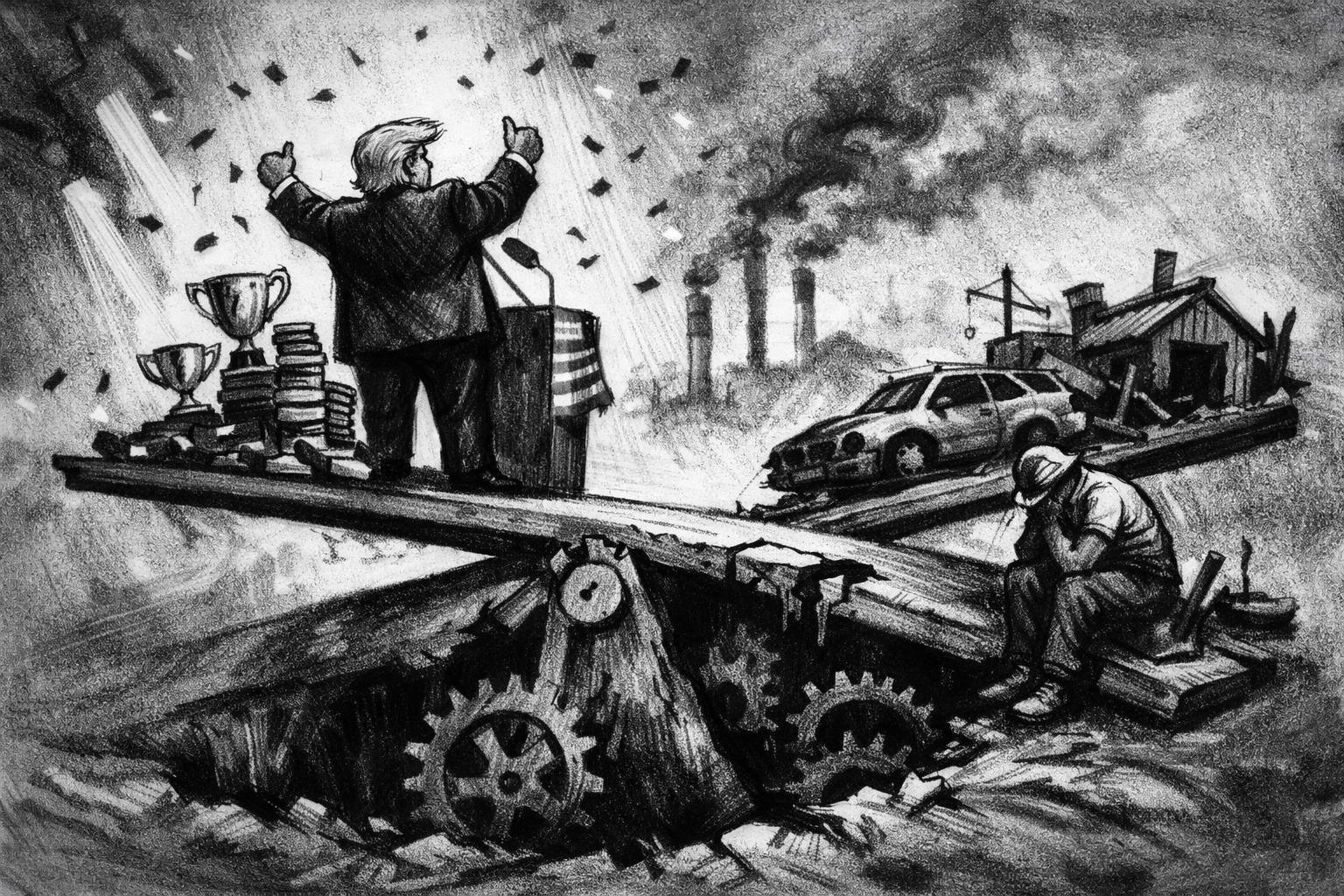
On July 27, the White House tried to turn Donald Trump’s tariff program into a simple victory story: tariffs were the shove, the shove was forcing change, and the change was supposed to show up as more factories, more jobs, and more evidence that the administration’s instincts about trade had finally been vindicated. The messaging was crafted to sound especially strong in Michigan, where manufacturing still carries enormous political and symbolic weight and where any hint of industrial revival can be turned into a campaign-style promise with very little effort. That kind of framing has obvious appeal. It gives supporters a clear storyline, wraps policy in patriotic language, and lets the administration present a complicated trade agenda as if it were producing a clean result. But trade policy is rarely so obliging, and it usually resists the sort of tidy, triumphant interpretation the White House is trying to sell.
The basic appeal of tariffs is not hard to explain. By making imported goods more expensive, they can give some domestic producers a better chance to compete, and in some cases they can encourage companies to invest, expand, or shift production in ways that might otherwise have gone somewhere else. That is the logic the White House is leaning on when it says its approach is not merely defensive but actively helping “supercharge” domestic manufacturing. The problem is that tariffs do not act only on the companies the administration wants to help. They also ripple through supply chains, and those ripples can be expensive. Businesses that rely on imported parts, components, raw materials, or machinery can face higher costs almost immediately, and those higher costs do not stay confined to a spreadsheet in Washington. They can appear in prices, hiring plans, investment decisions, and the cautious behavior that often follows uncertainty. The administration’s public case emphasizes the upside, but it tends to skate past the fact that the downside is not theoretical. It is often where the real economic effect shows up first.
That is why a few visible manufacturing wins do not settle the larger argument. A plant expansion, a high-profile investment announcement, or a carefully staged event in an industrial state may be useful politically, especially when it can be presented as proof that the country is taking production back. But a handful of examples do not by themselves prove that tariffs are generating a broad or durable national comeback. They also do not answer the harder question of how the policy is affecting the rest of the economy, where one company’s benefit can be another company’s burden. A domestic parts supplier may get relief from foreign competition, while a downstream manufacturer ends up paying more for the input it needs to finish its own product. Consumers can feel that tension too, sometimes before any promised reshoring turns into actual jobs or output. And even when new investment does arrive, it can take a long time to build, staff, and stabilize, which means the political bragging can come well before the economic accounting is complete.
The White House’s approach depends on the idea that the public will respond more to visible signs of industrial strength than to the messier ledger behind them. That may work for a time, especially when the administration can point to favorable anecdotes, selected data, or regions that seem to fit the desired narrative. But tariff policy is unusually well suited to political spin precisely because its effects are mixed and uneven. Supporters can point to protected industries or announced projects and describe them as proof of concept. Critics can point to higher costs, volatility, and the drag on firms that are not in the spotlight but still have to operate in the same economy. Those two readings are not mutually exclusive. They can both be true at once, which is part of what makes tariff politics so durable and so hard to judge in real time. The question is not whether there are winners, because there always are. The question is whether the gains are large enough, broad enough, and lasting enough to justify the losses that come with them.
That is the standard the administration has not yet convincingly met. Lawmakers continue to hear from employers worried about unpredictability and from consumers who notice higher prices in everyday purchases, even when the policy is being described as a patriotic reset. Local officials and business leaders generally care less about ideological victory than about stable investment conditions, predictable supply chains, and whether new commitments will survive the next round of policy changes or retaliatory moves. If tariffs are supposed to strengthen American industry, then the case for them has to survive scrutiny on timing, scale, and durability, not just applause lines at a press event. It is not enough to point to one state, one sector, or one headline-grabbing project and call it proof that the policy is working as advertised. Until there is clearer evidence that the benefits are broad and persistent, the White House’s celebration looks less like settled fact than an effort to declare victory before the scoreboard is fully written.
Comments
Threaded replies, voting, and reports are live. New users still go through screening on their first approved comments.
Log in to comment
No comments yet. Be the first reasonably on-topic person here.