
Trump’s White House war diplomacy looked more like managed theater than leadership
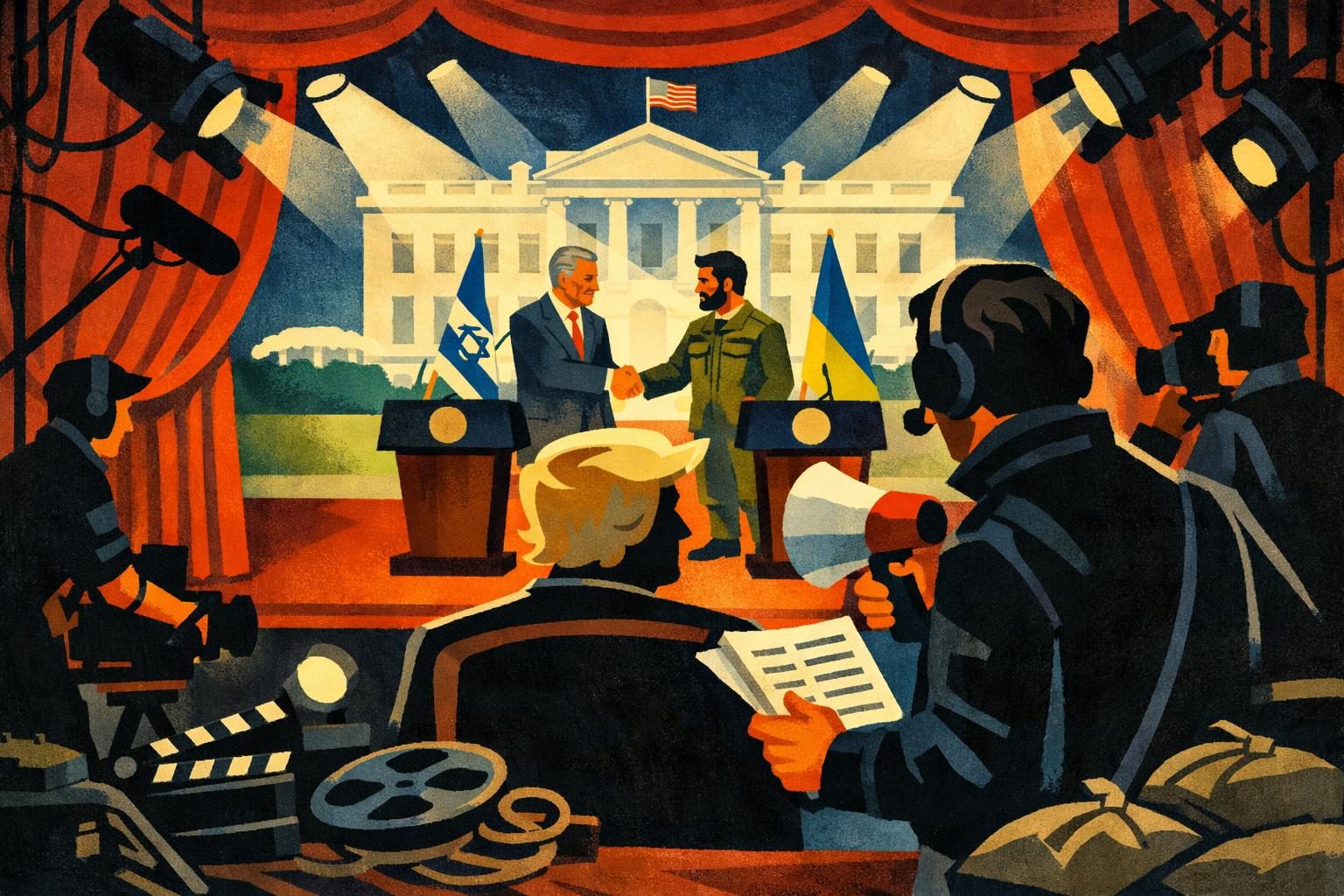
The White House lined up two major foreign-policy meetings on July 28: first with Israeli Prime Minister Benjamin Netanyahu, then with Ukrainian President Volodymyr Zelenskyy. The timing made for a neat visual, and the public messaging was predictably upbeat. But the official record showed something narrower than a breakthrough: two cordial sit-downs, two leaders thanking Trump, and very little in the way of hard detail about what, if anything, changed. ([apnews.com](https://apnews.com/article/2d9ade01d2977dee5555f24daee30482?utm_source=openai))
Netanyahu’s visit came as the U.S. and Israel were still dealing with the fallout from the joint war against Iran. In the public account that followed the meeting, Netanyahu called it an “excellent” session, while White House briefings and later coverage emphasized that the conversation was aimed at smoothing out strains and keeping the next steps flexible. That is not the same as a solved problem. What it does show is a meeting built to lower the temperature in public while leaving the substance largely inside the room. ([apnews.com](https://apnews.com/article/2d9ade01d2977dee5555f24daee30482?utm_source=openai))
Zelenskyy’s stop at the White House carried a different set of pressures. The Ukrainian leader said he had a “good meeting” with Trump, and the day’s public readout pointed to continued discussion of cooperation. But the visible outcome was still a conversation, not a completed package. The public materials did not lay out a new framework, a signed commitment, or a specific shift in policy. They showed a president who wanted to be seen managing an active war file, and an ally who still had reasons to come to Washington and test how far that management would go. ([apnews.com](https://apnews.com/article/fc0dc04777dc7a1d2a3fd88502e8365b?utm_source=openai))
That is the pattern here: the White House can stage the backdrop, control the entrances, and keep the tone calm. It cannot force a war to produce a clean political ending on command. The day’s meetings were public relations successes in the narrow sense that nobody blew up in front of the cameras. But the public record also stopped short of proving a larger diplomatic win. There was no announced Iran deal, no new Ukraine roadmap, and no documented turning point that would let the administration claim the policy had moved beyond talk. ([apnews.com](https://apnews.com/article/2d9ade01d2977dee5555f24daee30482?utm_source=openai))
So the strongest reading is not that Trump solved anything on July 28, or even that he tried to. It is that he used two high-visibility meetings to signal command while keeping the terms vague enough to avoid immediate contradiction. That can be politically useful. It is also fragile. When the public-facing message is all composure and little content, the gap eventually becomes the story. For now, the White House has a photo set, a pair of friendly readouts, and a day that looked organized from a distance. Whether it amounted to anything more than that is still the open question. ([apnews.com](https://apnews.com/article/2d9ade01d2977dee5555f24daee30482?utm_source=openai))
Comments
Threaded replies, voting, and reports are live. New users still go through screening on their first approved comments.
Log in to comment
No comments yet. Be the first reasonably on-topic person here.