
Trump’s immigration machine is detaining military spouses and parents
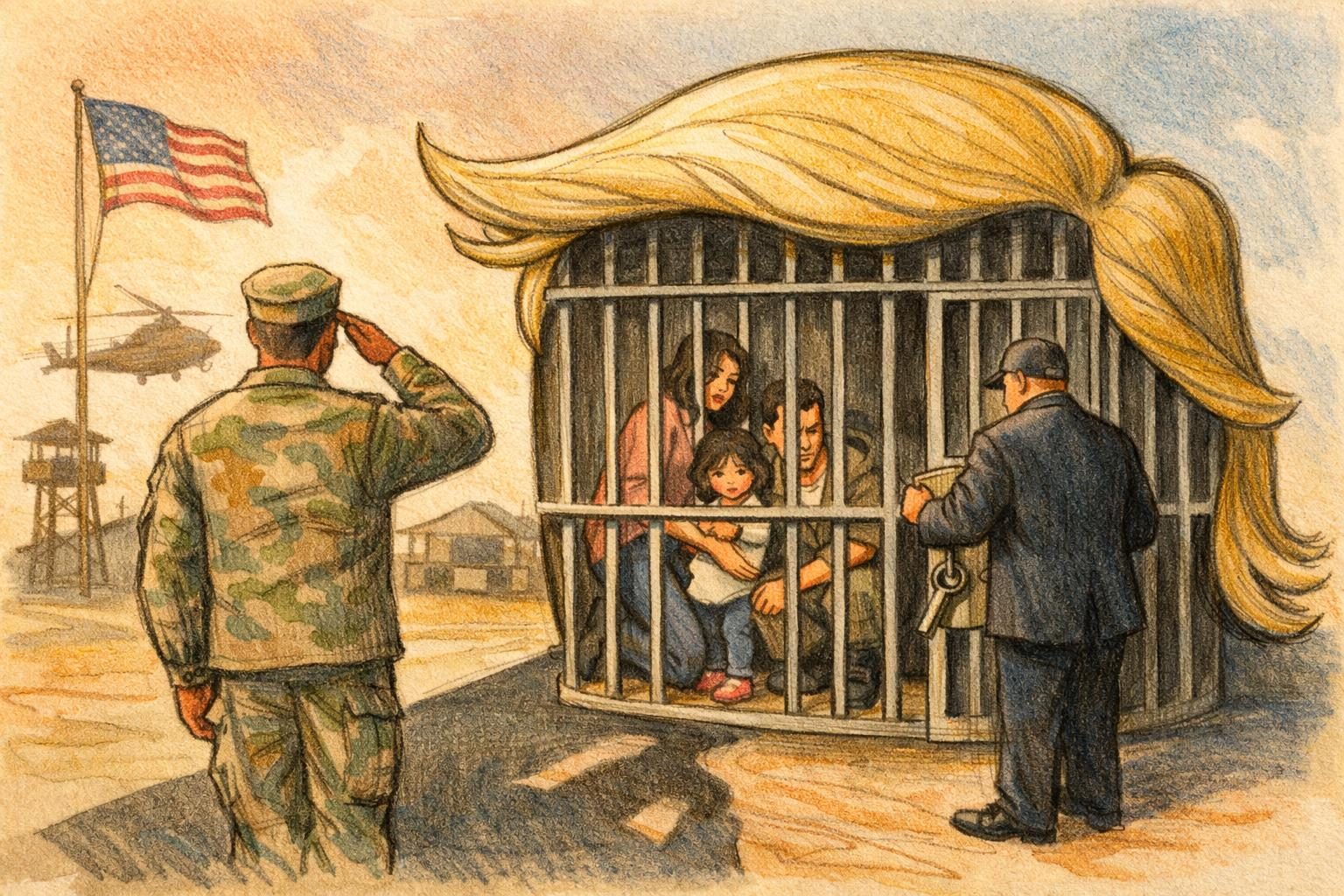
The Trump administration’s immigration crackdown has reached a place even many of its supporters are likely to find hard to defend: the spouses and parents of active-duty service members. A review of detention records and family accounts published on Aug. 5 found that at least 52 relatives of U.S. troops have been detained since Trump returned to office, with some already deported. The cases include men and women who were not simply living in the shadows, but were trying to pursue legal status through family-based pathways that have long been available to military households. That distinction matters because it undercuts the idea that this is only about targeting people on the margins of the system. What the review describes is a deportation campaign sweeping up families who are deeply tied to the armed forces and, in some cases, already embedded in the ordinary routines of military life.
The human cost is obvious, but the policy cost may be just as significant. Military families depend on the expectation that service will come with at least a basic measure of stability at home, and not a threat that a spouse or parent can vanish into detention while a soldier is deployed, training, or preparing to move to a new post. Commanders and legal experts cited in the review warned that the practice is beginning to chip away at readiness, morale, and retention, all of which are already fragile in a force that is constantly recruiting, relocating, and asking a lot from its people. When troops have to worry about whether a partner will be held by immigration authorities or a parent will be sent away, that is not some abstract family hardship; it becomes one more operational distraction in a system that depends on focus and trust. The administration’s defenders say the law should be applied the same way to everyone, but that slogan runs into a long-standing reality: administrations of both parties have typically treated military households with unusual care because the nation has a direct interest in not punishing people for serving.
That is why the cases have resonated so sharply among service members, military-law specialists, and veterans’ advocates. They are describing not just bureaucratic mistakes or isolated hard cases, but a policy shift that appears to be breaking with past practice in a very visible way. One Army specialist quoted in the review said he watched his own father get detained even as he had helped support border enforcement, a detail that turns the administration’s own rhetoric back on itself. Stories like that are politically dangerous because they strip away the abstraction from immigration enforcement and replace it with a simple question: what exactly is the government gaining by inflicting this on a family tied to the military? That question is especially uncomfortable for a White House that has built much of its immigration message around toughness, discipline, and respect for those in uniform. Instead, the crackdown is producing images and accounts that suggest the opposite: a government willing to create needless collateral damage and then call it procedure.
The broader effect is uncertainty, and that uncertainty is now being absorbed by the people least able to control it. Families are waiting for bond hearings, status decisions, and in some cases deportation flights, all while trying to keep children fed, bills paid, and careers intact. Service members are being asked to do the work of national defense while wondering whether their home life will be disrupted by the same government that praises their sacrifice. That tension is not just emotionally corrosive; it can make it harder for troops to concentrate on training, deployment schedules, and the everyday demands that keep military units functioning. It also gives the administration’s critics a concrete example of how a mass-deportation drive can boomerang into institutions it claims to honor. However the White House wants to frame these cases, the emerging record suggests a policy that is not merely enforcing the law with greater zeal, but normalizing a level of harm that many Americans will see as incompatible with basic decency, common sense, and the stated commitment to support military families.
Comments
Threaded replies, voting, and reports are live. New users still go through screening on their first approved comments.
Log in to comment
No comments yet. Be the first reasonably on-topic person here.