
Trump tries birthright citizenship again, because apparently losing once was not enough
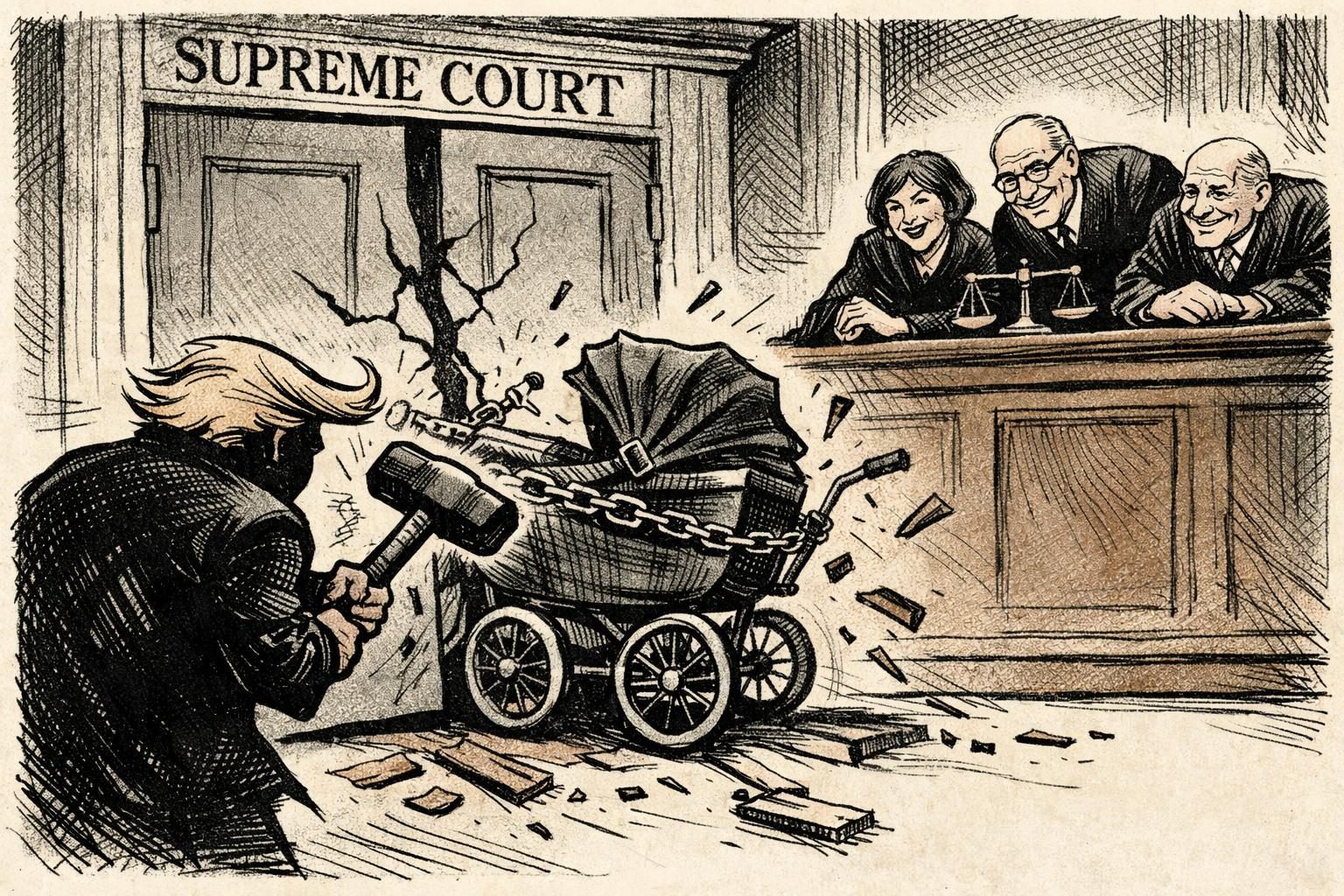
President Donald Trump on Thursday signed a new executive action aimed at tightening the rules around birthright citizenship, reviving a fight that the Supreme Court already knocked aside in June. The White House also rolled out a separate directive focused on so-called birth tourism, continuing an aggressive immigration agenda that mixes executive muscle with maximal political theater. This time, the administration appears to be trying a narrower approach than the one that previously ran into a wall. But the basic confrontation has not changed: the White House is again testing how far it can go in trying to limit automatic citizenship for some children born on U.S. soil.
That makes the new action less a fresh policy breakthrough than a return engagement with the same constitutional problem. The earlier attempt to deny citizenship to children born in the United States was rejected by the Supreme Court, which left the administration with a public loss and a legal warning label. Rather than treat that ruling as the end of the line, the White House seems determined to see whether a revised order can survive longer in court or at least force another round of arguments before judges. The administration’s defenders will say the new directive is more carefully written and aimed at specific abuses, not a wholesale rewrite of the Constitution. Critics will respond that changing the wording does not change the underlying goal, which is still to use executive action to narrow a protection that has long been understood to apply broadly.
The practical effect of that choice is a new wave of legal uncertainty. Civil-rights groups and immigration lawyers are likely to move quickly to challenge the order, and the issue almost certainly invites another emergency dispute over whether the White House is trying to do by subsection what it could not do by slogan. For mixed-status families, the immediate concern is not a tidy legal theory but the possibility that a child’s citizenship could become a source of confusion, delay, or bureaucratic friction. Agencies that handle birth records, immigration status, and related documentation may be left trying to interpret a directive whose real-world implementation could be messy even before any court rules on it. And if the administration’s broader goal is to create a stronger deterrent around immigration, the move may do that politically while doing very little to resolve the underlying legal question.
That is the larger pattern here: a policy designed to keep immigration in the register of fear, spectacle, and permanent grievance, even after an important defeat. The White House says it is protecting the integrity of citizenship and stopping abuse, a framing that is likely to play well with supporters who want to see harder edges on immigration enforcement. But the courts are not obligated to reward political messaging, and this issue remains one of the most closely watched flash points in constitutional law. By pushing again after losing once, the administration is signaling that it is willing to spend more time and political capital on a fight that may end in another rebuke. If that sounds repetitive, it is because it is. The only real novelty is the possibility that the White House believes a slightly narrower version of the same idea might buy enough time to keep the argument alive, even if the legal odds still look poor.
Comments
Threaded replies, voting, and reports are live. New users still go through screening on their first approved comments.
Log in to comment
No comments yet. Be the first reasonably on-topic person here.