
Court blocks move to kill school mental-health grants — for now
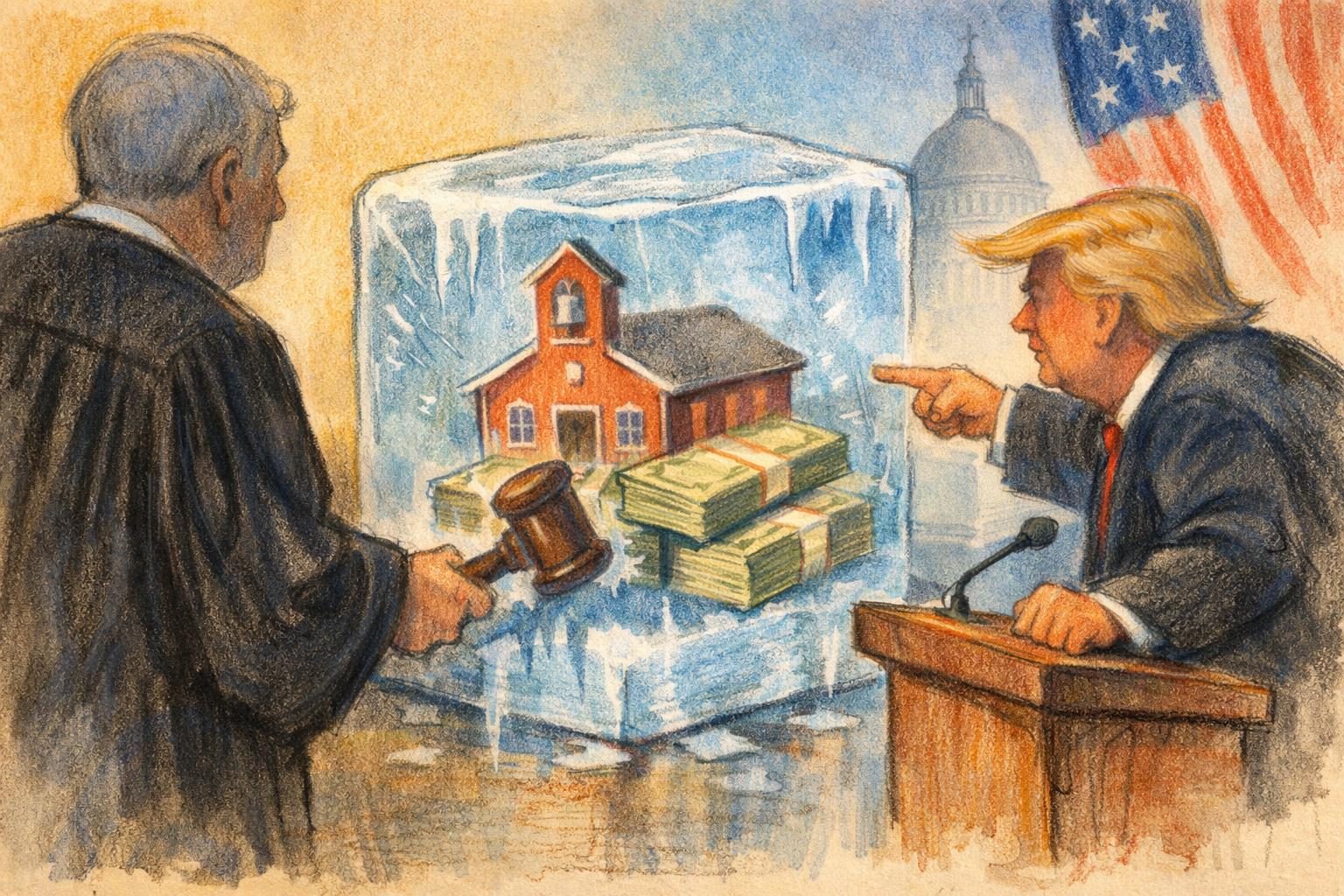
A federal judge has temporarily blocked the Trump administration from terminating a set of school mental-health grants, handing educators and service providers a brief but meaningful reprieve in a fight over money that many districts say is already spoken for. The order, issued on August 7, takes effect while the broader case continues and prevents the administration from carrying out a move that states say would have yanked support from counseling and student-wellness programs with little warning. That matters because these grants are not abstract line items sitting untouched in a federal ledger; they are often tied to staffing, contracts, and services already underway in schools. When the government tries to pull them back abruptly, the disruption lands first on students and staff, not on the lawyers and officials arguing over the paperwork. For districts that built plans around this funding, the ruling at least pauses the immediate threat of a sudden gap.
The case is about more than one grant program, even if the immediate stakes are concrete and local. School mental-health funding has been under pressure for some time, and administrators have warned for years that shrinking support in this area can quickly cascade into fewer counselors, longer wait times for help, and more burden on teachers and principals who are already stretched thin. In practice, grants like these often support crisis response, outreach, and services for students who might otherwise have nowhere to turn during a bad day that turns into something worse. If the money disappears, districts do not get a clean reset; they get the task of deciding what to cut, whom to let go, and which needs to leave unmet. The temporary restraining order does not settle any of that, but it does reflect a judge’s view that the plaintiffs showed enough risk of immediate harm to justify freezing the administration’s move for now. In a fight over school support, that is not a final victory, but it is far from nothing.
State officials backing the challenge have argued that the termination was unlawful and politically driven, framing it as another example of Washington trying to use budget power as a weapon against programs it dislikes. Their position is that the administration cannot simply flip the switch on funding that schools and providers have already relied on, especially when the consequences would be felt in classrooms and counseling offices almost immediately. The administration, for its part, now has to defend both the policy choice and the decision to unwind support midstream, a tougher task than making a broad ideological argument about grant priorities. Courts tend to care a great deal about procedure, reliance, and the possibility of immediate harm, and the plaintiffs appear to have persuaded the judge that those concerns were serious enough to require a pause. That does not mean the government has lost the case, but it does mean the effort to kill the grants cannot proceed on the administration’s preferred timetable.
For school districts and nonprofit providers, the practical effect is straightforward: they can keep operating under the current rules while the case works its way forward. That kind of stability is limited and temporary, but in a funding dispute it is still better than the alternative, which would have been a cliff edge disguised as administrative housekeeping. Districts can continue planning staffing and services without making emergency assumptions that the money will vanish before the year is out. Providers can keep their programs intact while they wait to see whether the court ultimately allows the termination or blocks it for good. The ruling also sends a broader signal that attempts to upend education-related grants in a single sweep may run into legal resistance when states can show immediate harm. In that sense, the order is both narrow and revealing: narrow because it is only temporary, revealing because it suggests the court saw enough danger in the administration’s move to stop it before the damage got worse.
Comments
Threaded replies, voting, and reports are live. New users still go through screening on their first approved comments.
Log in to comment
No comments yet. Be the first reasonably on-topic person here.