
The White House keeps stacking executive actions while the legal fights catch up
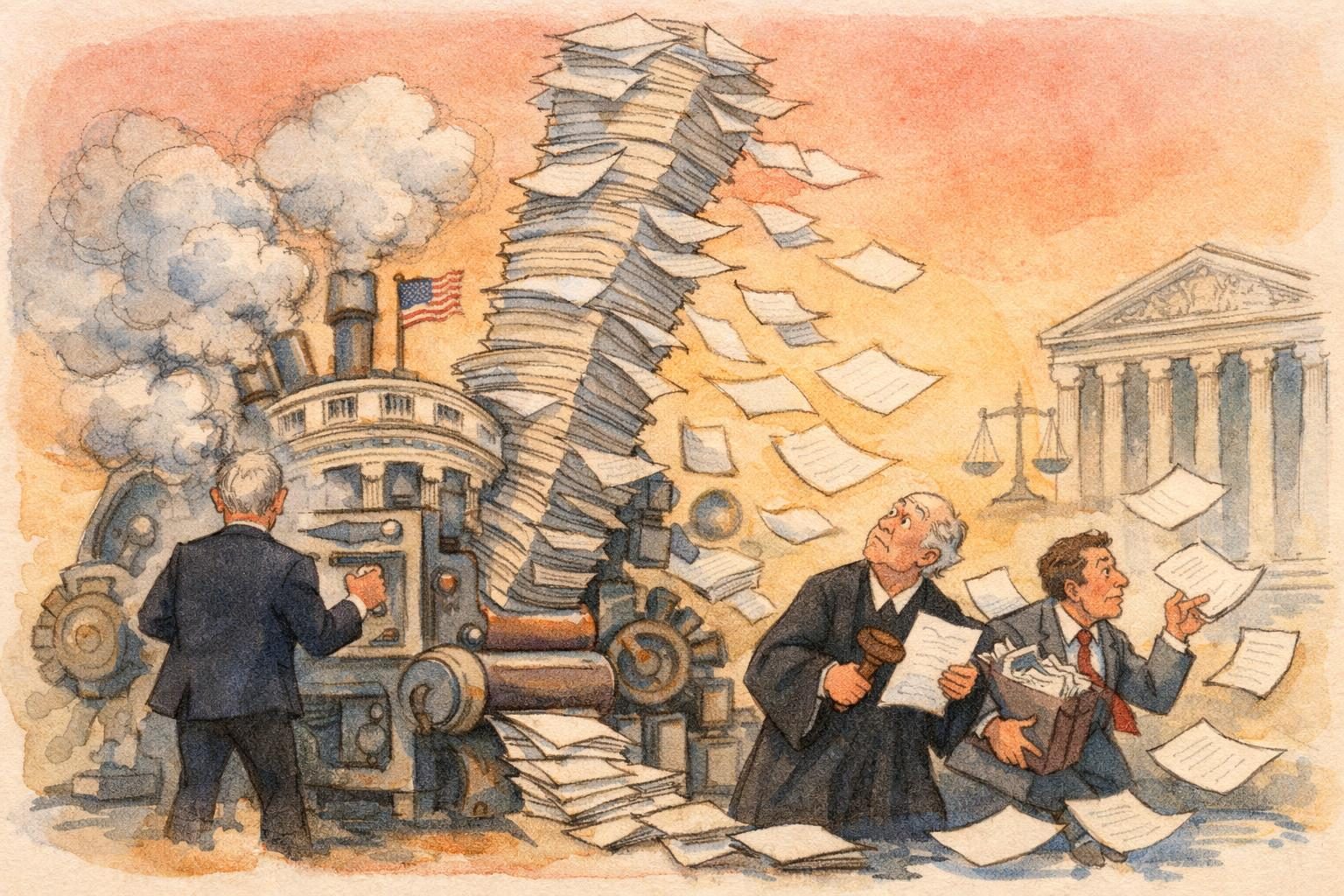
The White House’s executive-actions page keeps filling up with the kind of presidential orders and proclamations that make governing look less like legislation and more like a constant series of unilateral moves. The most recent items visible there are clustered in July, with effective dates that spill into August, which is a small but telling sign of how the administration is trying to keep policy moving at a pace Congress cannot match. None of that means a single order automatically changes the country overnight, but it does mean the machinery of government is being asked to react to directives that are already live, already public, and already shaping expectations. In practice, that creates a rolling emergency for agencies, state officials, contractors, and regulated industries that have to read, interpret, and prepare for consequences before the courts or lawmakers have fully weighed in. The political message is equally clear: when the White House wants something done now, it is reaching for the powers it can use now.
That matters because the recent stream of actions has not been limited to one narrow policy lane. The administration has used this path to touch supply chains, customs enforcement, research, farming, and other areas where presidential action can ripple through the economy quickly and often unpredictably. A directive in one sector can require new compliance rules in another, and those changes do not wait patiently for normal policymaking to catch up. Supporters of this approach will argue that it is what decisive leadership looks like in a slow and gridlocked system, especially when the executive branch believes a problem is urgent. Critics will see something else: a workaround for congressional paralysis, or perhaps congressional irrelevance, depending on how cynical they are feeling. The truth may sit awkwardly between those two views. A president can be both acting within authority and exploiting every available inch of it, and the result is still a government that moves by command rather than consensus.
The latest visible order touching defense supply chains illustrates the point without resolving it. On paper, a move aimed at securing America’s defense supply chains and ensuring domestic acquisition of critical materials can sound straightforward, even obvious, because few people object to having secure access to the things the military and broader national-security apparatus depend on. In reality, orders like that tend to open a dense thicket of implementation questions. Which materials count as critical. Which purchases must be domestic. Which existing contracts are affected. Which agencies get to define the rules, and how quickly. Those questions are where the actual battle begins, because every answer can create winners, losers, delays, exemptions, and lawsuits. A White House can announce a policy in a few crisp paragraphs, but the downstream effects can run for months as agencies try to translate presidential language into procurement rules, enforcement priorities, and paperwork that someone in the private sector has to survive. That gap between announcement and implementation is where the modern decree machine does its real work, and where the legal system usually starts to push back.
That is why the bigger story here is not just the substance of any single order, but the continuing dependence on presidential action as a primary governing tool. When the White House leans heavily on executive orders and proclamations, it can move faster than Congress, but it also invites immediate friction from every other part of the system. Agencies have to write guidance. States have to decide whether to align, resist, or litigate. Businesses have to decide whether to invest, delay, or hedge. Courts may eventually narrow, uphold, or suspend the practical effect of an order, but that process rarely moves as fast as the political logic behind the action. So the country gets a familiar sequence: a sweeping announcement, a wave of compliance and panic, a round of legal challenges, and then a long slog through administrative and judicial follow-up. In that sense, governing by decree is not just a style choice. It is a strategy for making policy in an environment where the normal channels are clogged, and where the consequences of speed are often borne by everyone else.
For now, the White House page itself is the clearest evidence that the administration is still running that playbook. The pattern is visible, public, and continuous: orders and proclamations arrive in clusters, agencies are expected to absorb them, and the effects begin before the political system has time to stabilize. That does not settle whether each move is legally sound or politically wise. It does, however, explain why so much of the fight now happens in the spaces between the announcement and the ruling, the directive and the waiver, the intention and the rulemaking. The administration may view that as efficient governance. Opponents may view it as an overreach dressed up as urgency. Either way, the result is a federal government that keeps operating through executive force first and argument later, with the courts, agencies, and states left to catch up as best they can. And if that sounds like a recipe for constant uncertainty, that is because it is.
Comments
Threaded replies, voting, and reports are live. New users still go through screening on their first approved comments.
Log in to comment
No comments yet. Be the first reasonably on-topic person here.