
A new attack on citizen suits could gut a core environmental enforcement tool
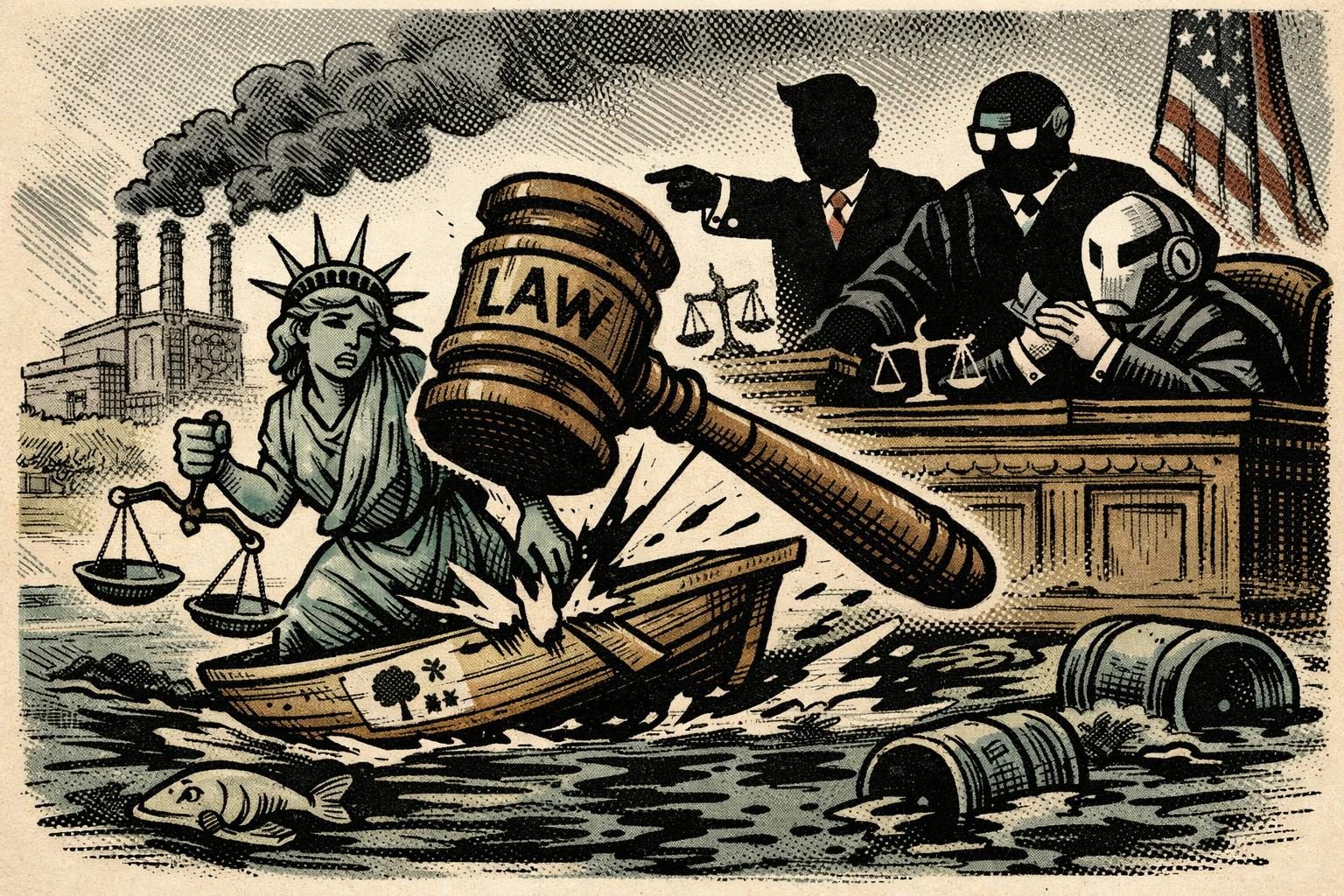
A new set of legal challenges is taking aim at one of the most durable, if often overlooked, tools in environmental law: the citizen suit. For decades, Congress has allowed private parties — including neighborhood groups, environmental organizations, and in some cases local governments and individuals — to sue alleged polluters or force action when regulators do not move. That arrangement has never pleased everyone, especially industries that prefer to fight enforcement in slower, more politically favorable channels. Now conservative legal activists, with the Trump administration backing a broad legal theory about enforcement power, are trying to narrow or even cripple that pathway. Environmental lawyers say the practical effect would be a lot simpler than the constitutional framing suggests: fewer cases, fewer consequences, and less pressure on polluters to comply.
The fights now unfolding are not isolated curiosities. One dispute in Tennessee involves a town-backed challenge to a lawsuit brought under the Clean Water Act, with a right-leaning legal organization supporting the effort. Another case features Elon Musk’s xAI in a challenge to a pollution suit brought by civil-rights and environmental advocates. In both matters, the broader argument is that Congress may have gone too far by letting private actors step into a role that should belong more firmly to executive branch agencies. That is a significant claim because the citizen-suit model exists precisely because federal environmental enforcement has long been uneven, limited by resources, and vulnerable to political pressure. If courts begin accepting the notion that these suits are constitutionally suspect or improperly intrusive, the loss would not be abstract. It would land in places where communities already struggle to get regulators to act at all.
That is why advocates see the current campaign as more than a routine court fight. They argue it is taking place in an era already shaped by permissive treatment of polluters, where the gaps in enforcement are wide enough without a legal effort to widen them further. The practical value of citizen suits has always been that they can create pressure when agencies delay, decline to investigate, or choose not to bring a case. They can also serve as a backstop when regulated companies have enough money, lawyers, and time to wait out a government response. Environmental lawyers say weakening that backstop would reward delay and make it easier for companies to keep operating while disputes drag on. In that sense, even a narrow ruling could have broad consequences, because the threat of litigation is often what keeps a company from treating compliance as optional.
The administration’s support for the underlying theory makes the stakes larger still. Its position reflects a familiar conservative argument: that enforcement should sit more squarely with the executive branch, and that private lawsuits can upset the balance Congress struck. But critics say that view ignores the practical reality of environmental law, where federal agencies do not always have the will or the capacity to police every violation. They also argue that the theory is especially troubling when paired with cases involving companies accused of pollution, because it creates the impression that the legal system is being asked to shield regulated actors from scrutiny rather than to strengthen accountability. The xAI case, in particular, has drawn attention because it places a high-profile company in the middle of a fight over whether ordinary citizens and advocacy groups should be able to press claims at all. To opponents of the effort, that is not a minor procedural question. It is a test of whether the law still gives communities a meaningful way to respond when regulators fall short.
For now, the most important thing to watch is not any one filing but the direction of the campaign as a whole. These cases could end up reshaping the legal landscape around environmental enforcement for years, especially if courts accept the idea that private suits are constitutionally suspect or that the executive branch must control the field more completely. Even if the challengers do not win outright, the mere existence of these arguments may encourage more delay, more litigation over standing and authority, and more hesitation from would-be plaintiffs. That would matter in communities already living with pollution, where time is often the difference between a fix and a permanent harm. If the challengers succeed, they may not formally eliminate citizen suits, but they could make them harder to bring and easier to dismiss. If they fail, the effort still reveals how aggressively this legal movement is trying to recast enforcement in favor of regulated industries and against the people most likely to be affected by the damage.
Comments
Threaded replies, voting, and reports are live. New users still go through screening on their first approved comments.
Log in to comment
No comments yet. Be the first reasonably on-topic person here.