
Judges keep Haiti deportation machinery on a shorter leash
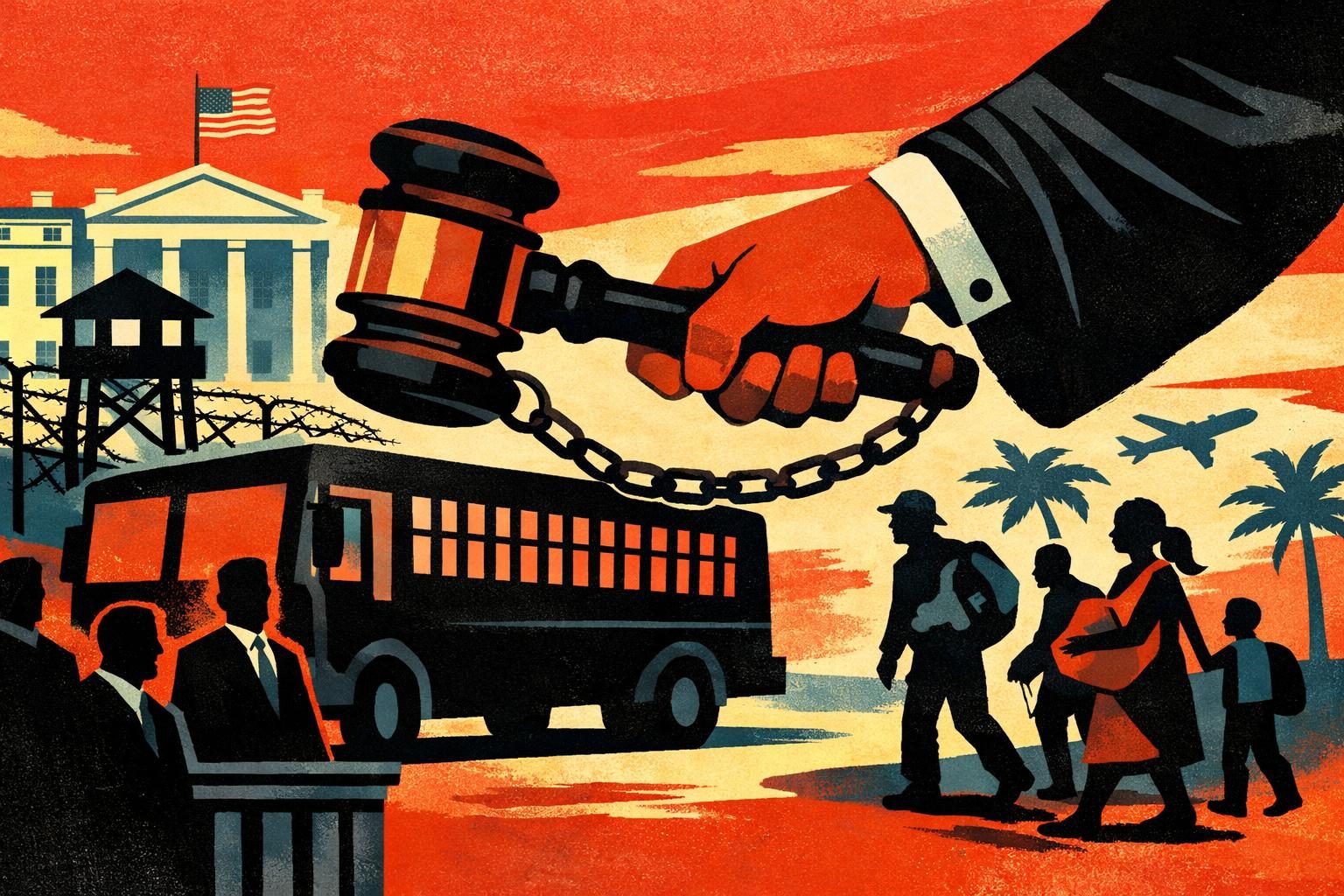
A federal judge’s August 8 ruling put a fresh set of legal restraints on the administration’s effort to strip or narrow Temporary Protected Status for Haitians, adding another obstacle to a deportation push that has been repeatedly slowed by the courts. The decision does not end the fight, but it does underscore how aggressively the White House is trying to shrink humanitarian protections that were created precisely to keep people from being forced into danger before conditions improve. For Haitian TPS holders, the immediate effect is more uncertainty layered on top of already unstable ground. For the administration, it is another reminder that immigration policy is one thing to announce and another thing to execute when judges are watching. The case has become less a narrow administrative dispute than a test of how far the government can go in retracting legal shelter from people who have built lives here under a protection the executive branch itself established.
The practical stakes are plain enough. TPS has long functioned as a temporary bridge for people from countries hit by disaster, instability, or other extraordinary conditions, allowing them to live and work in the United States without the constant threat of removal. Haitian nationals with that status have used it to keep jobs, support children, and anchor families while the legal and political status of their home country remains deeply unsettled. A move to narrow that protection, especially in a sweeping way, can quickly turn into an effort to uproot people who have done exactly what the program was intended to permit: stay put while the broader crisis remains unresolved. That is why the current litigation matters beyond the courtroom. It is about whether the government can abruptly convert humanitarian discretion into an enforcement tool, even when people have relied on the promise that they would not be forced out overnight. When judges impose a pause or limits, they are not crafting immigration policy from the bench. They are forcing the executive branch to show its work and to live within the boundaries of the law.
The administration’s broader immigration posture has repeatedly run into that same problem. Officials can make sweeping promises about restoring control, tightening protections, or accelerating removals, but the actual machinery of government still has to pass through statutes, regulations, and procedural obligations that do not disappear because the politics are urgent. That has produced a pattern of legal strain: a big announcement, a fast challenge, and then a court order that slows the government down long enough for the underlying questions to be tested. The result is often not clarity but limbo. Families do not know whether they can plan for the next school year, employers do not know whether workers will remain authorized, and local advocates are left bracing for the next emergency filing. The government can call this enforcement, but in practice it often looks like a bid to move faster than the law allows, or at least faster than the law can be defended in court.
There is also a political dimension that the ruling makes hard to ignore. The administration appears to be treating humanitarian protections as an easy target because they can be attacked rhetorically as temporary, discretionary, or soft. But when those attacks reach a courtroom, the record tends to matter more than the messaging. If the government cannot justify a broad effort to narrow TPS without running into judicial resistance, that suggests its preferred path may be more vulnerable than officials want to admit. Supporters of the administration may argue that the federal government is simply applying the rules as written and reasserting control over immigration policy. Critics will say the opposite: that the White House is using the machinery of removal as a political signal and relying on the courts to clean up the legal mess later. Either way, the ruling leaves Haitian TPS holders in another round of fragile protection, with the threat of future action still hanging over them. The larger message is unsettlingly familiar. The administration keeps trying to narrow the humanitarian floor, and the courts keep forcing it to come back and justify each step, one filing at a time.
Comments
Threaded replies, voting, and reports are live. New users still go through screening on their first approved comments.
Log in to comment
No comments yet. Be the first reasonably on-topic person here.