
Washington’s federalization push is turning into a stress test for local control
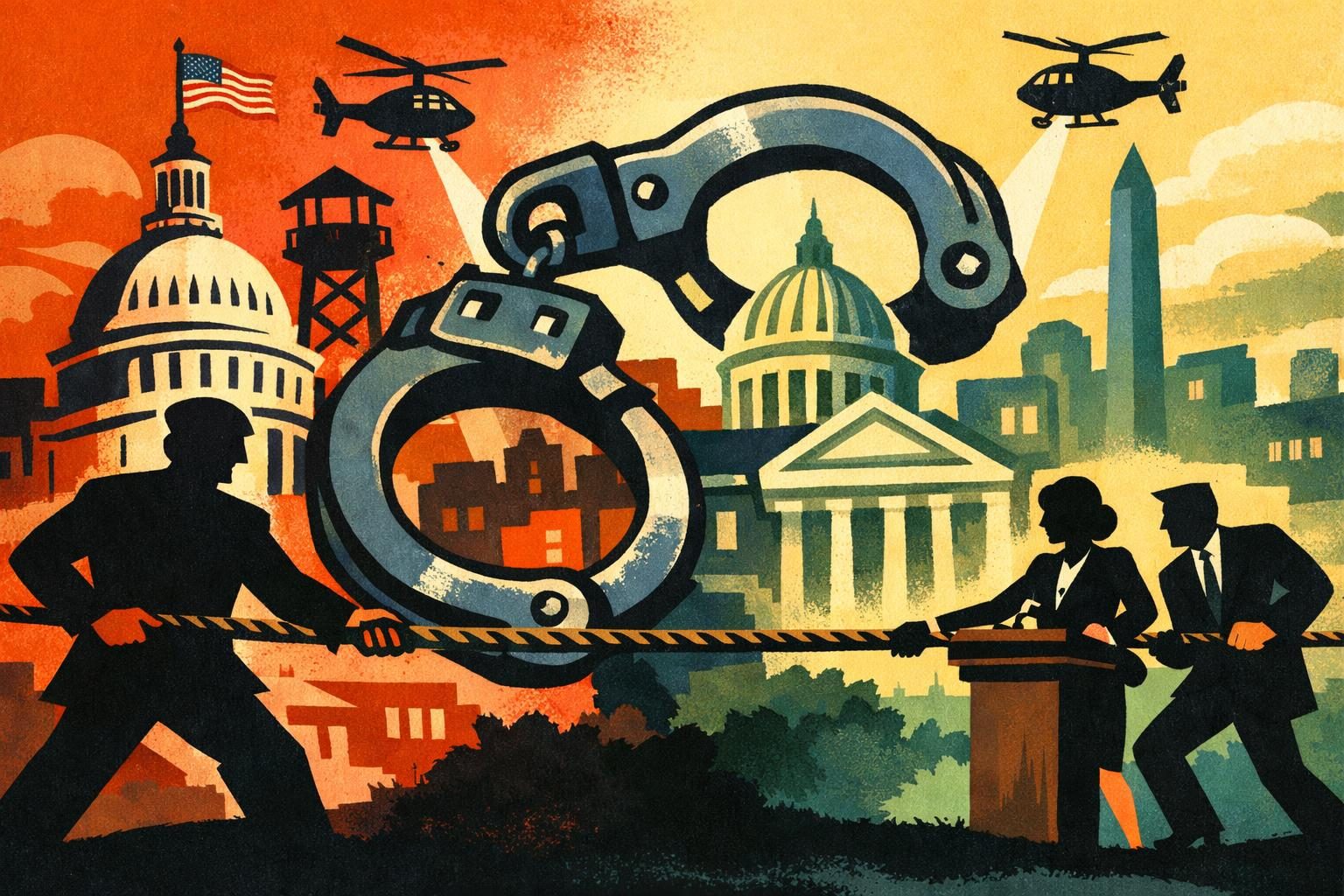
Washington’s latest fight over who controls the city is quickly becoming more than a local dispute. Over the past several days, the federal government has continued asserting a stronger role over public safety and day-to-day operations in the nation’s capital, setting off a familiar but newly intense argument about home rule, police authority, and the limits of local power under federal oversight. The immediate question is practical, not theoretical: who gets to make decisions when the city and the federal government want different outcomes? For local leaders, the answer is increasingly that the balance is being pushed beyond what residents were promised. For federal officials, the argument is that the city’s problems are serious enough to warrant a tougher hand. That tension has made the latest move feel less like an isolated intervention than a broader stress test for Washington’s ability to govern itself.
The political stakes are unusually high because Washington is not just another city. Any expansion of federal control over the District inevitably lands in a larger debate about democracy, representation, and unequal power, especially because the city’s residents do not have the same voting protections states use to resist interference. Critics of the federal posture are already describing it as paternalistic, saying it treats the city less like a self-governing community and more like a place to be managed from above. Supporters counter that public safety concerns justify stronger action and that the government cannot ignore disorder simply because the optics are awkward. That clash is central to the moment: the more the federal government frames intervention as necessary, the more local officials can argue that necessity is being used as a catch-all justification for control. It is a politically useful argument for both sides, which is exactly why it is so combustible. The federal government can claim it is responding to a problem; city leaders can claim the response itself proves the problem is being exploited.
There is also a deeper institutional issue underneath the immediate back-and-forth. Washington’s arrangement has always been awkward, but it becomes much more visible when federal authorities start tightening their grip on policing and related city functions. In practice, that means residents and local officials may face overlapping chains of authority, unclear lines of responsibility, and mixed signals about which office is actually making the call. When that happens, the debate stops being an abstract constitutional seminar and becomes a daily administrative headache. City officials say the expansion of federal involvement is happening faster than the political consensus behind it, creating a gap between what is being imposed and what has been broadly agreed upon. That gap matters because legitimacy is not just about whether the government can act; it is about whether the public believes the government should act, and on what terms. Once those answers start to diverge, every new directive, appointment, or enforcement shift becomes another opportunity for mistrust. The result is a city caught between competing claims of authority, with neither side able to pretend this is a normal relationship.
The broader danger is that each round of federal intervention hardens the very conflict it claims to solve. Local leaders have more material now to argue that Washington is proving their warning right, especially if the federal posture keeps expanding into areas beyond any narrow emergency rationale. At the same time, federal officials can point to persistent problems and insist that extraordinary measures are not only justified but overdue. That creates a self-reinforcing loop: the more aggressive the intervention, the more it looks like overreach; the more it looks like overreach, the more defenders say forceful action is necessary. For residents, the upside is not obvious. They are left trying to track which authority is in charge of what, and whether the city they live in is being treated as a capital with limited autonomy or as a testing ground for federal management. If this continues, the central dispute may shift from one policing decision to the much larger question of whether home rule in Washington has meaningful substance at all. That is the real stress test now, and it is one the city may not be allowed to fail quietly.
Comments
Threaded replies, voting, and reports are live. New users still go through screening on their first approved comments.
Log in to comment
No comments yet. Be the first reasonably on-topic person here.