
Justice Department keeps hauling states into court over immigration enforcement fights
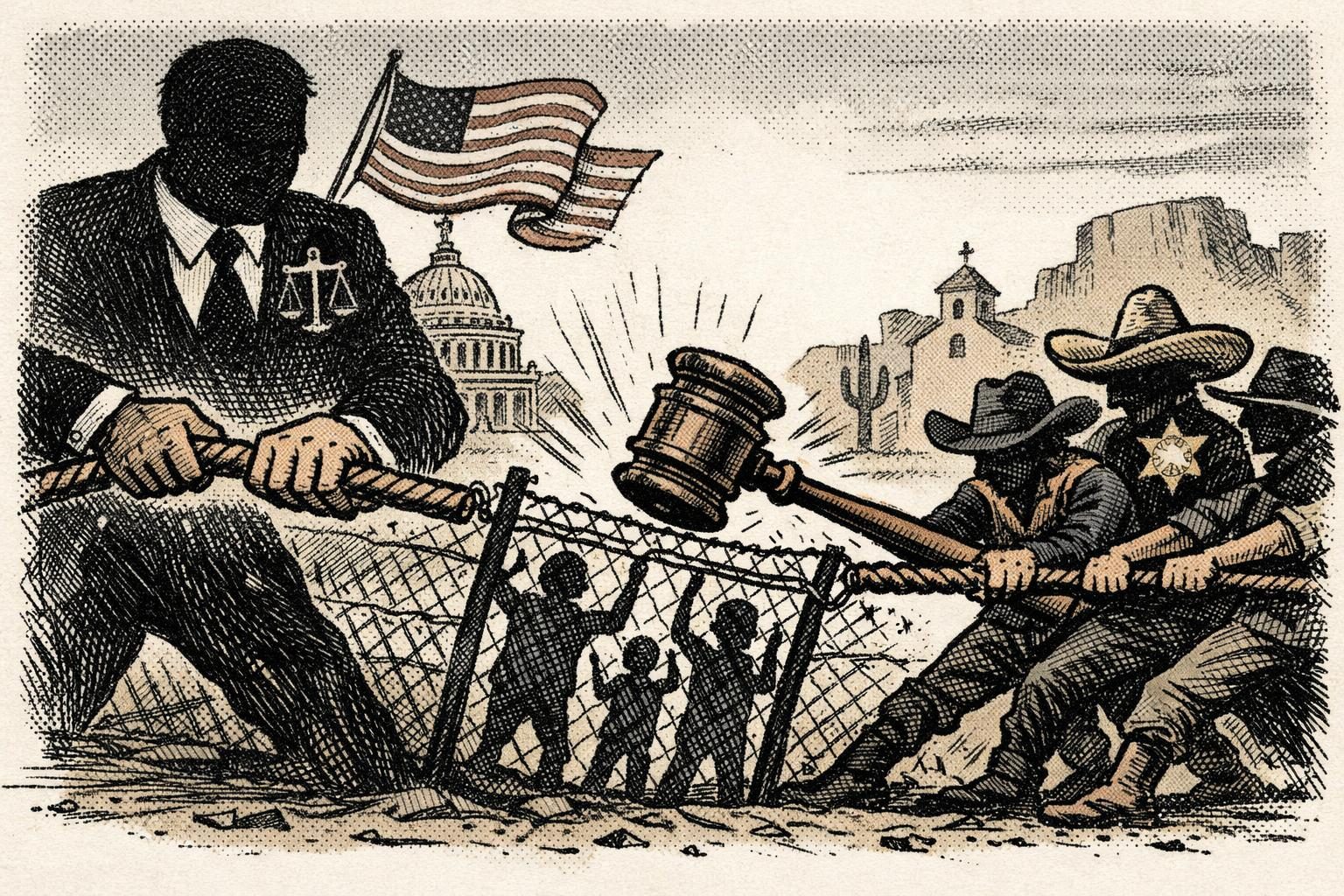
The Justice Department kept its immigration-enforcement pressure campaign moving on August 8, filing and advancing litigation that frames resistance from New Mexico and Albuquerque not as ordinary policy disagreement, but as a direct challenge to federal authority. The latest move fits a pattern that has been building for months: Washington is increasingly treating sanctuary-style limits on cooperation with immigration officials as grounds for courtroom confrontation. In practical terms, that means state and local governments are being pulled into federal court to answer for policies they say are meant to protect public safety, preserve trust in local policing, and avoid turning neighborhood institutions into extensions of immigration enforcement. The department’s posture signals that it is willing to use litigation as an instrument of administrative pressure, not just as a way to resolve a legal dispute after the fact. That matters because once the argument is filed in court, the fight is no longer only about politics or rhetoric. It becomes a test of how much room local governments really have to set the terms of their cooperation with federal immigration authorities.
At the center of the dispute is a familiar but increasingly combustible question: where does federal supremacy end and local discretion begin? New Mexico and Albuquerque, like other jurisdictions that have adopted limits on immigration cooperation, have argued in one form or another that their policies are designed to keep residents willing to report crimes, cooperate with police, and engage with public institutions without fear that local government will function as a holding pen for federal immigration enforcement. The Justice Department is challenging that premise by suggesting that some of those limits obstruct federal authority rather than merely reflect policy choices. That is a consequential shift in framing, because it turns a long-running political and legal argument into a confrontation over whether local officials are unlawfully interfering with federal law. If the government prevails, the effect could reach well beyond this case, giving federal officials more leverage when they object to local noncooperation. If it does not, the ruling could reaffirm that local governments retain meaningful space to decide how far they will go in helping immigration agents. Either way, the case places ordinary municipal and state decision-making under a harsher constitutional spotlight.
The broader significance is not limited to one city or one lawsuit. Each new case adds to a growing body of conflict that can force local officials to spend time, money, and political capital defending policies they say are lawful and necessary. Even a relatively small jurisdiction can be drawn into a costly legal battle that requires lawyers, staff time, and attention that would otherwise go to policing, housing, courts, or other basic functions. That is one reason critics describe this approach as coercive: the burden of responding to a federal lawsuit can itself become part of the pressure campaign. Supporters of the department’s strategy, by contrast, are likely to argue that the government is simply enforcing the law and preventing local policies from creating patchwork barriers to immigration enforcement. The current posture suggests the administration is comfortable letting judges determine how far those arguments can go. But the legal process can still work as a political weapon even before a final ruling arrives, because the mere threat of litigation can influence how states and cities write, defend, or retreat from contested policies. In that sense, the courthouse becomes a policy arena, and the case docket becomes a tool of federal reach.
What makes the moment especially charged is that the administration’s strategy does not appear to be an isolated action but part of a broader, ongoing effort to put local resistance in the crosshairs of federal enforcement. The public message is that immigration law cannot be selectively narrowed by state or city officials. The practical message, however, is that jurisdictions that limit cooperation may be forced to justify themselves under intense legal scrutiny. That has implications for police departments, jail systems, court operations, and budgets, all of which can be affected when federal and local roles collide. It also sharpens the political stakes for elected officials who must decide whether to stand by their policies, modify them to reduce legal exposure, or settle into a posture of partial cooperation. The result is a slow-motion showdown in which both sides are betting that the law, as interpreted by the courts, will validate their view of the balance between federal immigration enforcement and local governance. Until that happens, the conflict is likely to keep moving through the courts, with each filing adding another layer of pressure. For now, the Justice Department’s approach suggests that the administration is not content to argue immigration policy in speeches or press statements alone. It is using litigation to force the issue, and New Mexico and Albuquerque are the latest jurisdictions left to absorb the blow.
Comments
Threaded replies, voting, and reports are live. New users still go through screening on their first approved comments.
Log in to comment
No comments yet. Be the first reasonably on-topic person here.