
Justice Department sends election monitors into Arizona counties again
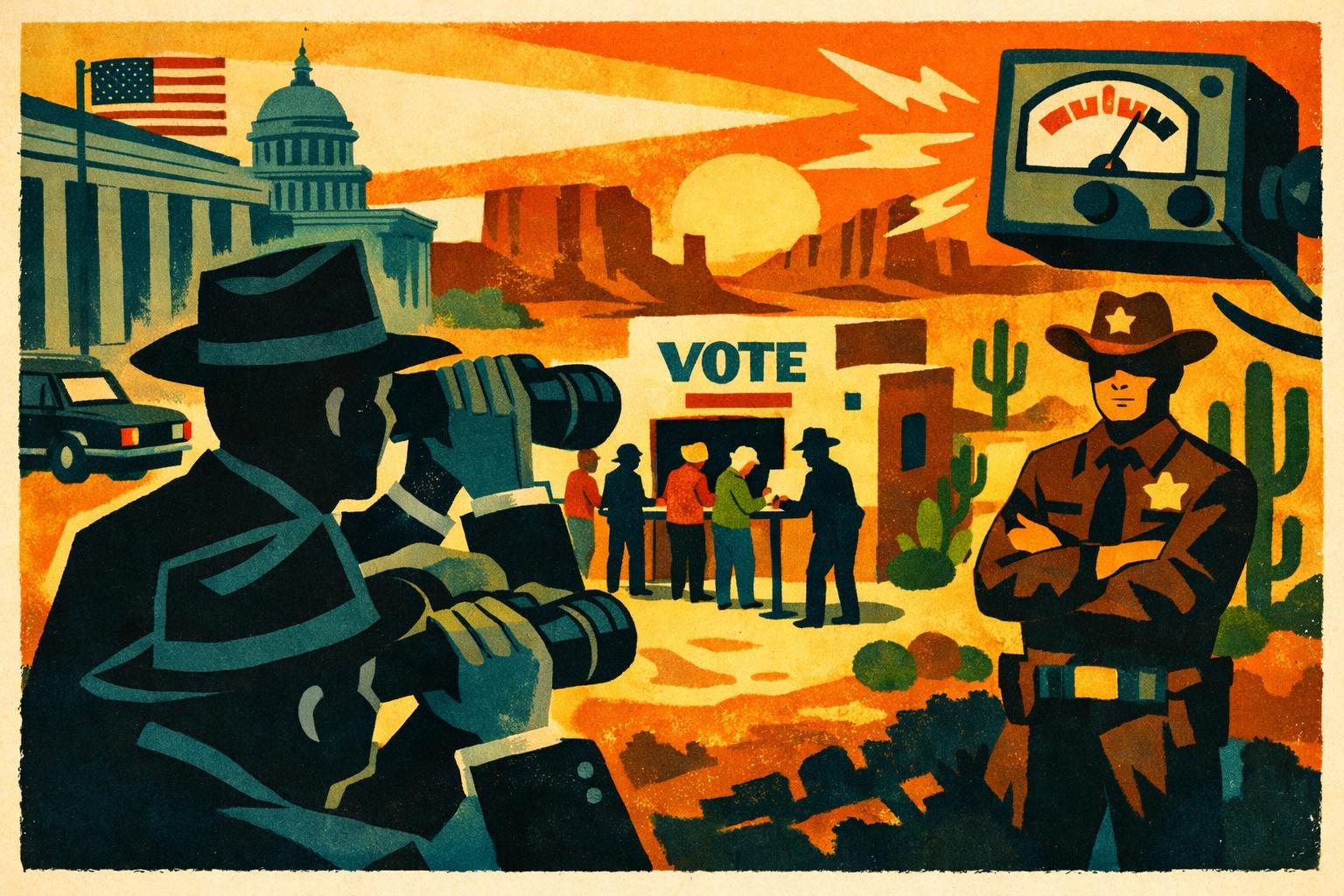
The Justice Department is sending election monitors into three Arizona counties, a move that puts federal officials back in the middle of one of the country’s most politically sensitive voting environments. According to the department, Civil Rights Division personnel will be available at polling sites to take complaints and questions about possible violations of voting rights law. That sounds procedural, and in a narrow sense it is, but it also carries obvious political weight. Federal monitoring is never just a background administrative step when election legitimacy has become a recurring national argument. It signals that the government sees enough risk, or enough potential for disputes, to justify a visible presence on the ground.
The announcement matters because election monitoring is designed to do two things at once, and those goals can sit uneasily together. On paper, monitors are there to help protect voters, deter misconduct, and create a channel for reporting problems in real time. In practice, the same presence can reassure some voters while making others suspicious that the election is being watched through a partisan lens. The Justice Department is not claiming that any specific county is currently failing to comply with voting law, at least not in the information released with the announcement. Instead, it is deploying staff into an environment where even ordinary administrative decisions can be treated as evidence of bad faith. That makes the monitoring both routine and highly charged, which is exactly why these decisions so often become talking points long before they become enforcement cases.
Arizona is a particularly combustible place for this kind of federal action because voting administration there has been under a microscope for years. County election offices in the state already operate under intense scrutiny from activists, candidates, lawyers, and voters who often disagree not only about outcomes but about the basic reliability of the process. Adding federal monitors to the mix can be read as a statement that the Justice Department expects heightened sensitivity, whether from disputes over access, intimidation, language assistance, polling-place procedure, or other issues that can trigger federal scrutiny. It also places pressure on local officials to be meticulous in their handling of complaints and documentation, since every step taken on election day may later be examined through a legal or political lens. None of that means a violation is likely or inevitable, but it does mean the room for error gets smaller once federal personnel are in place.
The release says Civil Rights Division personnel will be available to receive complaints and questions, which is important because the department is framing the deployment as a practical support function rather than a grand symbolic gesture. Still, symbolism is unavoidable here. Election monitoring has become part of the larger fight over who gets to define fairness in American elections, and federal involvement can be used by different sides to support opposite narratives. Supporters can point to it as evidence that the government is watching for interference and protecting voters. Critics can argue that it is another example of Washington inserting itself into local election administration and preloading suspicion into the process. Both reactions are predictable, and both are part of why monitoring deployments are so often more politically explosive than the official language suggests.
What is clear is that the Justice Department is choosing visibility over quiet oversight. By announcing the monitoring in advance, it is not hiding the fact that federal officials will be present, and that transparency may be the point. If the department sees credible enough concerns to justify monitoring, then making that step public can deter misconduct and give voters a place to raise issues without waiting for a formal complaint process later. But the same transparency can also intensify the atmosphere around polling places, especially in counties where distrust already runs high. The result is a familiar tension in modern election administration: the government wants to be seen as protecting the vote, while opponents of federal involvement may see that same visibility as evidence of political interference. That tension does not disappear simply because the department says it is only there to receive complaints.
The broader significance is that election policing in the United States has become inseparable from election politics itself. A monitoring deployment may be a standard Civil Rights Division tool, but in the current climate it is rarely received as standard. It becomes a test of institutional credibility, local trust, and the government’s ability to enforce voting law without looking like it is leaning on the scales. Arizona, with its history of contested elections and recurring national attention, is almost tailor-made for that kind of drama. The Justice Department’s action does not settle any larger debate about election integrity, and it does not by itself prove that problems are widespread or that local systems are broken. What it does show is that the federal government is still willing to put actual personnel between voters and the accusation machine, which is a small administrative fact with very large political consequences.
Comments
Threaded replies, voting, and reports are live. New users still go through screening on their first approved comments.
Log in to comment
No comments yet. Be the first reasonably on-topic person here.