
Hawaii held its primary under a packed 2026 election calendar
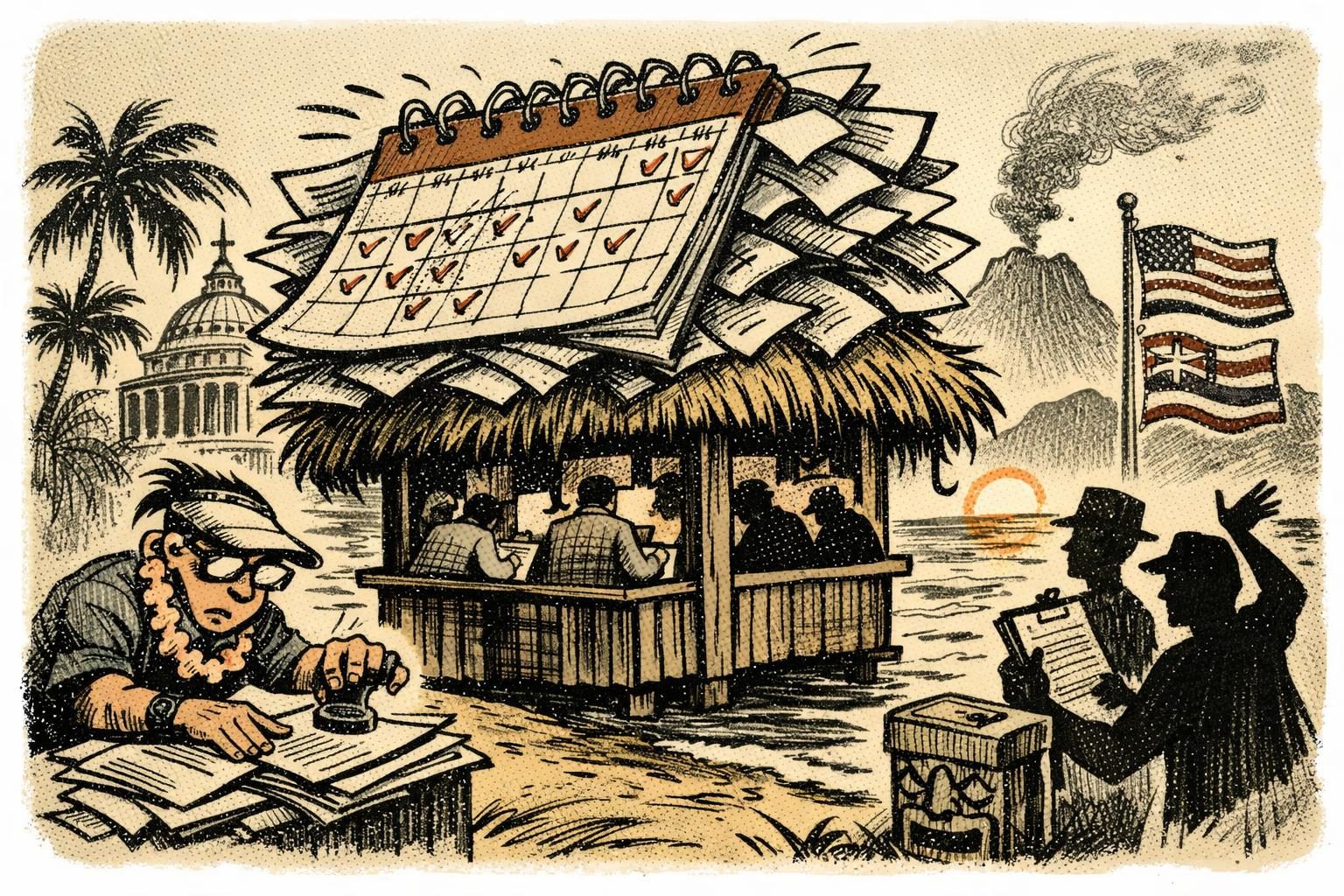
Hawaii’s statewide primary went forward on Saturday as part of a 2026 election calendar that is already dense enough to keep election officials, party leaders, and voters moving from one deadline to the next. The state’s elections office scheduled registration boards to remain in place through the close of voting so they could handle appeals involving voter eligibility and registration, a detail that may sound dry until you remember that these are the kinds of procedures that determine whether ballots are counted cleanly and disputes are resolved before they become bigger problems. In practical terms, the day was about administration: who could vote, how challenges were handled, and whether the machinery of the state could do its job without slowing the process to a crawl. That kind of work rarely produces dramatic footage, but it is the backbone of any election. A primary does not just select candidates; it tests whether the system itself can hold together under ordinary pressure.
The timing matters because Hawaii’s vote took place inside a broader election year that is still gathering force and still carrying the usual arguments over access, turnout, and trust. By the time a state reaches its primary, party coalitions are already forming, campaigns are already sorting out where they have support, and local organizations are trying to turn attention into actual ballots. That is especially true in a year like this one, when election administration has become a recurring point of political friction rather than a background function most people only notice on Election Day. Hawaii’s structure showed the ordinary work required to keep the process on schedule: deadlines, boards, appeals, and the documentation that ties each step together. None of that is glamorous, but it is the difference between a result that can be explained and one that leaves the public guessing. When state officials have to spell out how appeals will be handled through the close of voting, they are not creating bureaucracy for its own sake; they are trying to preserve a process that can withstand scrutiny.
That is why the primary is worth paying attention to even without any single controversy driving the story. In national politics, election law is often discussed as if it were only a matter of slogans, lawsuits, or partisan messaging. On the ground, though, the real work is much less theatrical. It is about whether registration lists are up to date, whether challenges are routed correctly, whether local officials know what authority they have, and whether voters can get a clear answer when something does not look right. Hawaii’s primary is a reminder that elections are not abstract events that simply happen on a date printed on a calendar. They are built out of administrative decisions made ahead of time and enforced in real time. If those decisions are careful, the process can feel almost invisible. If they are not, every small issue can become a bigger question about legitimacy. The fact that the state’s elections office had to keep appeal boards on duty through the end of voting underlines how much of election confidence depends on preparation rather than rhetoric.
The larger political significance is that state-level elections continue to do most of the actual sorting in American politics, even when the national conversation is dominated by headline-grabbing fights. Primary contests shape who makes it to November, which factions feel energized, and which campaigns can claim momentum. They also reveal whether the people responsible for the system are equipped to manage it without drama. Hawaii’s primary appears to have been one of those days where the important story was not a spectacular failure or a surprise upset, but the fact that the state executed a legally structured process on schedule while the 2026 cycle kept moving forward. That may not satisfy people looking for a crisis, but it is exactly the kind of routine success democratic systems need more of. For voters, the practical outcome is straightforward: the election happened, the administrative pieces were in place, and the state moved deeper into the year’s contest cycle. For everyone else watching the national conversation, Hawaii offered a useful reminder that elections are still made or broken in the unglamorous spaces where rules are applied, appeals are heard, and the ballot box has to work the way it is supposed to.
Comments
Threaded replies, voting, and reports are live. New users still go through screening on their first approved comments.
Log in to comment
No comments yet. Be the first reasonably on-topic person here.