
HHS’s Medicaid Payment Hold Starts Looking Less Like Oversight and More Like a Political Sledgehammer
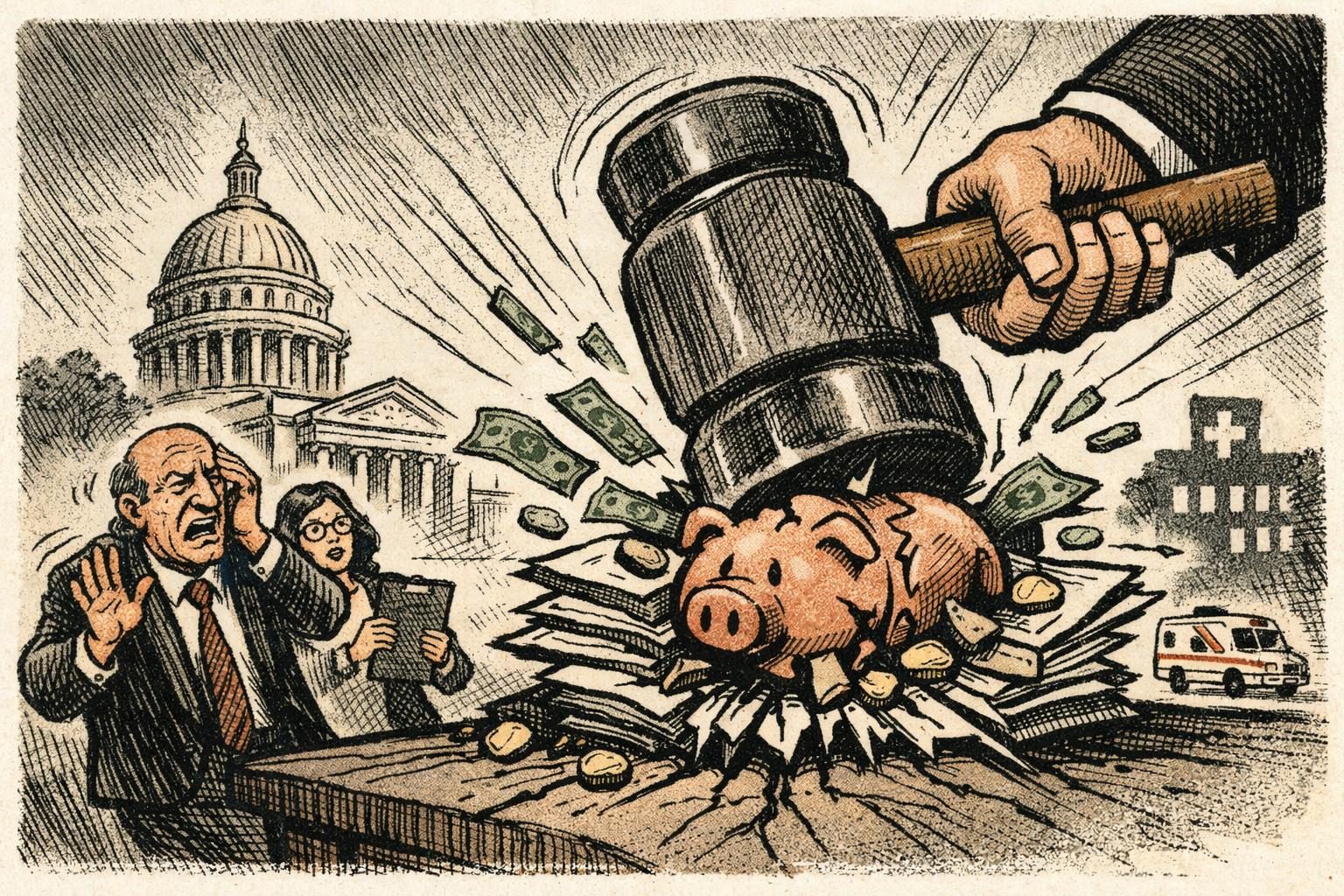
The Department of Health and Human Services has landed in the middle of a fight over Medicaid payments that is quickly looking less like a narrow accounting review and more like a hard-edged exercise of federal power. More than $1 billion in Medicaid payments to California and Minnesota has been deferred while the department says it is reviewing high-risk claims. On paper, that sounds like the kind of back-office scrutiny agencies do all the time. In practice, the size of the hold and the speed with which it is being felt by state officials, providers, and budget planners make it a lot harder to dismiss as routine oversight. When a federal agency slows money that states depend on to keep care moving, the consequences do not stay confined to a spreadsheet.
That is especially true in Medicaid, where financing is not an abstraction but the operating fuel for a sprawling system of clinics, hospitals, managed care arrangements, and state administrative machinery. States build their budgets around the expectation that reimbursements will arrive on schedule, and providers make staffing and service decisions based on the same assumption. A large payment deferment can create immediate strain, even if the government insists the action is temporary and tied to compliance checks. The result is uncertainty that can spread faster than any official explanation. Health systems do not have the luxury of waiting around to find out whether a hold is a short pause, a warning, or the first step in a broader squeeze.
The administration’s defense is familiar: fraud prevention, payment integrity, and a promise to look closely at claims that raise red flags. Those are not frivolous concerns, and Medicaid’s scale means bad billing can be real, expensive, and politically toxic. But the size of this move makes it difficult to treat the explanation as the whole story. When a government says it is targeting questionable claims while simultaneously freezing or deferring more than a billion dollars, the practical effect is not just tighter oversight. It is leverage. That distinction matters because oversight is supposed to correct problems without destabilizing care, while leverage is designed to force behavior by making the cost of noncompliance impossible to ignore. The federal government may believe it has a defensible basis for its review, but the political signal is unmistakable either way.
For state officials, the immediate concern is not the ideological fight so much as the operational damage. Medicaid is one of those programs where timing matters as much as total dollars, because even a temporary disruption can throw off cash flow, delay payments downstream, and force painful choices at the state level. Hospitals and clinics can end up waiting for money they need to keep staff paid and services open. Managed care systems can face contract pressure. Budget officers can find themselves scrambling to cover gaps that were not supposed to exist. That is why this move is landing as more than a technical dispute: it changes the field in real time. The department may frame the hold as an integrity measure, but to the states on the receiving end it looks a lot like a federal hand on the purse strings, and that is exactly the kind of pressure that turns a payment review into a political sledgehammer.
Comments
Threaded replies, voting, and reports are live. New users still go through screening on their first approved comments.
Log in to comment
No comments yet. Be the first reasonably on-topic person here.