
ICE arrest of a U.S. citizen at a protest deepens the agency’s abuse scandal
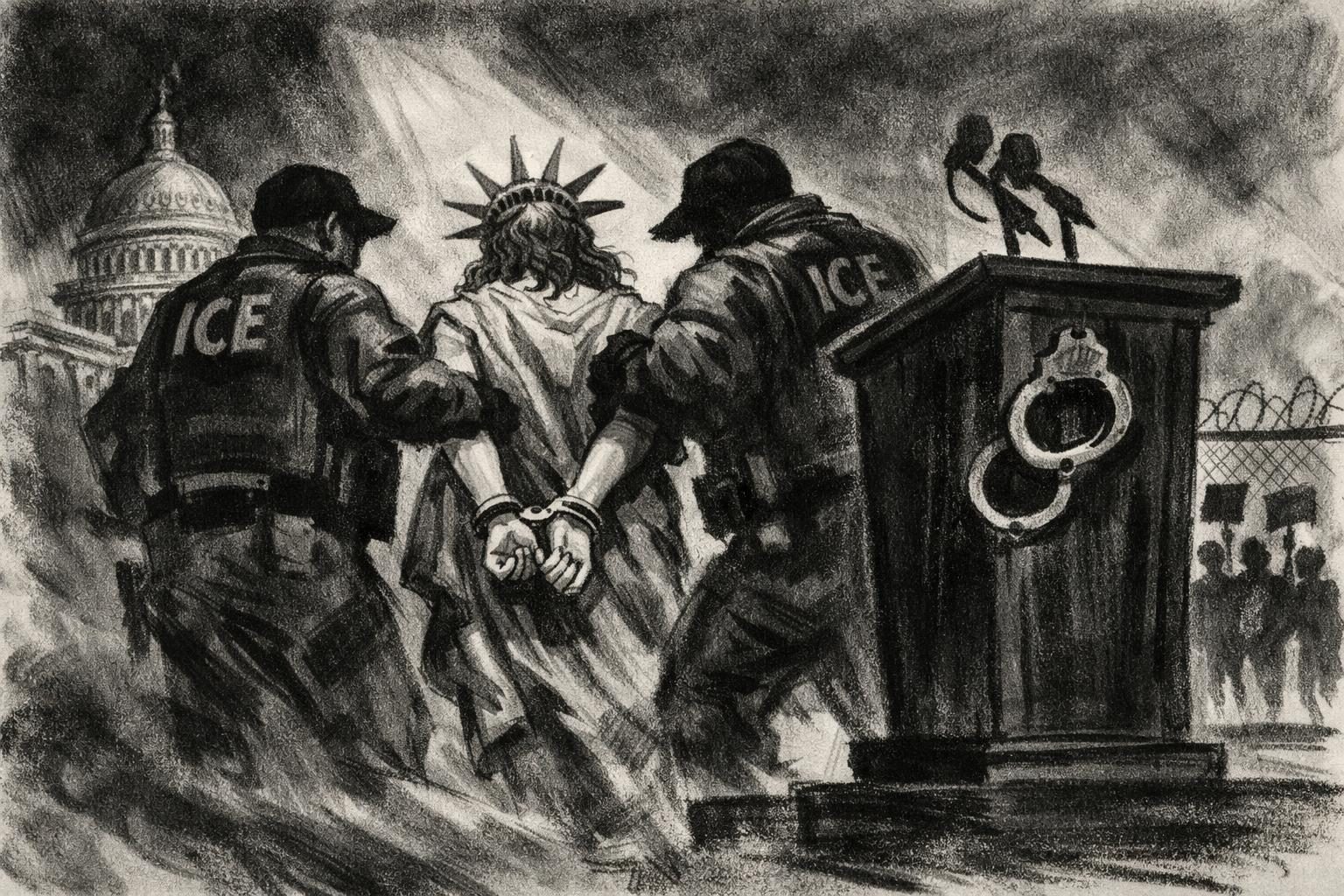
Federal immigration officers arrested Amanda Trebach, a U.S. citizen and registered nurse, on Aug. 8 while she was monitoring ICE activity at Terminal Island in Los Angeles with Unión del Barrio. On its face, the episode is a straightforward fact pattern: a citizen was present at a protest-adjacent enforcement scene, and federal agents took her into custody. But the broader meaning is harder to shrug off, because this is not happening in a vacuum. It lands in the middle of an already heated debate over how far immigration authorities are willing to go when public resistance shows up at the same place as enforcement. The arrest immediately raises questions about identification, judgment, and whether the agency is becoming increasingly comfortable treating observers as obstacles rather than members of the public with rights of their own.
That matters because ICE has spent months, and in some cases years, building a reputation for force-first conduct that seems to escalate the moment scrutiny appears. When officers operate around demonstrations, community watches, or legal observation efforts, the line between enforcement and intimidation starts to blur. A citizen monitoring federal activity is not the same thing as a suspect resisting arrest, and the distinction should matter a great deal. If it does not, then the agency is telling the public that being present near federal action can be enough to make you a target. That is the kind of message that chills civic participation, especially for legal advocates, trained observers, and local residents who feel obligated to document what federal agents are doing in their neighborhoods. Even if officials later say the arrest was a misunderstanding or based on some specific operational concern, the optics are already doing heavy damage.
Civil-rights critics have long argued that aggressive immigration enforcement increasingly spills into the protest space, where the government’s desire for control can collide with constitutional protections and basic democratic habits. The problem is not just that someone gets detained. It is that detentions in these settings can discourage other people from showing up, recording events, or asking hard questions. That chill effect is not some abstract academic worry. It is the practical result of an agency making itself look unpredictable enough that ordinary people start calculating whether witnessing government conduct is worth the risk. In that sense, Trebach’s arrest is less an isolated oddity than another example of an institution creating the very distrust it later complains about. If the government wants public confidence, arresting a citizen who was monitoring federal activity is a strikingly poor way to build it.
The larger backdrop makes the episode even harder for ICE to defend. Immigration enforcement has repeatedly collided with protest activity, civil liberties disputes, and concerns about overreach, and each new confrontation adds to the perception that the agency is operating with too little restraint and too much appetite for escalation. That perception is reinforced whenever peaceful observers, medical professionals, or community members end up in handcuffs while trying to document what federal officers are doing. Courts and oversight bodies may eventually sort out the details of Trebach’s arrest, including what officers believed they were doing and whether those beliefs were reasonable. But the political and civic damage is immediate. A U.S. citizen was arrested while watching federal activity at a protest site, and that is the sort of fact pattern that invites litigation, demands for accountability, and renewed skepticism about the agency’s judgment. If ICE intends to project order, it keeps choosing methods that look more like provocation than law enforcement.
Comments
Threaded replies, voting, and reports are live. New users still go through screening on their first approved comments.
Log in to comment
No comments yet. Be the first reasonably on-topic person here.