
A judge’s courthouse-arrest ruling exposed another immigration-enforcement overreach
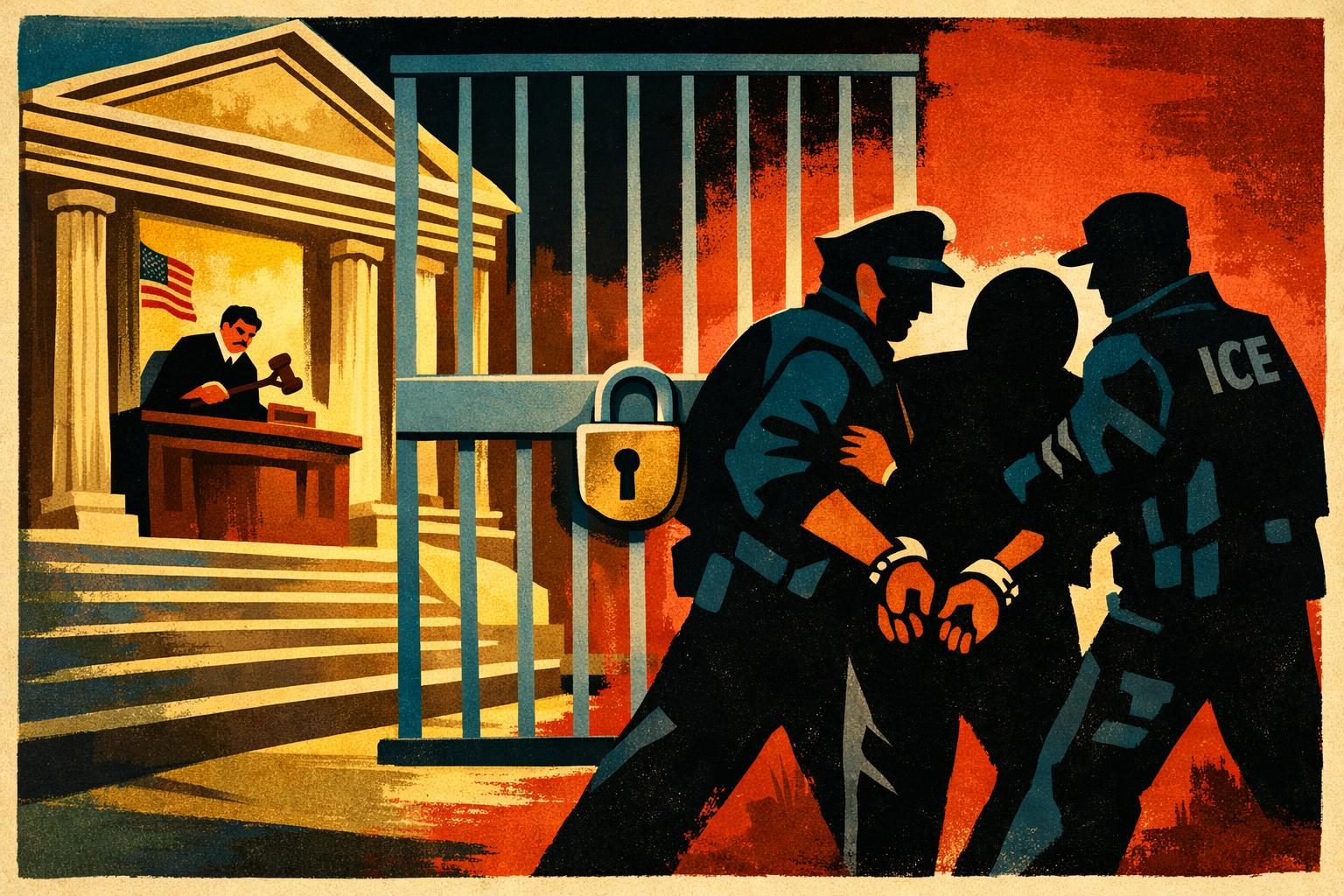
A federal judge’s decision to block immigration arrests at courthouses landed as another pointed rebuke to an enforcement strategy that has already drawn repeated legal scrutiny. The ruling did not arrive in a vacuum. It followed a growing set of judicial concerns that the government altered a long-standing practice without providing the kind of reasoned explanation administrative law requires. That may sound technical, but the issue is substantial: when the government changes how it polices access to courthouses, it is not just adjusting tactics, it is changing the stakes for people who need to appear in court without fear that a routine visit could turn into an arrest. The practical effect is straightforward enough that even the legal jargon does not obscure it. If people are afraid to walk into a courthouse, they may stay away, and that can weaken the very legal process the government says it is trying to protect.
That is why the decision is more than a procedural annoyance for the administration. Courthouse arrests sit at the intersection of immigration enforcement, due process, and the public’s willingness to use the courts at all. The judiciary has now signaled, in more than one context, that it is not willing to accept improvisation as a substitute for explanation. Agencies can change policy, but they have to justify those changes with evidence, a coherent rationale, and a lawful decision-making trail. Here, judges have found the government’s shift to be chilling and procedurally flimsy, which is a damaging combination for any policy that depends on public trust. The courts are not saying enforcement must stop altogether. They are saying the government cannot treat a sensitive institutional space like a staging ground for surprise arrests and then act as if the fallout is someone else’s problem.
The criticism of courthouse arrests is easy to understand because the setting itself carries a basic promise of neutrality. Courthouses are supposed to be places where people can show up for hearings, resolve cases, and comply with legal obligations without wondering whether the building has become a trap. If that expectation breaks down, the damage spreads beyond immigration enforcement. Witnesses may become less willing to appear. Defendants may skip hearings. Families may avoid proceedings that they otherwise would have attended. Judges, clerks, attorneys, and community organizations all end up operating in an atmosphere of greater fear, which can undermine reporting, attendance, and cooperation in ways that are difficult to reverse once trust is lost. The administration has framed its approach in the language of toughness and deterrence, but courts have repeatedly asked a harder question: does this actually make the system stronger, or does it just make the system scarier? So far, the answer from the bench has been skeptical.
Politically, the ruling adds to the sense that the administration keeps pushing immigration enforcement as if severity itself were a governing philosophy. That may play well in a message-war, but it becomes a liability when judges ask for a lawful explanation rather than a slogan. The pattern matters because it suggests the administration is willing to test the limits of public institutions first and justify the consequences later. That approach may produce headlines, but it also produces legal setbacks when agencies cannot show they considered the basic implications of their choices. Courthouse arrests are especially vulnerable to that criticism because they target a place where the public has to trust the system to function fairly. Once that trust is damaged, the government does not just lose a case; it risks making its own enforcement goals harder to achieve.
The ruling will not settle the broader fight over immigration arrests, detention, or removal, and it does not mean every courtroom-related enforcement practice is now off the table. But it does narrow the government’s room to operate in one of the most sensitive spaces in public life. That matters because the courthouse is not merely another location on a map. It is where people are supposed to encounter law as process, not law as ambush. The administration wanted an edge that looked decisive. What it got was another reminder that a harsh tactic still has to survive basic legal scrutiny. And when judges say the government changed a settled practice without enough thought, the message is not just about one policy. It is about a larger habit of treating immigration enforcement like performance and then discovering that courts still expect the performance to have a script."}]}
Comments
Threaded replies, voting, and reports are live. New users still go through screening on their first approved comments.
Log in to comment
No comments yet. Be the first reasonably on-topic person here.