
Judge forces the administration to answer for its immigration pause fiasco
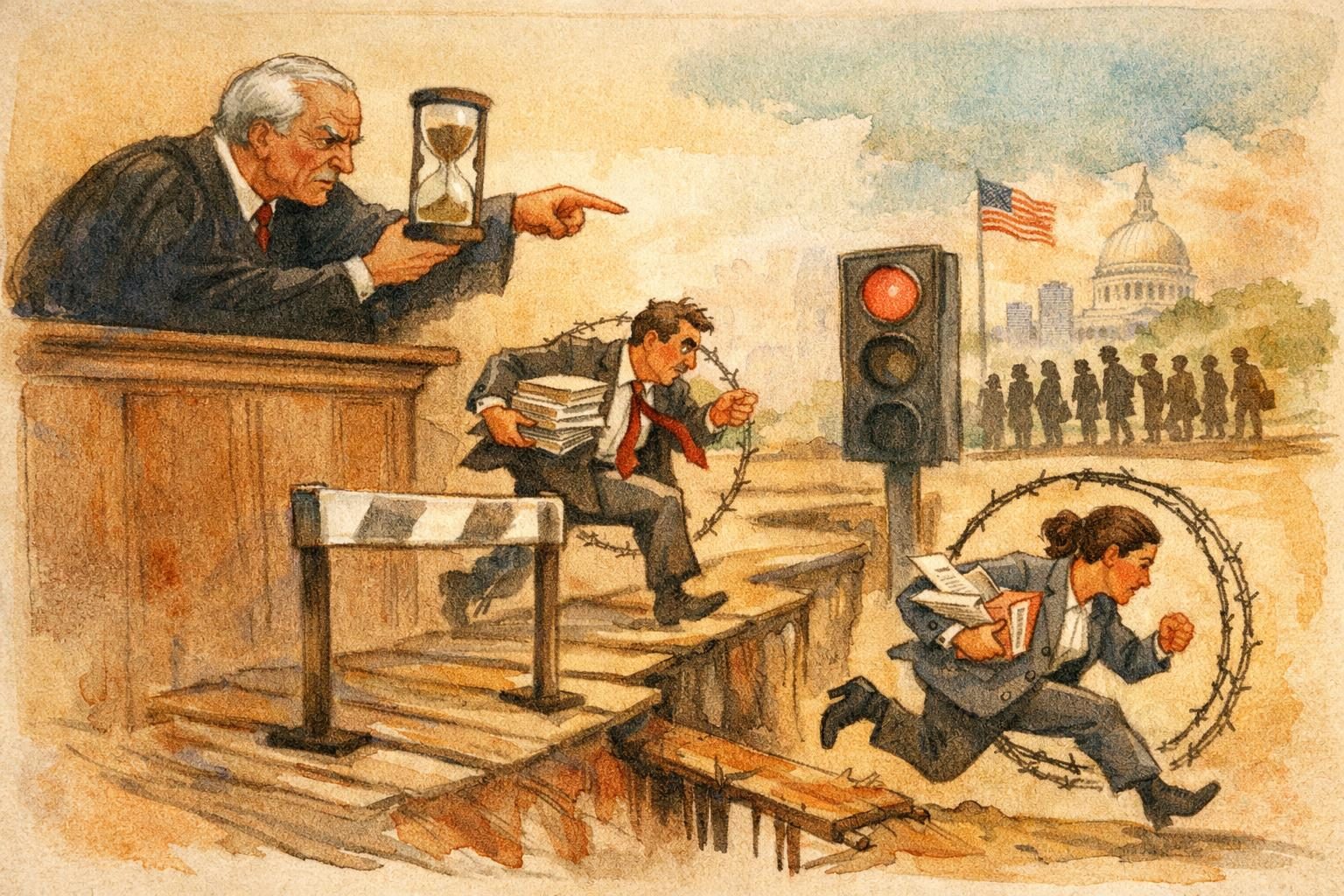
A federal judge has escalated pressure on the Trump administration over what the court sees as a needlessly sluggish response to an earlier ruling in an immigration case that has become a test of whether the executive branch plans to treat judicial orders as binding instructions or as suggestions that can be delayed until further notice. The dispute centers on the government’s pause in processing certain immigration applications, a move challenged by labor unions and immigrant-rights groups that said the administration had no lawful basis to halt the work in the first place. The court had already found the policy unlawful and arbitrary, and the latest rebuke suggests the judge is increasingly unconvinced by the administration’s explanation for why compliance has taken so long. In the meantime, people caught in the middle of the pause remain stuck in a system that has already been disrupted by the government’s own decision. What might have been a straightforward remedial order has instead become another demonstration of how quickly immigration policy can turn into litigation over delay, defiance and administrative improvisation.
The case matters because it is not just about one paused program or one category of applicants; it is about whether the government can suspend a process affecting real people, lose in court, and then proceed at the pace of a bureaucracy hoping to outlast the judge’s patience. According to the underlying dispute, the administration halted processing for certain applicants and defended the move as part of its broader immigration-management strategy, but the challengers argued that the pause was unlawful and inflicted direct harm on workers, families and organizations depending on the system to function. When the earlier ruling came down, it did not leave much room for interpretation: the policy was found to be arbitrary, and the government was expected to move promptly to comply. Yet the latest judicial criticism indicates the judge believes the response has been too slow and too carefully staged, as if officials were searching for a narrow procedural workaround rather than implementing the ruling in good faith. That tone matters, because judges do not usually need to be this pointed unless they think a party is treating compliance as optional or, at the very least, as negotiable.
For the administration, the episode adds to a familiar pattern in which immigration policy is announced aggressively, challenged immediately and then tied up in court while officials insist they are simply managing the practical realities of governing. But from the court’s perspective, the practical realities do not erase the obligation to comply, especially when a judge has already concluded that the underlying policy cannot stand. The government’s defenders may still argue that implementation requires coordination, notice and internal review, though those arguments tend to sound better when they are attached to a detailed timetable rather than to a vague assurance that things are moving. The judge’s latest language suggests there is little appetite for open-ended delay or for the kind of legal tap dancing that can make noncompliance look like process. That is especially awkward for an administration that has made toughness and control central to its immigration posture while now finding itself accused of being unable, or unwilling, to follow through on a court order in a timely way. In practical terms, the longer the pause persists, the more the government compounds the original disruption with a second problem: the perception that it is dragging its feet even after being told to stop.
The broader stakes reach beyond the immediate group of applicants affected by the pause. When courts have to repeatedly push the executive branch to carry out an order, the dispute stops being about the substance of one immigration program and starts becoming a larger argument over institutional credibility. For immigrants and employers waiting on processing decisions, every extra week of uncertainty can mean lost work, stalled plans and mounting legal bills. For labor unions and immigrant-rights groups, the case reinforces the idea that the administration is willing to impose sweeping restrictions first and sort out the legality later, a strategy that shifts the burden onto the people least able to absorb it. And for the court system, the danger is obvious: if rulings can be slowed down through selective interpretation or administrative inertia, then even a victory on paper can feel like a loss in practice. The judge’s sharper rebuke is therefore more than a procedural scolding. It is a reminder that compliance is supposed to be the part that follows the ruling, not the part the government negotiates around while everyone else waits.
Comments
Threaded replies, voting, and reports are live. New users still go through screening on their first approved comments.
Log in to comment
No comments yet. Be the first reasonably on-topic person here.