
Nevada lands a major win against Trump’s election-order power grab
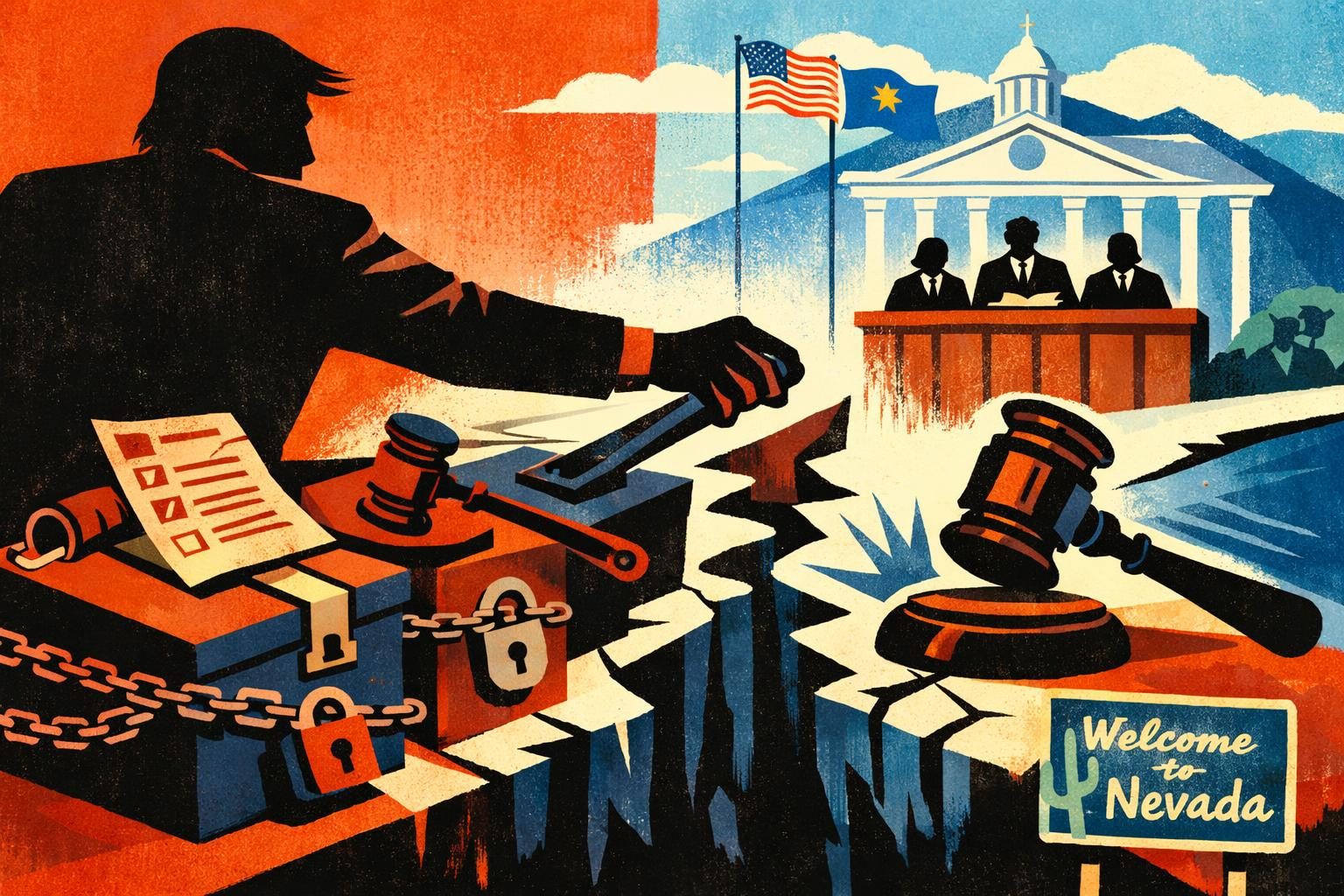
Nevada officials are claiming a significant victory in their fight against a federal election order they say would have forced the state to remake parts of its voter-registration and ballot-processing systems on Washington’s schedule, not Nevada’s. The ruling permanently blocked the government from enforcing the challenged provisions, including a requirement aimed at disqualifying some ballots that arrive after Election Day even if they were mailed on time. For election administrators, that kind of rule is not a minor technical adjustment. It can ripple through ballot design, voter instructions, mailing deadlines, signature verification workflows, public education, and the software systems that keep track of who voted and when. That is why state officials are treating the decision as more than a courtroom win. They are presenting it as a defense of the basic principle that states, not presidents, run elections.
The broader fight is really about power. The administration has been trying to use executive authority to reshape election policy from the top down, and Nevada’s case became a direct test of how far that can go before judges step in. State officials argued that the order was not a neutral attempt to improve election integrity but an intrusion into a state-run system that would have forced costly database changes and a scramble to rewrite public guidance for voters. That is the kind of policy that sounds tidy in a presidential directive and becomes a logistical headache the moment actual clerks, county officials, and technicians have to make it work. The state’s argument also carried a more political edge, accusing the federal government of trying to make voting harder and ballot counting more brittle under the banner of reform. That claim cannot be proved by rhetoric alone, but it gains force when the alleged fix would create new barriers and new confusion without any clear evidence that the states need it.
The ruling also fits a larger pattern of states pushing back against aggressive federal improvisation on elections. Election law is one of the few arenas where a single federal order can generate instant chaos if it collides with state deadlines, county procedures, and the practical realities of mail voting. If one part of the system changes too quickly, the effects show up immediately in training sessions, printer orders, public notices, and the instructions people rely on to vote correctly. Nevada’s officials said the blocked provisions would have required them to overhaul systems they already use to manage registration and ballot counting, which would not just cost money but also risk introducing errors during a period when election offices already run on tight margins. In that sense, the case was never only about one rule. It was about whether federal officials can announce a sweeping new election standard and expect states to absorb the disruption. The court’s answer, at least in this dispute, was no.
For the White House, the loss is another reminder that executive power has limits when it runs into state authority and practical administration. For Nevada, the decision is being framed as proof that the state’s election process cannot simply be rewritten by decree. That matters well beyond one ballot rule or one cycle, because election officials are already planning for the next round of deadlines, technology updates, and voter outreach efforts. If Washington keeps trying to improvise election policy through executive order, states now have a fresh example to point to when they argue that the courthouse, not the White House, will get the final word. The outcome does not settle every legal fight over federal involvement in elections, and it does not mean the administration will stop testing the boundaries. But it does make the cost of that strategy clearer. Every new order invites another lawsuit, another round of uncertainty, and another reminder that the people who actually run elections are rarely eager to let a federal memo dictate how their systems work in practice.
Comments
Threaded replies, voting, and reports are live. New users still go through screening on their first approved comments.
Log in to comment
No comments yet. Be the first reasonably on-topic person here.