
OPM tightening of hiring rules keeps the federal workforce fight alive
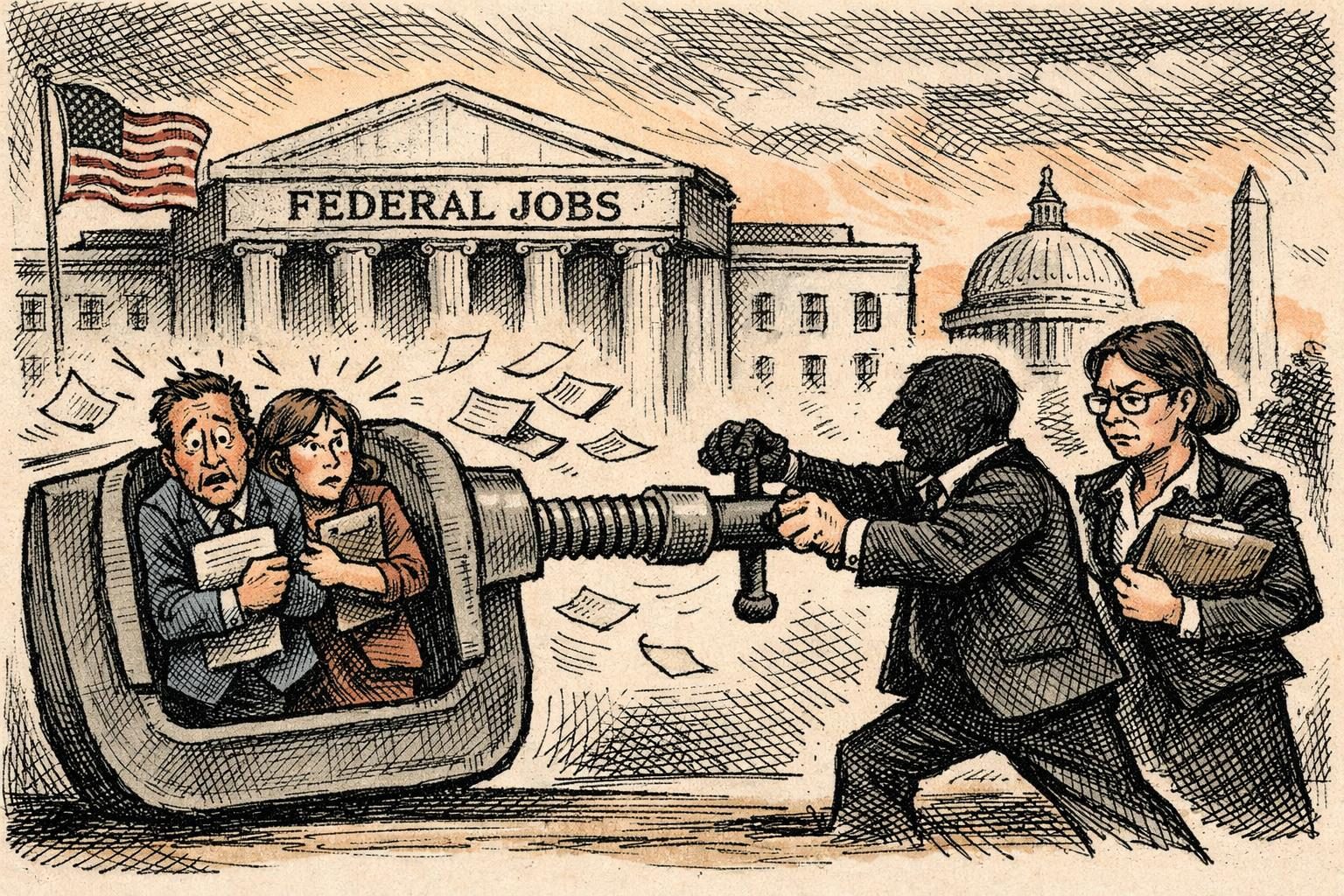
The Office of Personnel Management’s latest personnel move on August 8 has kept an already simmering fight over federal hiring and internal accountability very much alive. The development is the kind that can look minor from a distance and deeply consequential up close: a routine-sounding administrative step that can affect how agencies recruit, screen, promote, discipline, and retain employees across the civil service. In Washington, the difference between a memo and a mandate is often smaller than it seems, and workforce rules can begin shaping behavior almost immediately once agencies start interpreting them. That is why this latest action matters beyond the narrow world of federal human resources. It speaks to how aggressively the government wants to police its own bureaucracy and how much room it intends to leave for agency-level discretion.
At the center of the dispute is the usual tension between reform and control. Supporters of tighter hiring and accountability rules typically argue that the federal government has too often tolerated sluggish hiring, weak oversight, and a culture that makes it too hard to remove poor performers or correct bureaucratic drift. From that angle, a sharper personnel posture looks less like ideology than housekeeping, a way to make the civil service more responsive and more effective. Critics hear something else entirely. They worry that stricter rules can become a pressure point on career staff, especially if the standards are vague, unevenly applied, or tied to broader efforts to centralize authority inside the executive branch. That concern is not abstract. In a system where hiring and discipline can determine what expertise survives and what expertise gets pushed out, personnel policy becomes a proxy battle over the shape of government itself.
The political significance is easy to understand even if the underlying paperwork is not. Federal hiring rules are never just about filling vacancies; they are about who gets to exercise power inside the state, how insulated professional staff remain from political demands, and whether agencies are being run to preserve institutional independence or to enforce a more disciplined line from the top. A move that hardens accountability can be presented as a long-overdue correction to inefficiency, and in some cases it may genuinely be that. But it can also be read as a signal that the administration wants a more compliant workforce, or at least one that knows the cost of resistance. That is why these fights recur. They are not simply arguments over process. They are arguments over the limits of political control in a federal bureaucracy that is supposed to outlast any one administration. The fact that the personnel move arrived on August 8 matters less for the calendar than for the message: this is not a one-off flare-up, but part of a continuing effort to redefine how government manages its own employees.
What happens next will likely be just as important as the initial announcement. Agencies now have to decide how to implement the change, and that is where the politics often become real. A directive that is precise and narrowly written may still draw objections from labor groups, watchdogs, and career managers, but it can at least be administered with some consistency. A directive that is broad or ambiguous can invite confusion, uneven enforcement, and immediate pushback from employees who already feel stretched thin. Recruitment could also become more difficult if the new rules are perceived as adding friction to a workforce system that already struggles to attract and keep talent. That is the practical risk behind the political rhetoric. A government that wants more accountability may end up making itself harder to staff if the rules are seen as punitive rather than corrective. Even so, the administration may be willing to absorb that criticism if it believes the payoff is a tighter and more controllable bureaucracy.
The larger point is that this is one of those technical Washington fights that can decide whether the federal government functions like a functioning government. The source material supports the existence of a fresh personnel-related action and places it in the middle of a broader argument over hiring and accountability, but the full impact will depend on how agencies interpret and enforce the move in the weeks ahead. That leaves a fair amount of uncertainty, which is exactly how these stories often begin. At first, it looks like a dry internal personnel update. Then managers start revising procedures, unions start asking questions, and employees start adjusting their expectations about what behavior is rewarded and what behavior is punished. By the time the consequences are visible, the policy has already done some of its work. For now, the August 8 development keeps the civil service squeeze at the center of the conversation, and it suggests the workforce fight is still very much in motion rather than settled.
Comments
Threaded replies, voting, and reports are live. New users still go through screening on their first approved comments.
Log in to comment
No comments yet. Be the first reasonably on-topic person here.