
Judge keeps knocking down the VA’s union-busting play
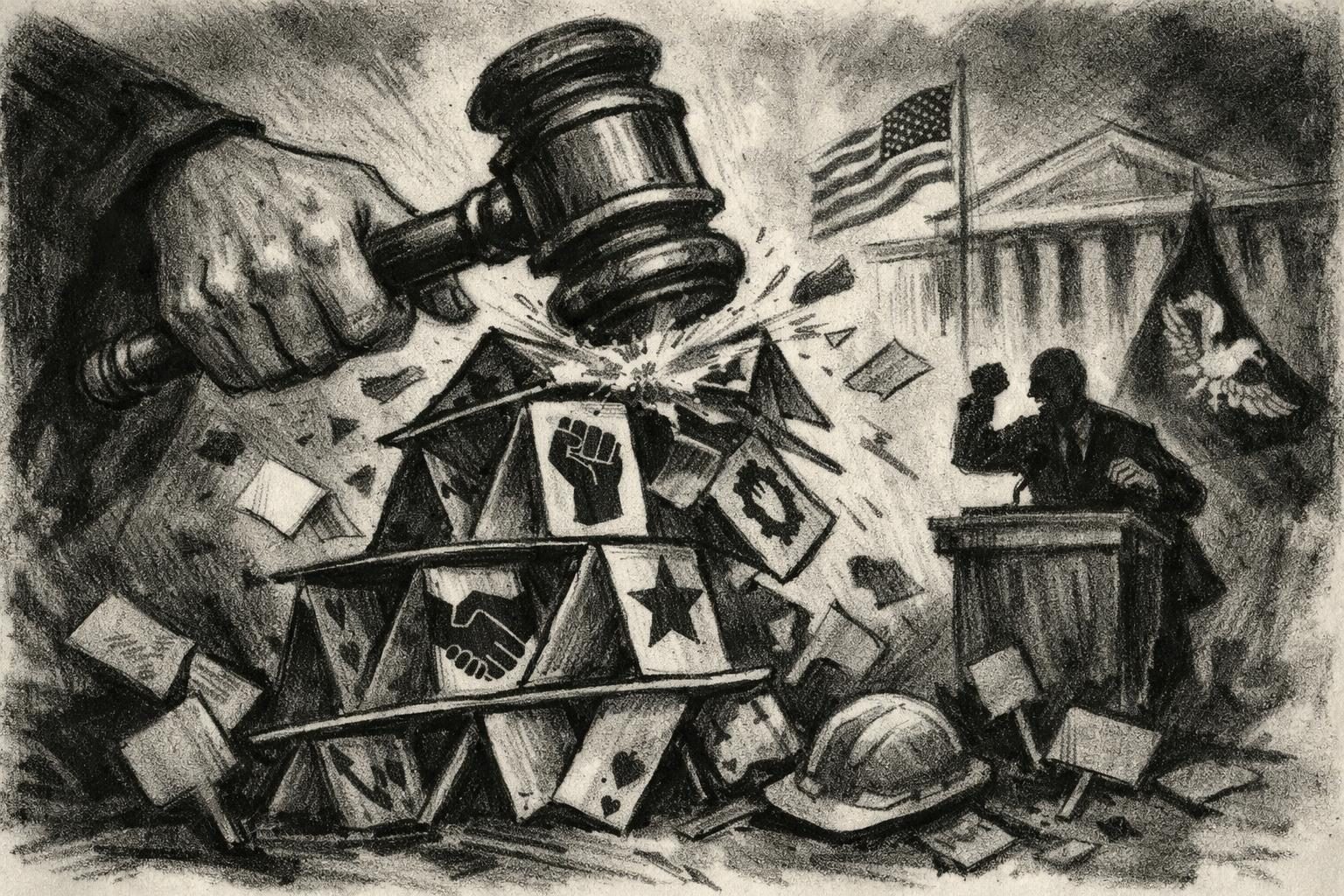
A federal judge on August 8 again turned back the Veterans Affairs Department’s effort to cancel union contracts covering most bargaining-unit employees, keeping alive a legal fight that has become one of the clearest tests of how far the administration can push its campaign against federal labor protections. The ruling did not resolve the case once and for all, but it did block the agency from acting as if collective bargaining agreements could simply be erased by decree. That matters because the VA is not a small or peripheral bureaucracy. It is one of the government’s largest civilian employers and a department whose workforce is already carrying a heavy load. When an agency with that kind of mission spends its time trying to unwind labor contracts, it sends a message about priorities that is hard to miss. The court’s latest decision keeps the agency’s anti-union strategy bottled up in litigation, where it has repeatedly run into resistance.
The dispute grew out of the VA’s earlier move to terminate contracts with multiple unions after invoking executive authority associated with the Trump era. From the administration’s point of view, the argument appears to be that management needs broad latitude to reorganize and direct the federal workforce without being constrained by negotiated labor protections. Unions and their allies see something much more direct: an attempt to strip workers of protections that were won through bargaining and then treat the loss of those protections as a technical management decision. The judge’s refusal to bless the latest VA bid suggests that the courts are not inclined to accept the idea that bargaining rights can be brushed aside as optional extras. That does not mean the administration is finished trying. It does mean the department has now been forced, again, to defend a sweeping anti-union approach in court rather than simply imposing it on employees.
The stakes at the VA are unusually high because the department’s workforce is already under strain and because its public mission is tied so closely to the quality of service veterans receive. Labor unrest inside such an agency is not just an internal personnel problem. It can ripple outward into staffing, morale, retention, and the day-to-day functioning of programs that veterans rely on for care and support. That is why the legal fight has taken on significance beyond the usual federal-sector labor dispute. If the government can weaken or cancel union contracts at an agency of this size, other departments may take that as a signal that similar tactics are available elsewhere. If the courts continue to slow or block that effort, agencies will have to reckon with the fact that labor rights in the federal system cannot be erased by memo and muscle alone. The fight has therefore become a broader test of whether management flexibility is being used as a real administrative tool or as a euphemism for union busting.
For unions, the case is part of a larger pattern in which federal workers are told to absorb political turmoil while losing some of the very protections designed to keep workplaces stable. They argue that the administration’s approach leaves employees with fewer tools to respond to understaffing, burnout, and shifting directives, even as the government continues to expect steady performance from the same workforce. The administration’s defenders counter that agencies need room to manage efficiently, but that argument has limits when it comes wrapped around an effort to cancel bargaining agreements wholesale. The latest ruling does not restore trust between labor and management, and it does not end the dispute. It does, however, keep the government from treating union rights as disposable and reminds other agencies that an aggressive anti-union strategy can quickly become an expensive one in court. For now, the VA’s campaign remains stalled in litigation, which may be the only place a fight of this kind was ever likely to be settled.
Comments
Threaded replies, voting, and reports are live. New users still go through screening on their first approved comments.
Log in to comment
No comments yet. Be the first reasonably on-topic person here.