
John Bolton’s guilty plea turns a national-security scandal into a full-blown legal humiliation
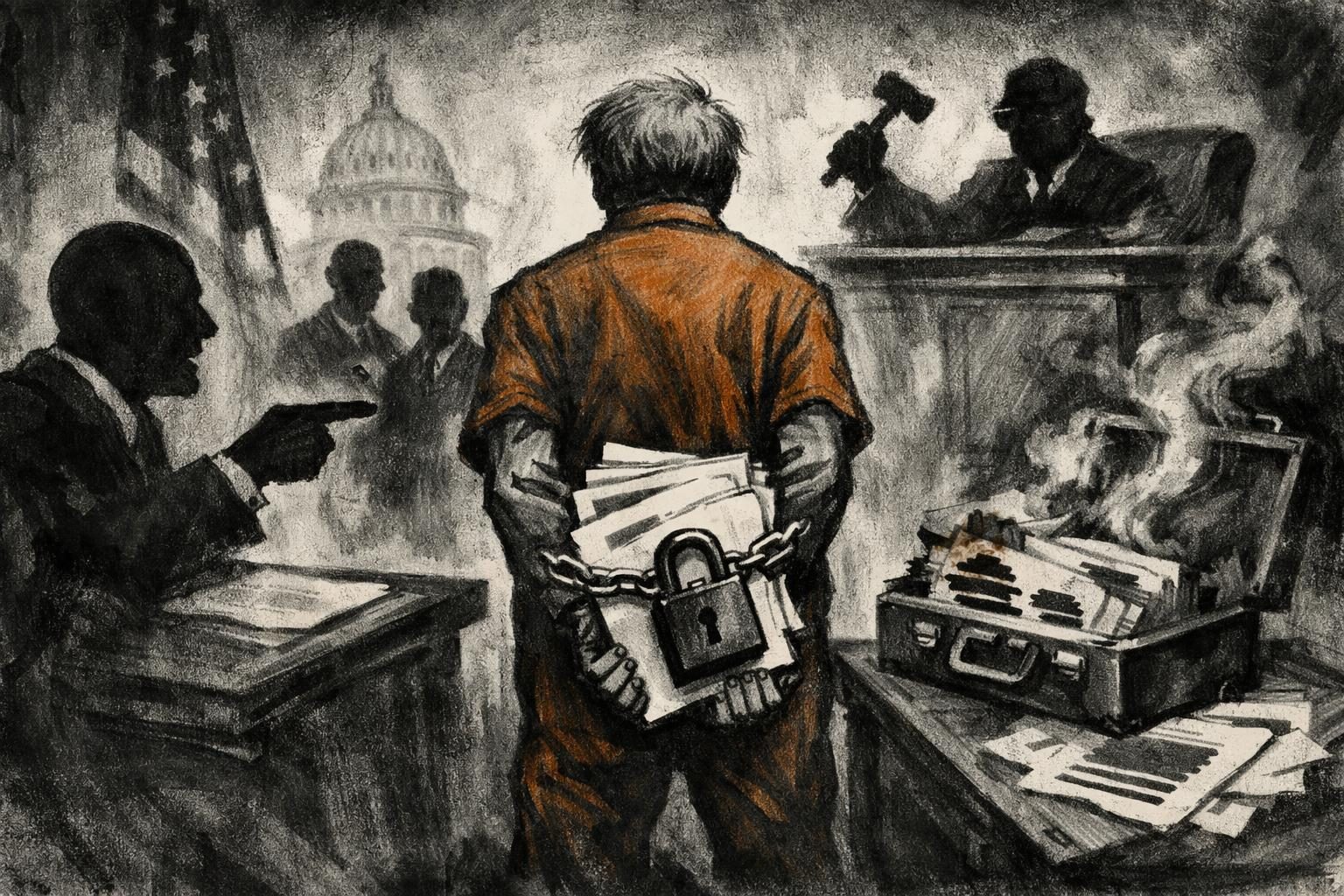
John R. Bolton II’s guilty plea in federal court on August 9 turned a long-running fight over sensitive material into something far more concrete and far more damaging: an open-court admission that the former national security adviser willfully retained national defense information. That is not a semantic flourish or a paper-pushing squabble over how documents were labeled. It is the kind of charge that cuts to the core of how the federal government protects information it considers among the most tightly guarded in the system. Bolton’s decision to plead guilty gives the case a new immediacy and strips away much of the insulation that can surround high-level investigations when they are still framed as disputes over process, classification, or political targeting. However much his defenders may want to describe the matter as technical, the legal posture is now unmistakably worse for him. A guilty plea is not a rhetorical exercise, and it is not an accident of wording. It is an admission that leaves behind a very public mark on a man who built part of his reputation on projecting seriousness, discipline, and national-security hardball.
The result is especially awkward because Bolton spent years occupying a niche in Republican foreign-policy circles as a kind of emblem of stern, no-nonsense hawkishness. He was often treated as the sort of figure who believed rules were for everyone else, so long as the country was secure and the state was projected as strong. That image has not exactly aged gracefully, and the plea only sharpens the contrast between the brand and the behavior. People who have spent decades insisting they are the guardians of order, law, and institutional responsibility have a way of looking especially brittle when they are the ones standing before a judge to answer for allegedly mishandling sensitive material. Bolton’s case will now be read by many observers as one more example of the recurring Washington pattern in which the loudest lectures on discipline are delivered by the least disciplined actors. Even his most charitable allies will have difficulty pretending that an admission in federal court is some minor administrative misunderstanding. The political optics are bad, the legal consequences are real, and the personal embarrassment is obvious.
The Justice Department’s filing and the proceedings around the plea make clear that this is not being handled as a speculative or half-formed allegation. The government’s position is that Bolton retained material that should not have been kept the way it was, and the plea resolves the central question of whether the case is merely an accusation or an admitted violation. That distinction matters, because once the case crosses from investigation to plea, the whole matter becomes immediate and enforceable in a way that public back-and-forth never is. Bolton now faces sentencing risk and whatever additional consequences may follow as the handling of the records remains under scrutiny. The case also places renewed pressure on the larger system that is supposed to keep classified and national defense information inside tightly controlled channels. When a former top national security official is the one pleading guilty, the failure does not look abstract. It looks like a breach by someone who should have understood better than almost anyone else exactly how serious the rules are. That kind of failure reverberates beyond the individual defendant, because it feeds a broader public suspicion that access to the nation’s most sensitive secrets comes with privileges but not accountability.
Politically, the plea drops into an environment already saturated with arguments about selective enforcement, classified records, and whether the justice system treats powerful insiders differently from everyone else. That means Bolton’s case will almost certainly be pulled into larger fights he may not have chosen, especially from people eager to compare it with other high-profile document cases or to argue that the law is applied unevenly depending on the defendant’s influence and connections. Those arguments are not new, and they are not going away just because one defendant has admitted wrongdoing. What changes now is that the dispute is no longer hypothetical or dependent on competing interpretations of a filing. A guilty plea creates a durable fact pattern that critics, prosecutors, and political opponents alike can use. It gives Bolton’s adversaries a simple and damaging line of attack, while forcing his allies to explain why a former national-security heavyweight should be viewed differently from ordinary defendants. In Washington, reputations can survive many things, but they do not do especially well once a court record starts telling a cleaner story than the talking points. Bolton’s legal trouble is now immediate, his public standing is weaker, and the image of the disciplined national-security elder statesman he once tried to project has taken another hard hit that will not be easy to shake.
Comments
Threaded replies, voting, and reports are live. New users still go through screening on their first approved comments.
Log in to comment
No comments yet. Be the first reasonably on-topic person here.