
States keep fighting Trump’s mail-ballot order in court
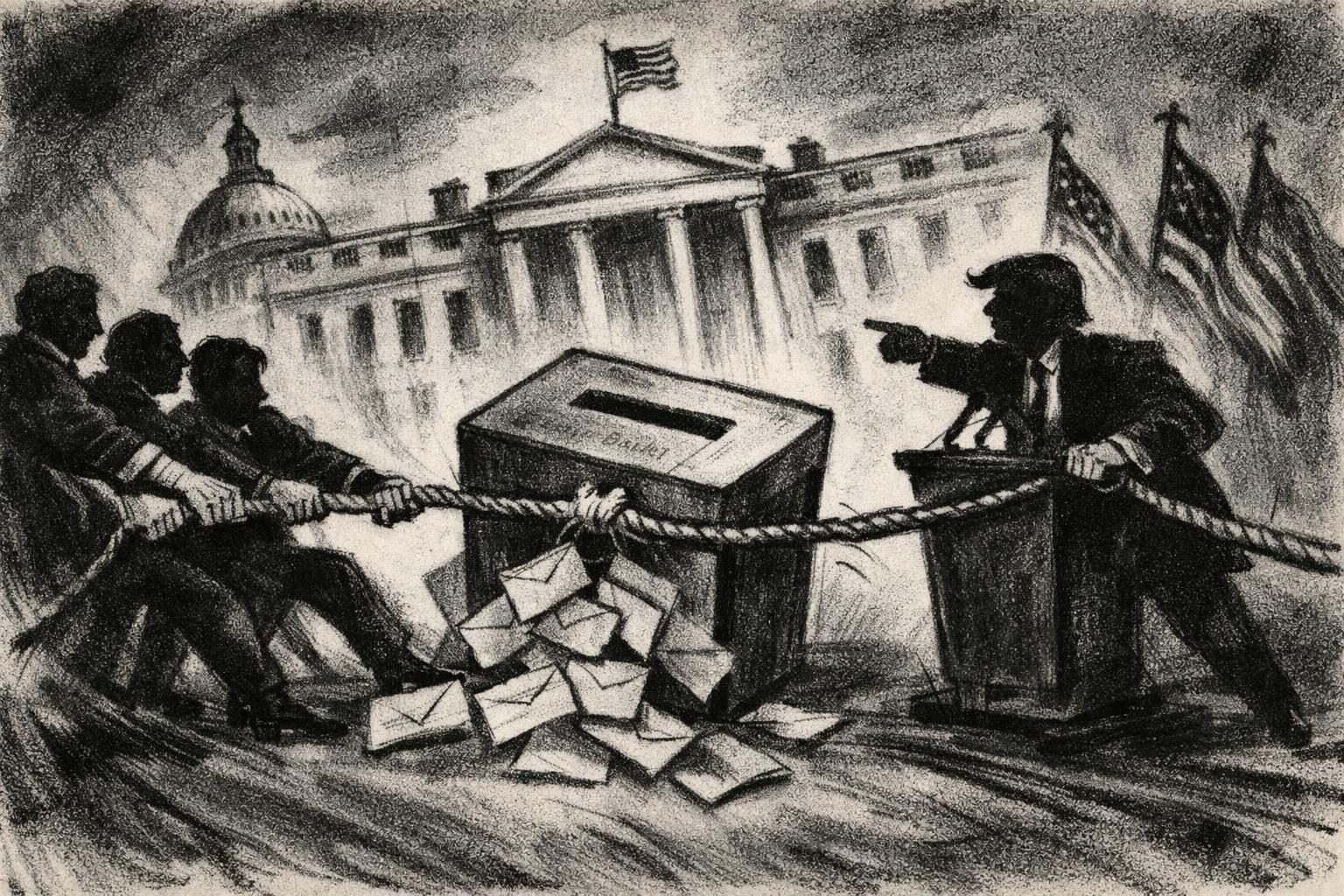
States and voting-rights groups are continuing to press their challenge to President Donald Trump’s effort to tighten mail voting, keeping a major election-administration fight alive even after the Supreme Court let existing ballot-counting rules remain in place for now. The dispute centers on whether the federal government can force changes to how states handle mailed ballots that arrive after Election Day but were properly postmarked on time. That may sound like a narrow procedural question, but it goes to the heart of how millions of Americans cast ballots and how election officials prepare for the 2026 midterms. The administration has framed the push as a fraud-prevention measure, while opponents say it is a direct attempt to reduce legally valid voting options under the banner of integrity. Because the courts have not definitively shut the door on the policy, the controversy remains live and unsettled rather than a closed chapter in election law.
The legal and political stakes are high because the battle is not just about one executive order or one set of ballot deadlines. It is about who has the authority to set the rules for election administration in the first place. States have traditionally controlled most of the mechanics of running elections, with Congress able to step in through legislation and federal courts resolving disputes when the rules are challenged. Trump’s move, by contrast, seeks to use executive power to push a nationwide change on a question that has long been handled differently from state to state. That is why election lawyers and state officials see the case as more than a technical quarrel over mailing dates. If a president can reshape ballot-counting practices through executive action, it could open the door to broader federal interventions in how states conduct elections. If the courts reject that approach, the administration’s attempt to centralize voting rules could end up reinforcing the traditional role of the states instead.
The immediate practical concern is that election administrators are being forced to plan under uncertainty. Officials in many states are already preparing for the possibility of injunctions, appeals, and last-minute changes that could alter how mail ballots are received, processed, and counted. That kind of moving target makes it harder to train workers, write voter instructions, and design public-facing deadlines that do not have to be revised again a few weeks later. It also creates an obvious communication problem for voters, who may hear one set of rules from state offices and another from the White House or from campaign messaging. Even when the final legal outcome is not dramatic, the process itself can be destabilizing if people start to doubt whether the system will work the same way from one election to the next. That is part of why critics say the administration is manufacturing confusion before a major election rather than clearing it up.
The broader political impact may be just as important as the legal one. Trump and his allies continue to present the order as a clean-up measure aimed at preventing fraud, but opponents argue that the evidence does not support the sweeping restrictions being pursued. Courts have already acknowledged that many states routinely count mailed ballots that arrive after Election Day as long as they were postmarked by then, and that practice has become a normal part of modern election administration across much of the country. The fight, then, is not over some fringe or experimental process; it is over an established system that voters and election officials have relied on for years. If the litigation drags on into the heart of the midterm cycle, it could become a persistent campaign issue in battleground states, with each side using the uncertainty to energize its base. The result may not be a single dramatic ruling that settles everything at once, but a long-running legal and political slog that keeps mail voting in the spotlight and leaves election officials bracing for more disruption.
Comments
Threaded replies, voting, and reports are live. New users still go through screening on their first approved comments.
Log in to comment
No comments yet. Be the first reasonably on-topic person here.