
Justice Department brings murder charges after federal-law-enforcement standoff turns deadly
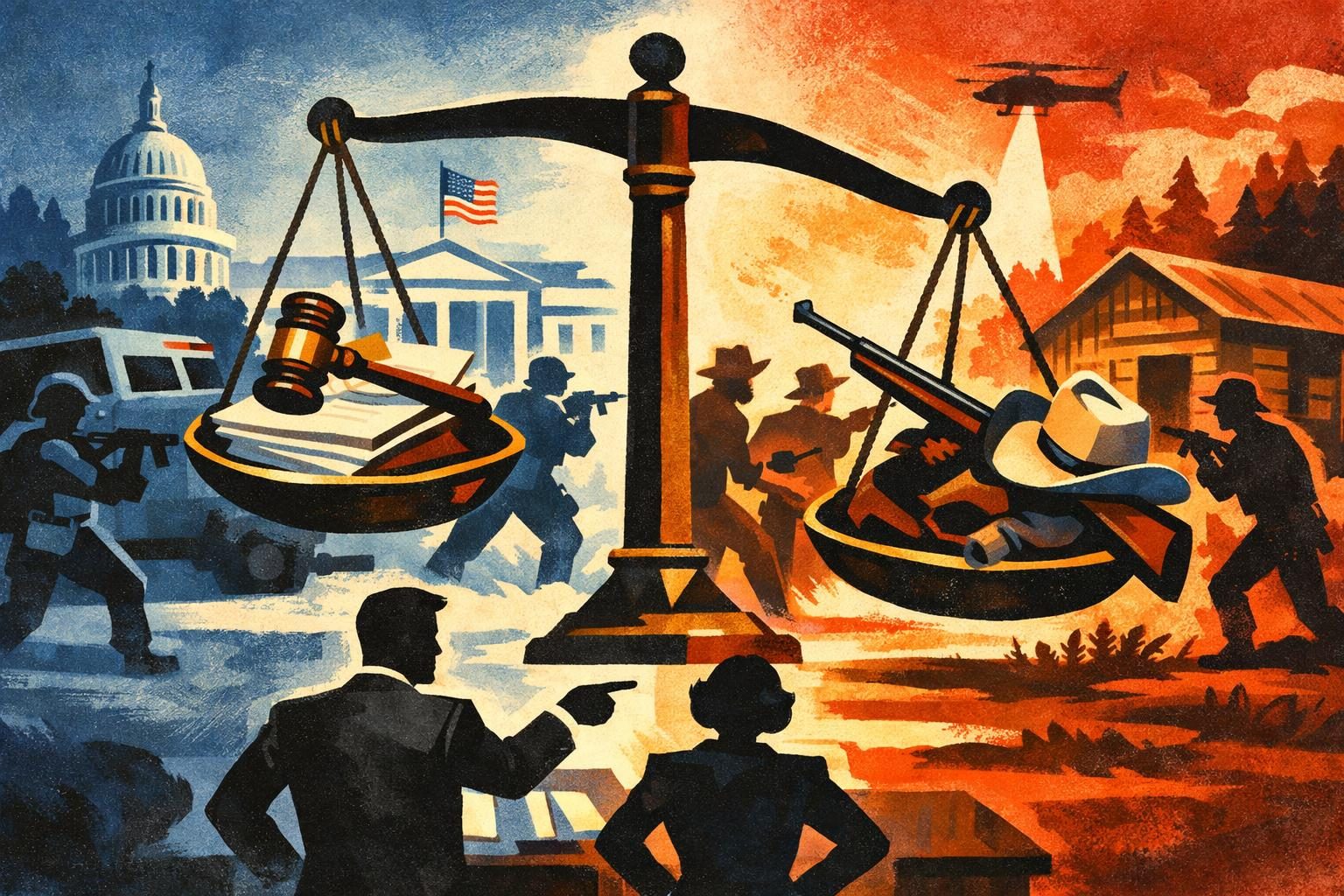
Federal prosecutors have escalated a violent confrontation involving federal and state law enforcement into a murder case, a move that immediately changes the legal and political temperature around the episode. What had already been a serious standoff is now being treated by the Justice Department as a killing that crossed the highest possible line of criminal conduct. That is not the sort of charge the government reaches for casually, and it signals that investigators believe the facts, as they now understand them, support something far beyond a chaotic exchange. In practical terms, the filing suggests prosecutors think they can prove more than fear, confusion, or reckless conduct. They are making the case that this was deliberate fatal violence tied to an armed confrontation with officers acting under color of law.
The charging decision matters because it reframes the incident from a dangerous law-enforcement encounter into a test of federal authority itself. A murder allegation in this setting is a blunt assertion that resistance to officers, if it turns deadly, will be met with the full force of the federal criminal system. It also sends a message to other armed suspects who may believe standoffs can be resolved as tactical impasses rather than criminal escalations. The government, by moving in this direction, is indicating that it views the episode as a warning case rather than a one-off tragedy. In that sense, the charge is as much about deterrence as it is about punishment. It tells the public and law enforcement alike that the department believes the conduct at issue sits at the extreme edge of what prosecutors can and should address.
The politics surrounding the case make the stakes even higher. Federal agents and prosecutors have become frequent targets in a broader culture war in which law enforcement is often portrayed as either overreaching or under siege, depending on the audience. Against that backdrop, a murder prosecution tied to a standoff will likely be read by supporters of the government as evidence that violent resistance has crossed into intolerable territory, while critics may view it as another example of the federal government asserting its power in a highly charged way. None of that changes the legal burden prosecutors must meet, but it does shape the public reception of the case from the outset. The Justice Department is not operating in a vacuum here. It is acting in an environment where every forceful move is interpreted through a partisan lens, and where the symbolism of charging decisions can matter almost as much as the courtroom outcome.
What happens next will probably be defined by procedure, but the proceedings are likely to be intense. A murder charge in a federal-law-enforcement standoff almost guarantees a serious detention battle, an aggressive push from the defense to challenge the government’s theory, and close scrutiny of the evidence that led prosecutors to escalate. The legal questions will likely center on intent, the sequence of events, and whether the confrontation can be shown to amount to intentional criminal violence rather than a rapidly unfolding crisis that spiraled out of control. Prosecutors will need to show that their characterization is more than rhetoric and that the evidence supports the weight of the charge. Even before those arguments fully unfold, the case has already become a major institutional flashpoint. It is the kind of prosecution that can shape how future confrontations are handled, how agencies think about resistance, and how seriously the public takes the line between armed standoff and murder.
Comments
Threaded replies, voting, and reports are live. New users still go through screening on their first approved comments.
Log in to comment
No comments yet. Be the first reasonably on-topic person here.