
Judge Blocks a New Push to Yank Work Permits From Immigrants
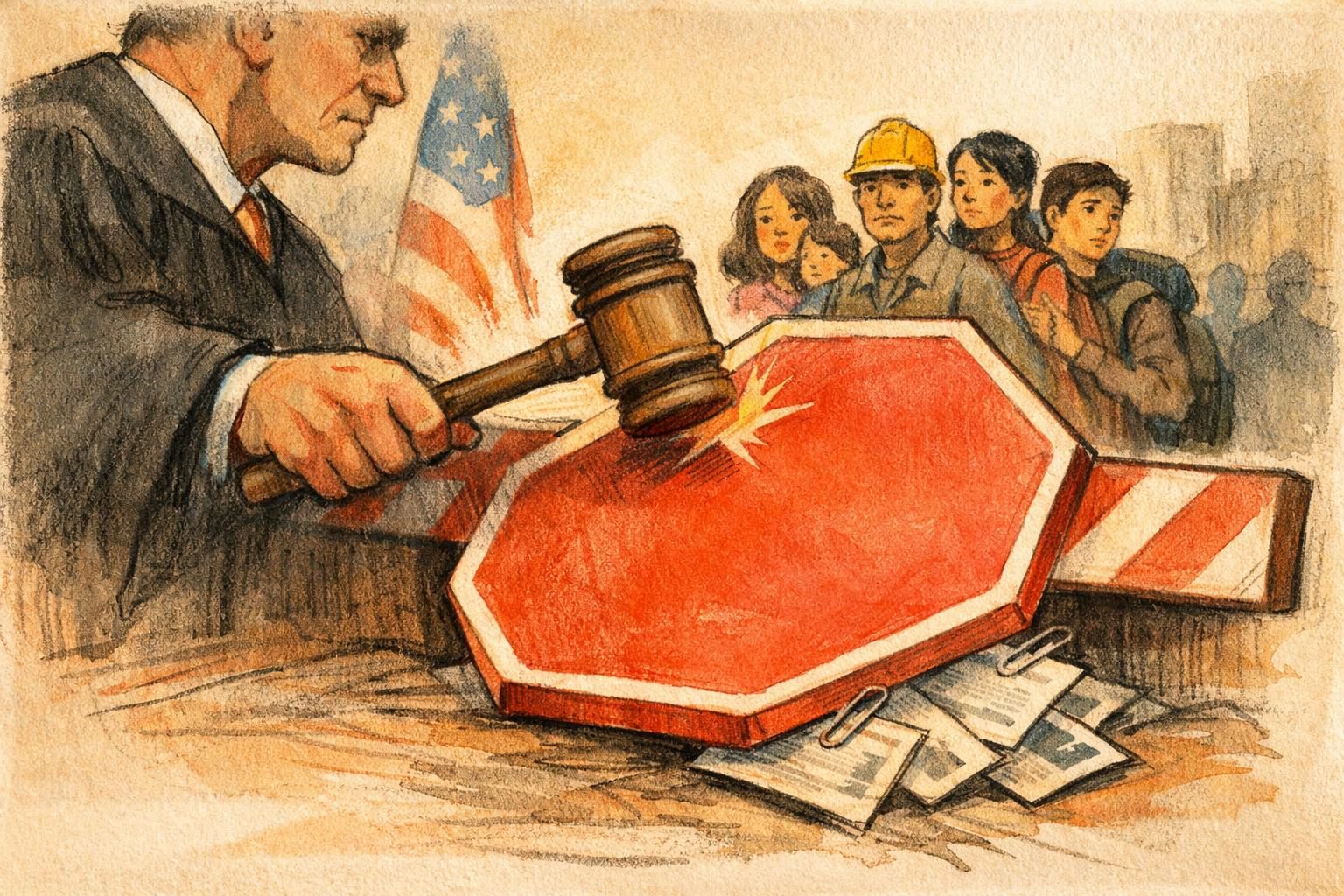
A federal judge in Boston has again slowed the administration’s effort to strip work authorization from immigrants who have been living and working in the United States under temporary protected status, keeping the policy on hold while the underlying litigation plays out. The ruling does not resolve the larger battle over the future of humanitarian protections, but it does stop the government from turning a legal dispute into an immediate loss of jobs for thousands of people. For now, workers whose permits were in jeopardy remain able to stay on payrolls, and employers are spared the scramble that would have followed if the government had been allowed to move ahead. The court action is another reminder that immigration policy can have consequences long before a case reaches its final destination. In practical terms, this was not merely a procedural pause; it was a barrier between a contested federal plan and a sudden disruption for families, workplaces, and local economies.
The fight centers on an administration effort to unwind protections that have allowed immigrants from a long list of countries to live and work in the United States after disasters, conflict, or other dangerous conditions at home. Temporary protected status has long been one of the more visible tools in the immigration system because it pairs legal presence with work authorization, giving people the ability to pay rent, buy groceries, and hold steady jobs while they remain in a legal limbo that is supposed to be temporary but often lasts for years. Stripping work permits would not just change a document in a file. It would affect whether people can remain employed, keep up with bills, and avoid cascading financial losses that can spread through households in a matter of days. That is part of why the judge’s move matters so much. It preserves the status quo while the broader legal questions are still unresolved, and it prevents the administration from making the kind of immediate change that is difficult to reverse once workers have already been pushed out of the labor force.
The ruling also reflects a broader pattern in which courts have been willing to stop the government from acting first and defending the policy later when the consequences are severe and hard to unwind. That point is especially sharp here because the administration has made immigration enforcement and the narrowing of humanitarian programs a central theme of its approach. Supporters of the policy argue that the government is simply restoring stricter standards and correcting what they see as years of overly generous treatment, but those arguments still have to survive judicial review before they can take effect. Opponents say the attempt to remove work authorization is a blunt instrument dressed up as administrative housekeeping, one that would punish people who have built their lives around rules the government itself put in place. The judge’s intervention does not settle which side will ultimately prevail, but it does undercut the administration’s argument that it should be able to implement a major policy shift now and let the courts sort out the consequences later. For the moment, the legal system has signaled that preserving stability may be the safer course while the merits are litigated.
The practical fallout of the dispute is already visible even with the policy blocked. Employers are left wondering what the next court ruling may bring, immigrant families are left trying to plan around a government decision that could still change, and communities that depend on workers covered by temporary protections are again forced to live with uncertainty. That uncertainty has its own cost. A person who is unsure whether a work permit will survive the next round of litigation may delay moving, renting, spending, or making long-term decisions, while businesses that rely on steady labor can be left to guess whether an employee will still be authorized to work a few weeks or months from now. The case therefore reaches well beyond immigration law and into ordinary economic life, which is exactly why the issue has become so contentious. The judge’s decision buys time, not certainty, and the administration’s larger effort to pare back protections for migrants continues to run into judicial resistance. If the ruling holds, it will stand as another example of a court forcing Washington to slow down before a policy change translates into an abrupt real-world hardship that cannot easily be undone.
Comments
Threaded replies, voting, and reports are live. New users still go through screening on their first approved comments.
Log in to comment
No comments yet. Be the first reasonably on-topic person here.