
Justice Department hands the EEOC an anti-DEI legal grenade
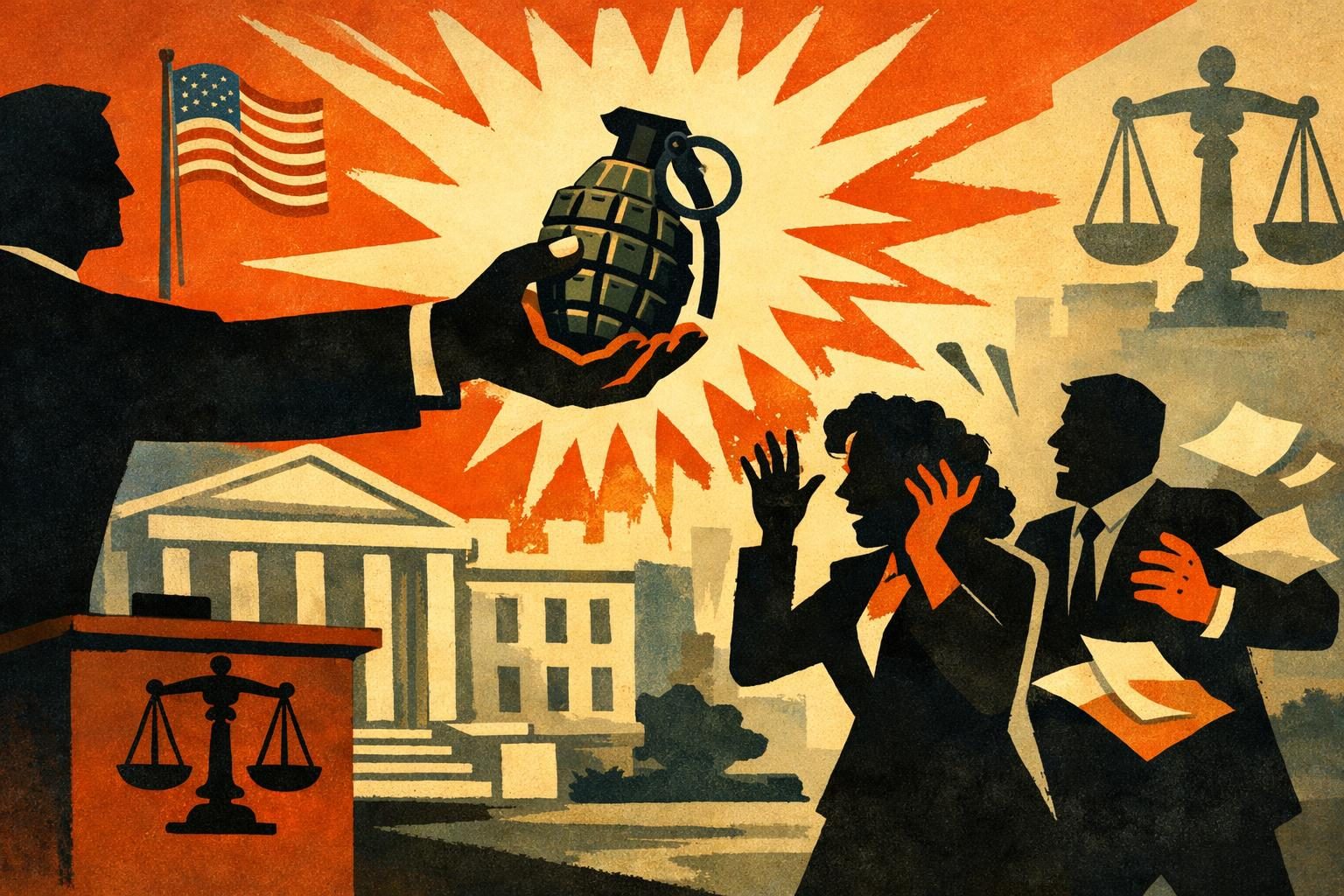
On August 9, 2026, the Justice Department moved to do more than simply clarify its position on employment law: it formally told the Equal Employment Opportunity Commission that the agency’s disparate-impact guidelines under Title VII violate the Constitution. That is a significant escalation in a long-running fight over how far the federal government should go in policing discrimination that is not always obvious on its face. The opinion comes from the government’s top legal shop, which gives it a different weight than a casual policy memo or a speech meant to please an audience. It signals that the administration is not just skeptical of race-conscious policy in the abstract, but is actively trying to narrow the tools that civil-rights enforcers use to measure discrimination. In other words, this is not a housekeeping note; it is an attempt to redraw the boundaries of federal anti-discrimination enforcement from inside the executive branch.
The immediate target is disparate-impact theory, a legal framework that has long allowed regulators and plaintiffs to challenge policies that appear neutral but in practice produce discriminatory outcomes. Under that approach, an employer does not have to say the quiet part out loud for a policy to raise legal questions; if the results consistently burden a protected group, that can be enough to trigger scrutiny. The Justice Department’s position treats that framework as constitutionally suspect, which is a strong and unusual stance for the federal government to take against one of the central instruments of modern civil-rights enforcement. Supporters of the move are likely to frame it as a restoration of neutral, colorblind law and a correction to what they see as mission creep in anti-discrimination policy. Critics will see something much more blunt: an effort to make discrimination harder to prove by insisting that only the most explicit forms of bias count. That difference is not academic. If the law stops taking outcomes seriously, a great deal of structural inequality can hide behind procedures that look fair on paper.
The political context matters here, because the opinion fits neatly into the administration’s broader anti-DEI and anti-race-conscious policy agenda. The White House has been pushing a message that government and institutions should move away from race-based decision-making, and this legal position gives that message an institutional backbone. It is one thing to campaign against diversity, equity, and inclusion programs in the abstract; it is another to have the Justice Department formally declare that a core enforcement doctrine may be unconstitutional. That shift is likely to embolden employers, conservative litigants, and anti-affirmative-action advocates who have been looking for federal cover to challenge existing practices. It also puts civil-rights agencies in an awkward position, because they now have to operate in an environment where the federal government itself is signaling skepticism toward some of the most established anti-bias tools. The result is not clean doctrinal clarity. It is a fresh layer of uncertainty, with the government essentially arguing against itself across different parts of the enforcement apparatus.
The practical fallout could be substantial even before any court has a chance to weigh in. Agencies may hesitate to press cases that rely on disparate-impact reasoning if they think the Justice Department is preparing to undercut them. Employers may take the new opinion as permission to challenge investigations, settle more aggressively, or redesign policies to maximize legal defensibility rather than equitable results. Plaintiffs’ lawyers, meanwhile, will have to decide how much weight to give a federal position that has not yet been tested in court but is still likely to shape litigation strategy and administrative behavior. For civil-rights advocates, the broader danger is that the administration is trying to hollow out enforcement not by repealing anti-discrimination law, but by narrowing what counts as evidence of discrimination in the first place. That is a more sophisticated move than an outright rollback, and potentially a more durable one. Whether courts ultimately accept the Justice Department’s constitutional theory is an open question, but the administration has already accomplished one thing: it has turned a technical enforcement standard into the next front in the political war over race, equality, and the meaning of neutrality in American law.
Comments
Threaded replies, voting, and reports are live. New users still go through screening on their first approved comments.
Log in to comment
No comments yet. Be the first reasonably on-topic person here.