
Justice Department sues Virginia over mask ban and ID rules for federal officers
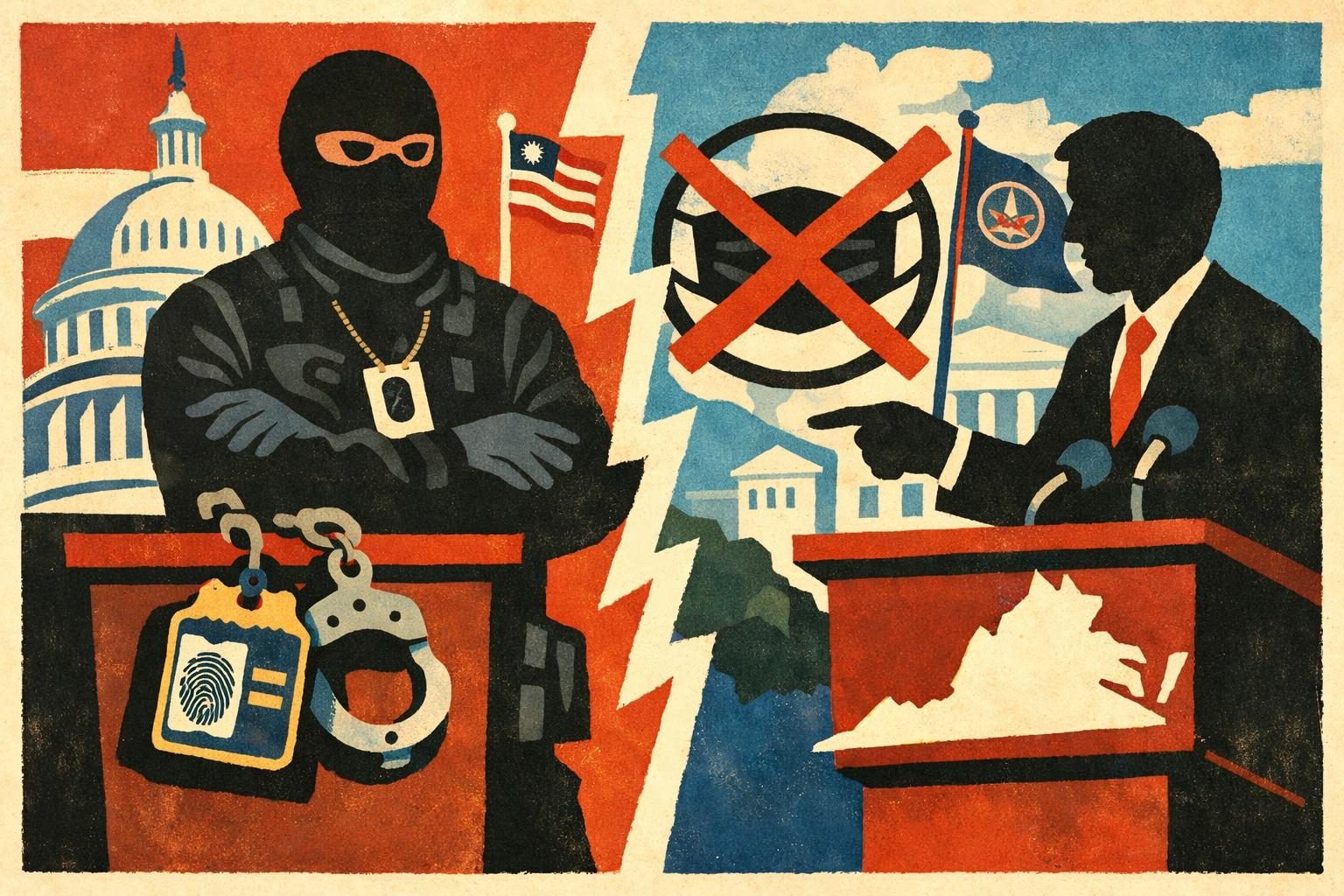
The Justice Department has taken Virginia to court over a state effort that would criminally bar federal law enforcement officers from wearing masks, require them to display individual identifiers, and place new pressure on cooperative enforcement arrangements that often link state, local, and federal authorities. At its core, the complaint argues that Virginia is trying to regulate federal officers while they are carrying out federal duties, which the department says is unconstitutional. That may sound like a fight over uniforms and badges, but the dispute is really about control: who gets to decide what federal agents can look like, how they can operate, and what information they must reveal while doing the government’s work. The lawsuit pushes the argument beyond the usual political theater and into a basic constitutional question about federal supremacy inside state borders. Virginia’s approach is being framed by the Justice Department as an attempt to turn a state criminal law into a leash on federal operations.
The issue lands in the middle of a broader national argument about accountability, secrecy, and the optics of modern policing. Masking and identification rules have become highly charged because they touch the most visible parts of law enforcement power, especially in settings involving immigration enforcement, protests, and other tense public encounters. Supporters of stronger identification requirements tend to say the public has a right to know which officers are acting in its name, particularly when force or detention is involved. Critics, including many law enforcement officials, say that forcing officers to reveal identities can expose them to harassment, retaliation, or operational risk, and that masks may be necessary in some environments for safety and tactical reasons. Virginia’s move appears to have been a response to public anger over anonymous enforcement, but the federal government is now insisting that the state has gone too far and is trying to impose its own policy preferences on federal agents. In practical terms, the suit asks whether a state can punish federal officers for following federal rules when those officers are inside the state and working on federal business.
The cooperative-enforcement piece makes the case even more significant because it reaches beyond symbolism and into day-to-day policing relationships. Federal, state, and local agencies often depend on one another, whether through task forces, joint operations, or information-sharing arrangements that can be essential in investigations and immigration enforcement. If Virginia can set criminal penalties tied to masks or identifiers, the Justice Department argues, that could interfere with those partnerships and effectively rewrite how federal work gets done on state soil. That is why the conflict is being presented as more than a one-off disagreement about one state’s policy choice. It is a direct test of how far a state can go when it wants to shape the behavior of federal officers who are not acting as ordinary state employees. The federal government is signaling that it views the Virginia law as a line-crossing effort to make state law govern federal conduct, and that position sets up a classic supremacy clash. If the case moves the way the department wants, states may find it much harder to impose new restrictions on the appearance or tactics of federal officers. If Virginia has the stronger argument, other states may start looking for their own ways to police the way federal agents operate inside their borders.
Politically, both sides have reason to treat this as a high-value fight. For supporters of the Virginia approach, the case is about transparency and the idea that law enforcement should not be allowed to hide behind anonymity when it exercises public power. For supporters of the federal position, the case is about preserving a national system of law enforcement that cannot be broken into a patchwork of state-by-state rules every time a legislature wants to react to a controversy. That tension between accountability and operational consistency is not going away, and the courtroom may end up serving as the place where it is most clearly defined for now. The outcome could shape how future disputes are handled not just in Virginia, but anywhere a state tries to regulate the look or conduct of federal personnel. Even if the immediate case is narrow, the precedent could be broad enough to affect how agencies respond to protests, immigration enforcement, and other contested forms of policing. What makes the case so combustible is that it sits at the intersection of legal doctrine and public frustration, which means neither side is just arguing a technical point. They are fighting over the machinery of enforcement itself, and the stakes extend well beyond whether a federal officer can cover a face or wear a number."}
Comments
Threaded replies, voting, and reports are live. New users still go through screening on their first approved comments.
Log in to comment
No comments yet. Be the first reasonably on-topic person here.