
Trade fraud task force hits billion-dollar milestone, which is not exactly a sign of healthy commerce
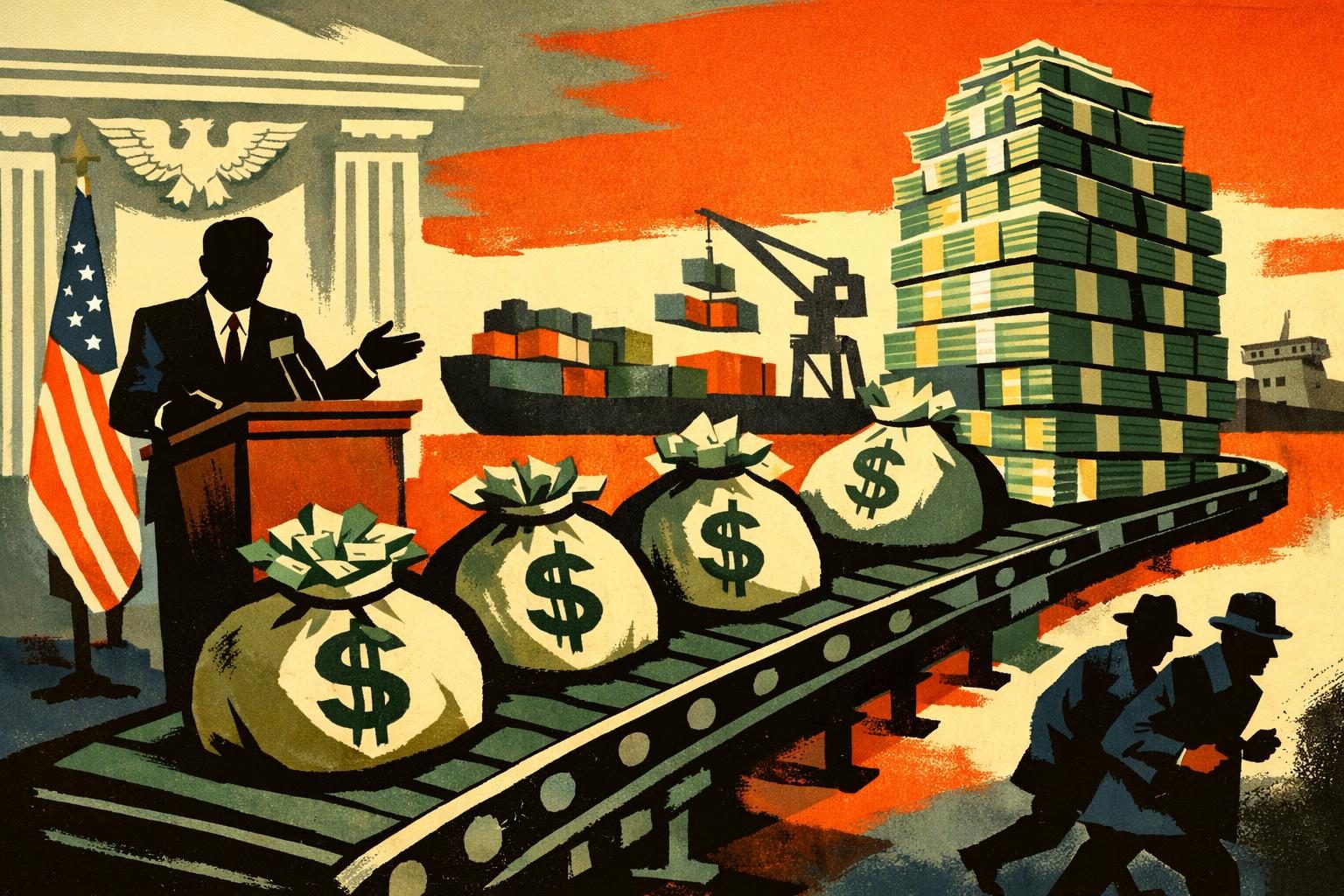
The Justice Department says its trade fraud task force has crossed a milestone that sounds impressive in one direction and deeply depressing in another: more than $1 billion in recoveries, penalties, forfeitures, and publicly charged losses in less than a year. On paper, that is a clear enforcement win. In practical terms, it is also a bright red flare telling you that customs fraud, tariff evasion, import misrepresentation, and related schemes are still large enough to move numbers at industrial scale. A healthy trade system would not need to brag about this kind of haul. A system this burdened by fraud is one that keeps forcing the government to build bigger nets just to catch what is already slipping through. The administration, naturally, is eager to frame the total as proof that it is serious about law and order in commerce. It is serious, all right, but the headline figure also suggests that the underlying problem is serious in ways that should make importers, regulators, and policymakers equally uncomfortable.
The politics of the announcement are easy to see. Trade enforcement has become one of the government’s favorite places to project toughness while also lending support to broader tariff and border-control arguments. When officials talk about cracking down on fraud, they are not just discussing casework and compliance. They are also constructing a larger narrative in which economic disruption can be blamed on bad actors rather than on the policy choices that may be driving up costs, slowing supply chains, or creating new incentives to game the system. That makes the task force useful in a very Washington way. It can be presented as proof that enforcement is working, while also serving as a rhetorical shield for more aggressive trade policy. If prices rise or import channels get messier, the existence of fraud lets the government say the problem is not the rules themselves but the people allegedly abusing them. That argument may sometimes be true. It is also politically convenient enough to be deployed whenever needed.
The broader consequence is likely to be a more hostile environment for companies that sit anywhere near customs compliance. Importers, brokers, freight handlers, and firms with complicated supply chains should expect more attention, more document demands, and more incentives for whistleblowers to come forward. Some of the cases falling under this enforcement push are likely to be straightforward and legitimate, involving conduct that clearly violated customs or tariff rules and deserved prosecution. Others may reveal exactly the sort of deceit the government is supposed to detect, whether that means false classifications, undervaluation, origin fraud, or other attempts to dodge duties and restrictions. But even when the cases are valid, the scale of the task force’s reported results points to a more punitive trade climate overall. Once the government signals that a billion dollars in recoveries is just the opening act, businesses are left to wonder how much more scrutiny is coming and how much of it will land on companies that simply operate in messy global markets rather than on the most brazen offenders. In that sense, enforcement and economic intimidation can begin to look uncomfortably similar, especially when policy is moving in the direction of heavier handoffs from trade regulators to criminal investigators.
The official numbers matter because they are concrete, current, and coming from the Justice Department itself. That gives the milestone a level of credibility that speculation cannot match. The department’s announcement is not subtle about the larger message: the government sees trade fraud as a real and ongoing threat, and it wants the public to understand that it is responding with organized, sustained enforcement. That may be justified on the merits. Fraud is fraud, and customs systems are only as strong as the people enforcing them. But the bigger picture is harder to ignore. A billion-dollar tally in under a year is not just a brag about successful policing; it is an admission that the ecosystem around imports and tariffs remains riddled with enough abuse to justify a major federal campaign. The only thing more American than a billion-dollar fraud task force is the habit of treating a billion-dollar fraud task force as evidence that the underlying system must be working exactly as intended, even when the opposite is staring everyone in the face.
Comments
Threaded replies, voting, and reports are live. New users still go through screening on their first approved comments.
Log in to comment
No comments yet. Be the first reasonably on-topic person here.