
Trump’s voting-order war keeps colliding with judges and basic federalism
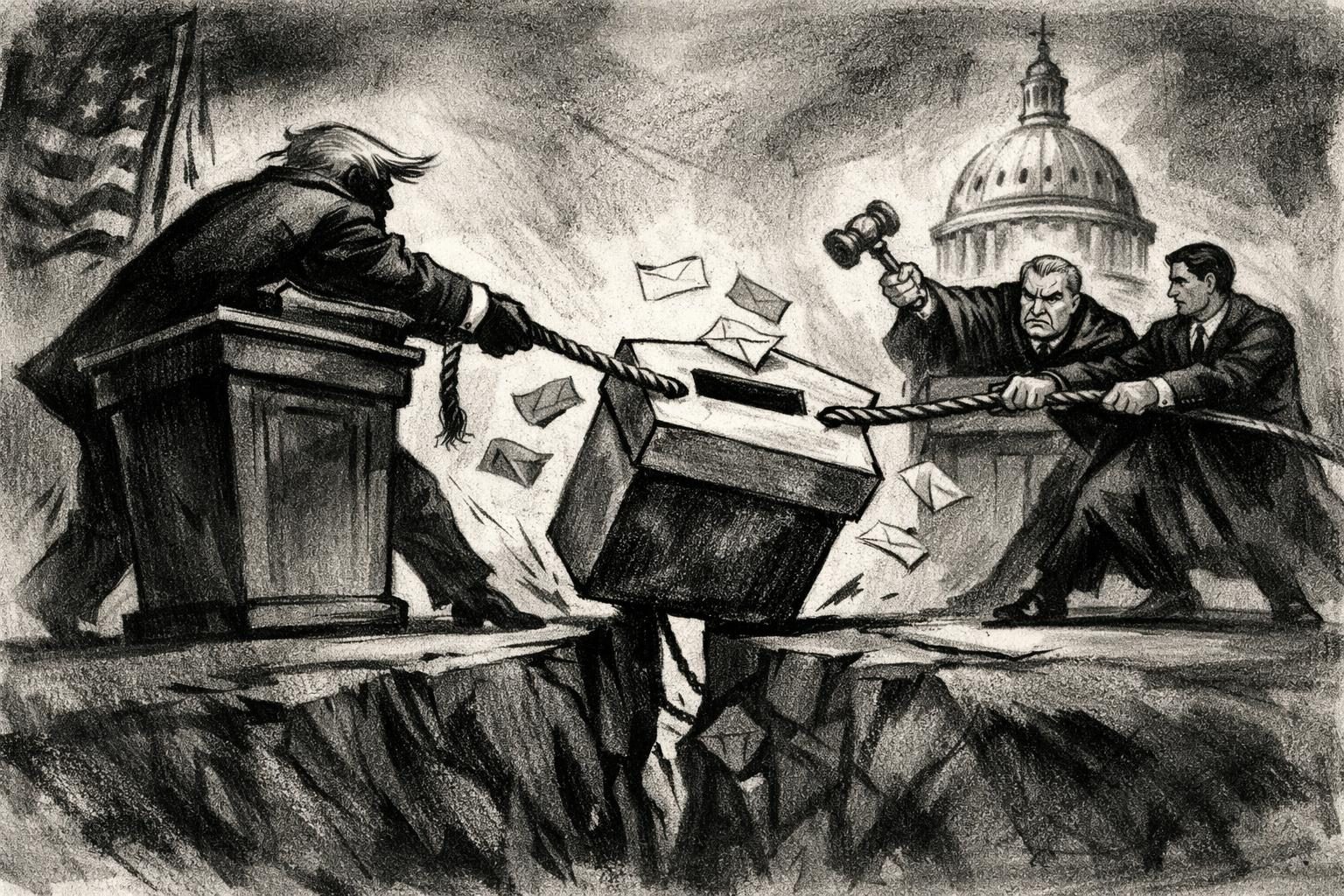
The Trump administration’s campaign to reshape mail voting through executive action is still alive in court, but it keeps running into the same two immovable objects: the Constitution and judges who are unwilling to let the White House improvise a national election system. The underlying order would push federal agencies to share citizenship-related data with states and would try to connect ballot-delivery rules to federal voter records, all under the banner of a fraud crackdown that has produced little more than familiar talking points and a lot of political noise. Democratic officials in more than two dozen states and the District of Columbia have challenged the effort, and lower courts have already put important parts of it on hold. The administration, instead of backing away from the legal thicket, has kept pressing the Supreme Court to rescue the plan. That alone says a lot about how much this fight has become a test case for how far a president can go when he wants to make election administration look less like a state responsibility and more like a federal command chain.
At the center of the dispute is a basic question that should not be obscure but keeps getting treated as though it were: who actually runs elections in the United States? The answer, in ordinary times and under ordinary law, is a mix of state authority and congressional power, not a sweeping presidential order drafted to solve a problem the administration has not been able to prove exists at the scale it keeps describing. The White House has leaned heavily on claims about noncitizen voting and broad fraud, but the evidence has not matched the intensity of the rhetoric. That gap matters because the administration is not merely urging states to tighten procedures in a narrow, clearly authorized way. It is trying to use federal levers to pressure states into changing how ballots are delivered and processed, with the implicit threat that funding consequences could follow if they do not fall in line. That sort of move may be politically useful for a president eager to keep election skepticism at the center of his message, but it looks a lot less convincing when translated into actual constitutional law. Courts have already signaled discomfort with the scope of the order, and the basic federalism problem has only become more obvious as the case works its way through the system.
The practical problems are just as serious as the legal ones. Mail voting remains a widely used and generally secure part of election administration, which is part of why the administration’s warnings have found so little purchase outside its political base. Election officials do not have the luxury of pretending that an unstable policy might never take effect; they have to plan for deadlines, printing, staffing, verification procedures, ballot tracking, and all the other details that keep a voting system functioning. If a court were eventually to let some version of the order survive, states would be forced to scramble to accommodate federal demands that could collide with existing rules, vendor contracts, and long-planned election calendars. That is how a theory-driven policy becomes an operational mess. Even before anyone reaches Election Day, the mere prospect of a change can create uncertainty for local administrators and voters alike. And because the order is tied to the administration’s broader fraud narrative, every new legal filing becomes another opportunity to repeat claims that have not been substantiated in the way the White House wants them to be. The result is a kind of perpetual election season panic, with officials left to separate actual administrative tasks from political theater.
There is also a broader political strategy running through the case, and it is not hard to see. The administration has tried to turn voting rules into a signature issue, folding legal fights over mail ballots into a larger midterm message about “integrity” and control. But the structure of the argument keeps giving away the weakness of the project. If the facts supported the most dramatic claims, the administration would not need such a sweeping order, such aggressive pressure, or such a heavy reliance on court intervention. Instead, it is asking judges to bless a plan that many states see as an intrusion, while also asking voters to believe that the problem is so urgent that federal agencies must be enlisted immediately. That is a tough sell when the record is thin and the constitutional objections are substantial. The more this fight continues, the more it looks like a familiar Trump pattern: declare a crisis, demand extraordinary power, and then blame judges and states when the law refuses to cooperate. The likely outcome is continued litigation, more deadline pressure, and more administrative uncertainty for election officials heading toward the midterms. Even if the courts keep narrowing or blocking the order, the surrounding confusion still does real damage, because it forces states to prepare for a policy that may never fully exist but could still complicate how people vote. In that sense, the administration is not just battling opponents in court. It is also manufacturing a burden that others will have to carry, whether or not the order survives long enough to matter.
Comments
Threaded replies, voting, and reports are live. New users still go through screening on their first approved comments.
Log in to comment
No comments yet. Be the first reasonably on-topic person here.