
Alabama’s congressional primary date change keeps election machinery under strain
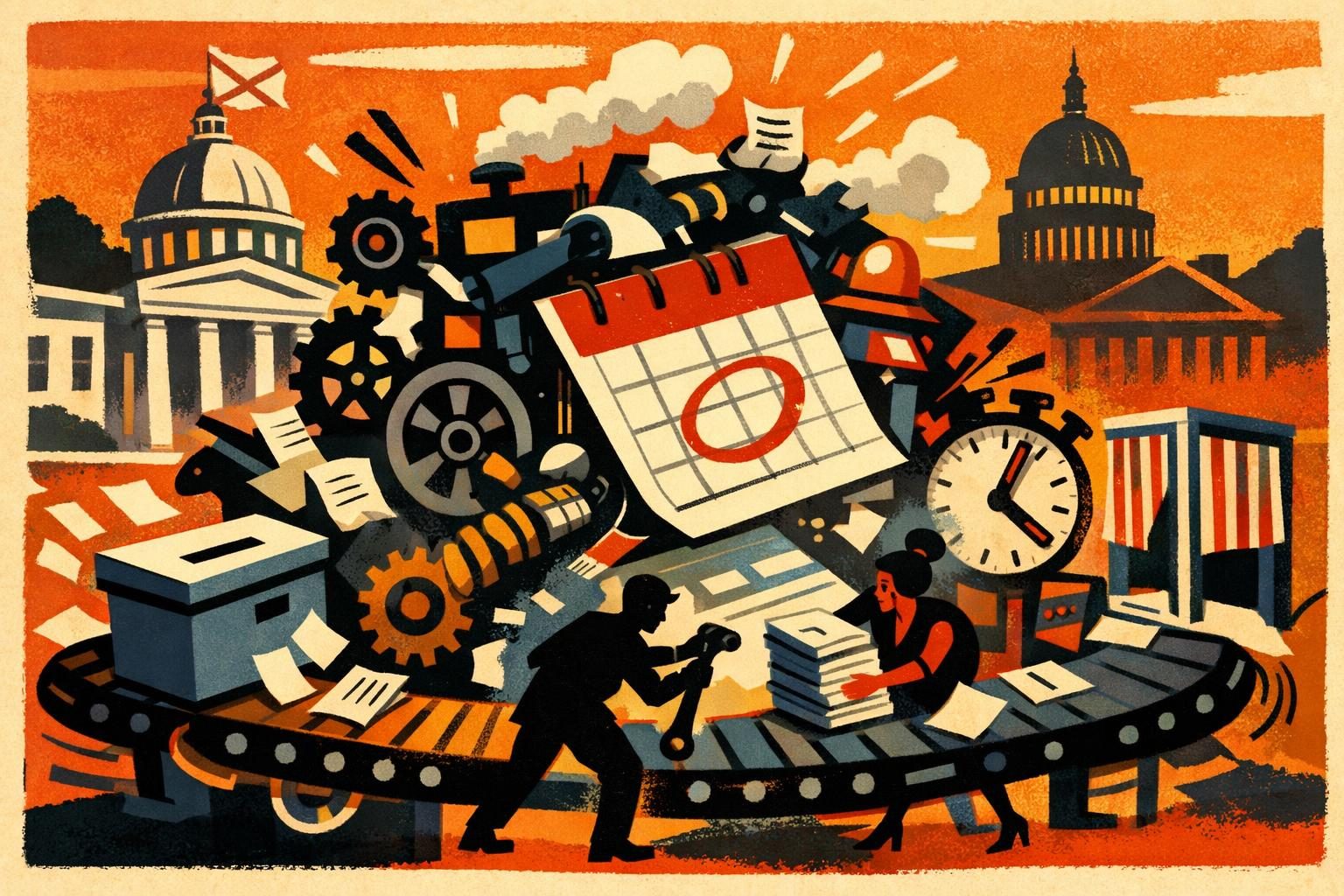
Alabama’s decision to move the primary election date for several congressional districts to Aug. 11, 2026 is no longer just a state-level scheduling note tucked into the background of the election calendar. The federal reporting system has already adjusted around it, and that is the clearest sign that the change is operational, not theoretical. Campaigns, committees, and outside spenders now have to work against a different set of deadlines than they were originally planning for, which immediately raises the stakes for compliance. In election administration, a date shift is never just a date shift. It changes how fast money has to be reported, how quickly ads have to be placed, how committees coordinate spending, and how much room exists for error before a deadline turns into a violation.
The Federal Election Commission’s current 2026 reporting guidance for congressional primaries reflects the moved Alabama primary, and that matters because the federal calendar is where uncertainty gets converted into hard obligations. Once those deadlines are posted, there is no practical wiggle room for candidates who are still adjusting field plans or for consultants trying to rework media buys on the fly. The pressure does not stop with the campaigns themselves, either, because vendors, donors, and independent groups are pulled into the same timeline. A primary date that shifts late in the process can force last-minute recalculations on when to raise money, when to spend it, and when to file the paperwork that shows where the money went. For a process that is supposed to be governed by routine and predictability, the result is a burst of administrative strain that is entirely avoidable in theory and very real in practice.
That is why this kind of change tends to draw criticism from election administrators and watchdog-minded observers even when it does not involve fraud, partisanship, or dramatic procedural conflict. The problem is competence and capacity. Voters are already expected to navigate layered state rules, shifting turnout conditions, and a constant flood of campaign messaging, so they benefit when the calendar stays stable and boring. When a primary moves, everyone downstream has to catch up at once, and the system does not magically absorb that churn without friction. County officials may need to adjust logistics, campaigns have to redo their internal calendars, and voters can be left trying to understand why the date in one place no longer matches the expectations they had a few weeks earlier. That kind of confusion does not always produce a headline-grabbing crisis, but it is exactly how smaller administrative failures accumulate into larger ones.
The broader concern is that election machinery is often treated as if it can tolerate repeated last-minute changes without any noticeable cost. In reality, each adjustment pushes stress into a different part of the system, and those stresses tend to show up where the public sees them least: in filing deadlines, payment schedules, print deadlines, compliance checks, and rushed coordination between campaigns and officials. Alabama’s moved congressional primary date may be a discrete event, but its ripple effects are wide enough to matter well beyond the state itself, because federal rules have to account for what happens there. That is what makes this an election-administration story rather than just a calendar update. It shows how a state political decision can immediately become a federal compliance problem, and how quickly a routine-looking change can make an already complicated process even harder to manage. If democracy is supposed to work like a machine, this is the part where someone keeps shifting the gears while the engine is already running.
Comments
Threaded replies, voting, and reports are live. New users still go through screening on their first approved comments.
Log in to comment
No comments yet. Be the first reasonably on-topic person here.