
Supreme Court ruling rewrites another chunk of campaign-finance guardrails
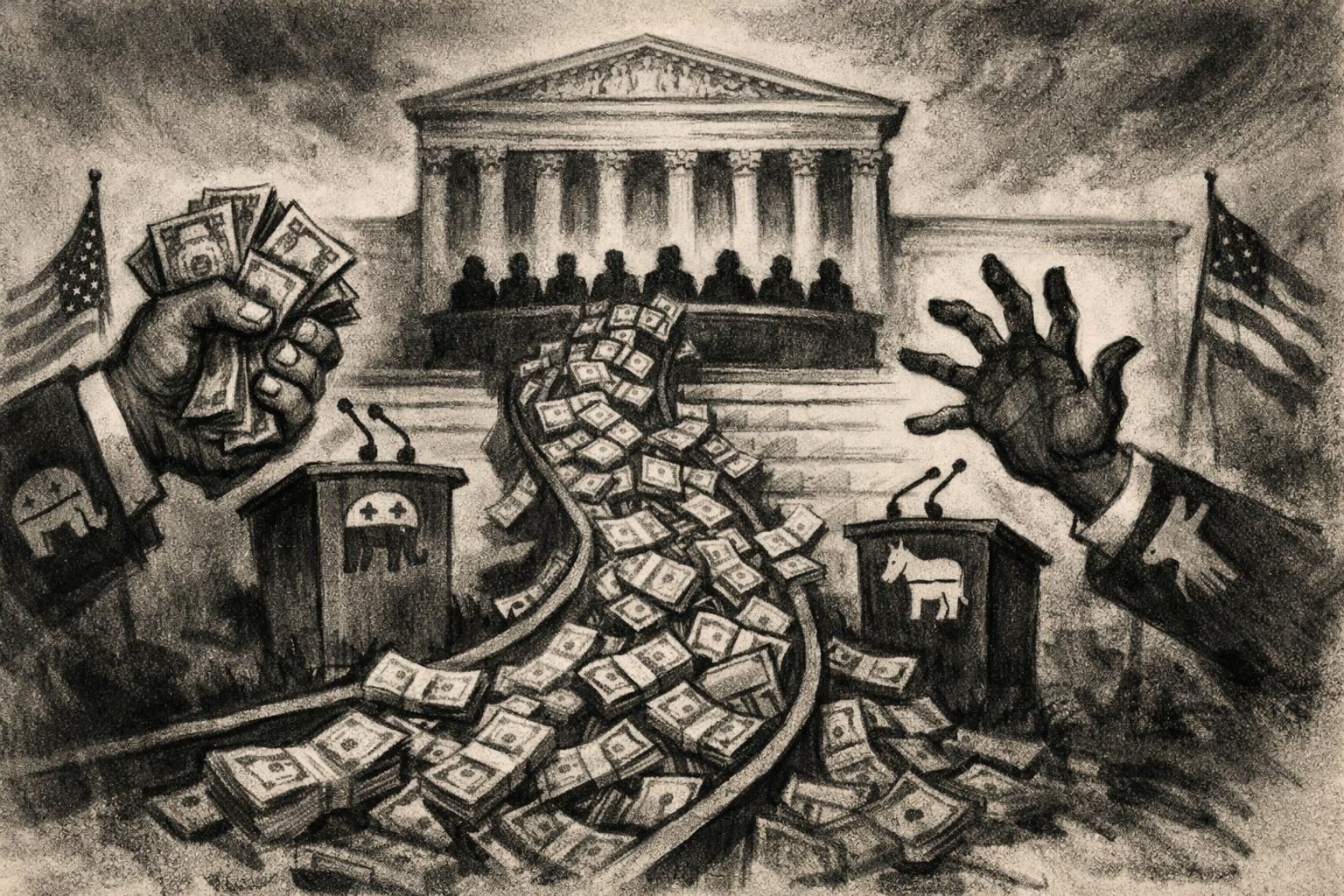
The Federal Election Commission has updated its guidance after the Supreme Court’s opinion in National Republican Senatorial Committee et al. v. FEC et al., a decision that knocks down political-party coordinated-expenditure limits and forces the agency to explain, in practical terms, what just changed. On paper, the ruling is a legal development in campaign finance. In reality, it is the kind of decision that quickly becomes a rulebook problem for everyone who has to operate inside the system. Campaigns, party committees, lawyers, compliance staff, and donors now have to recalibrate their expectations based on a Court that has once again narrowed the set of restraints governing how political money can move. The FEC’s notice does not create the legal shift, but it does mark the point where a courtroom holding begins to take on administrative form.
That matters because coordinated-expenditure limits were one of the guardrails meant to separate party spending from candidate spending and keep the two from blending into a near-continuous flow of support. Striking those limits does not end campaign finance regulation, but it does weaken a specific barrier that had constrained how much parties could spend in concert with their nominees. The result is likely to ripple through the mechanics of election strategy, especially in competitive Senate races where every dollar can be turned into another ad buy, another digital push, or another round of voter contact. Supporters of the ruling will call it a straightforward vindication of political speech and association, and they will argue that parties should not be boxed in when trying to help their candidates win. Critics will see something different: another reminder that when the law pulls back, the people with the deepest pockets usually find the most room to move. Either way, the decision is not symbolic. It changes incentives.
The FEC now has the unpleasant administrative job of translating a constitutional ruling into operational guidance. That is the part of campaign finance that rarely gets the public attention but often determines how rules actually work, because agencies have to tell committees what conduct is still allowed, what has changed, and where the remaining lines are. Once that guidance lands, campaigns and parties will likely adjust quickly, not because they suddenly discovered a new theory of democracy, but because they will want to avoid enforcement trouble while also taking full advantage of the new legal landscape. The first effects may show up in legal memos and fundraising planning before they show up in television buys or filing totals. Party committees may seek more aggressive coordination structures, candidates may become more comfortable relying on party support, and consultants may start sketching new ways to thread the needle between what is explicitly permitted and what is merely untested. That is often how these decisions work: the doctrinal shift comes first, and the arms race follows.
This is why the ruling deserves to be treated as a serious campaign-finance turn rather than a narrow procedural update. It touches a major set of rules in a system already criticized for rewarding donors, operatives, and the professional class that has learned how to profit from political complexity. It also arrives at a time when public confidence in institutions is already thin, which gives the broader fight over money in politics another layer of cynicism and frustration. Republicans get a long-coveted win here, one that fits neatly into years of legal and political pressure to loosen restrictions on coordinated spending. Democrats, and many reform advocates, are left with another reason to complain that the system keeps drifting toward a model where wealthy interests and well-connected committees can shout louder than voters ever can. The likely end point is not instant collapse, but a further erosion of the boundaries that were supposed to keep campaign money from becoming the dominant language of elections. And once those boundaries move, they are rarely restored in any hurry.
Comments
Threaded replies, voting, and reports are live. New users still go through screening on their first approved comments.
Log in to comment
No comments yet. Be the first reasonably on-topic person here.