
The Supreme Court’s Capital Case Docket Keeps Exposing the Machinery of State Death Sentences
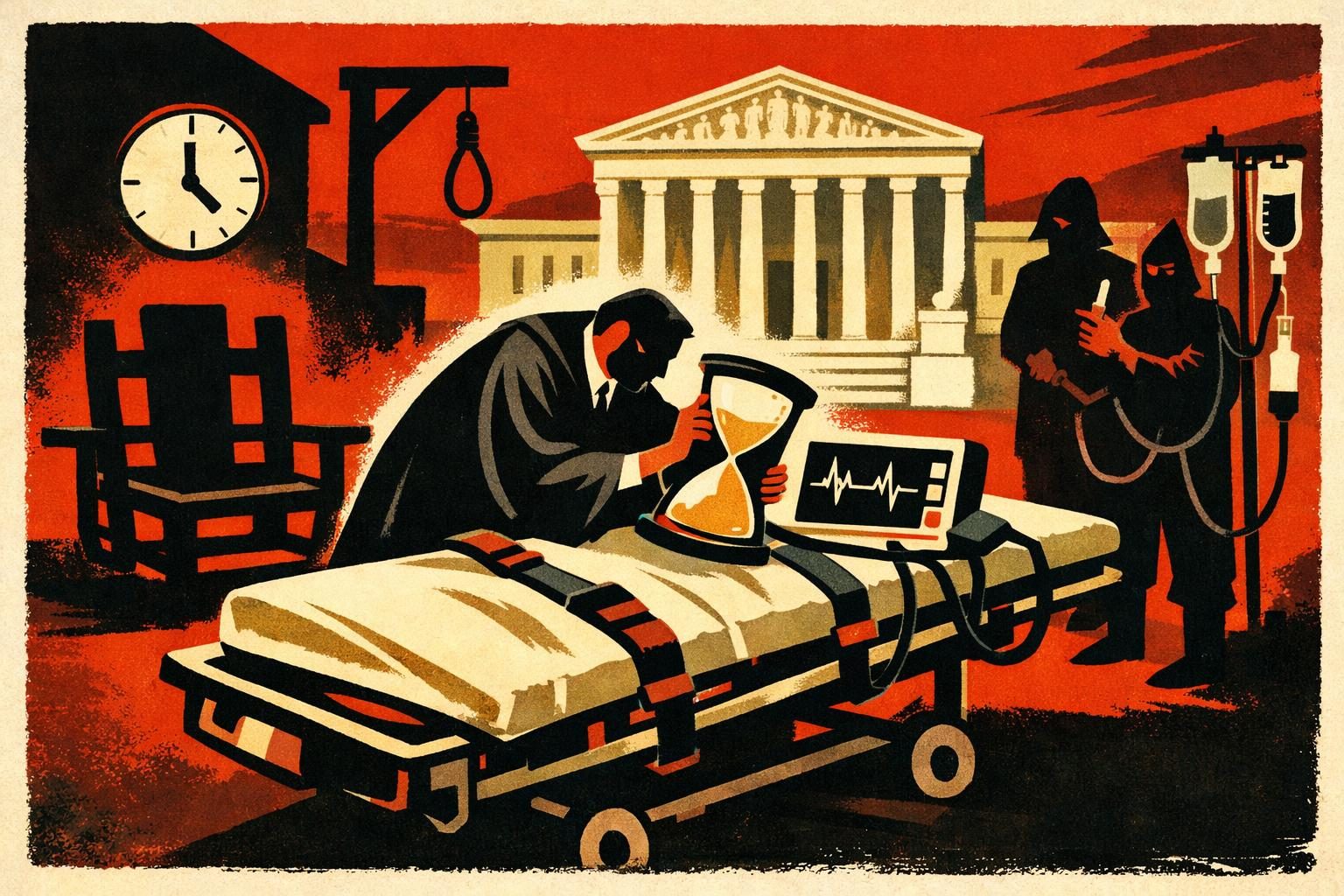
The Supreme Court’s capital-case docket is again showing how much of the death penalty now runs on emergency handling rather than anything resembling a calm, orderly appellate process. A stay application was denied in late July, and the case remains part of the Court’s current order flow, which means it is still producing live consequences rather than sitting as a closed historical record. That matters because capital litigation does not really pause once a date is set; it accelerates. The Court is often forced into the role of last-minute gatekeeper, deciding whether a state execution schedule moves forward or gets briefly stopped while lawyers try to identify a constitutional problem in time. In practice, the system has become a race between the calendar and the courthouse.
That is why the docket entry is more than a procedural footnote. It reflects a larger reality about how the modern death-penalty system functions: it depends heavily on emergency motions, stays, and near-final-hour judicial triage. Supporters of capital punishment often describe this as a necessary safeguard against delay tactics and serial litigation, arguing that the state must be able to carry out lawful sentences without endless obstruction. Opponents see the same structure and conclude something very different, namely that a punishment so severe should not require constant improvisation to keep it from failing under the weight of its own errors. Both views are part of the same ugly architecture, and the Court is left managing the consequences. The result is a process that looks less like a steady legal framework than a series of alarms.
What makes the current moment politically and legally significant is not just that a stay was denied, but what that denial signals about the burden now falling on defense counsel and lower courts. Once the Court declines to intervene, the path forward can narrow very quickly, and the people trying to halt an execution have to establish a serious constitutional issue in extremely compressed time. That is an almost impossible posture for any legal team, especially in cases where the relevant factual disputes have already been litigated for years and where late-stage filings are judged against a standard of urgency rather than a full rehearing of the merits. The Court does not need to issue a sweeping opinion for its action to matter. A single refusal to step in can change the entire tempo of the case and effectively push the machinery forward. In death-penalty litigation, timing is often the substance.
This is also a reminder that some of the Supreme Court’s most consequential work happens far from the attention given to its headline opinions. The public tends to notice constitutional law when the justices hand down a major ruling that reshapes doctrine in a visible way. But a great deal of the Court’s power is exercised quietly, through order lists, emergency applications, and the repetitive management of cases where the stakes are literally life and death. That can make the process feel bureaucratic, but it is bureaucratic in the most brutal sense possible: each entry can determine whether an execution is delayed, permitted, or suddenly placed back on track. The current docket shows a system still grinding along, still dependent on last-minute intervention, and still revealing how unstable the machinery of state death sentences remains. If anything, the case is a reminder that the death penalty today survives not because the process is smooth, but because it is constantly being patched together under pressure.
Comments
Threaded replies, voting, and reports are live. New users still go through screening on their first approved comments.
Log in to comment
No comments yet. Be the first reasonably on-topic person here.