
Supreme Court revives challenge to immigration-judge speech restrictions
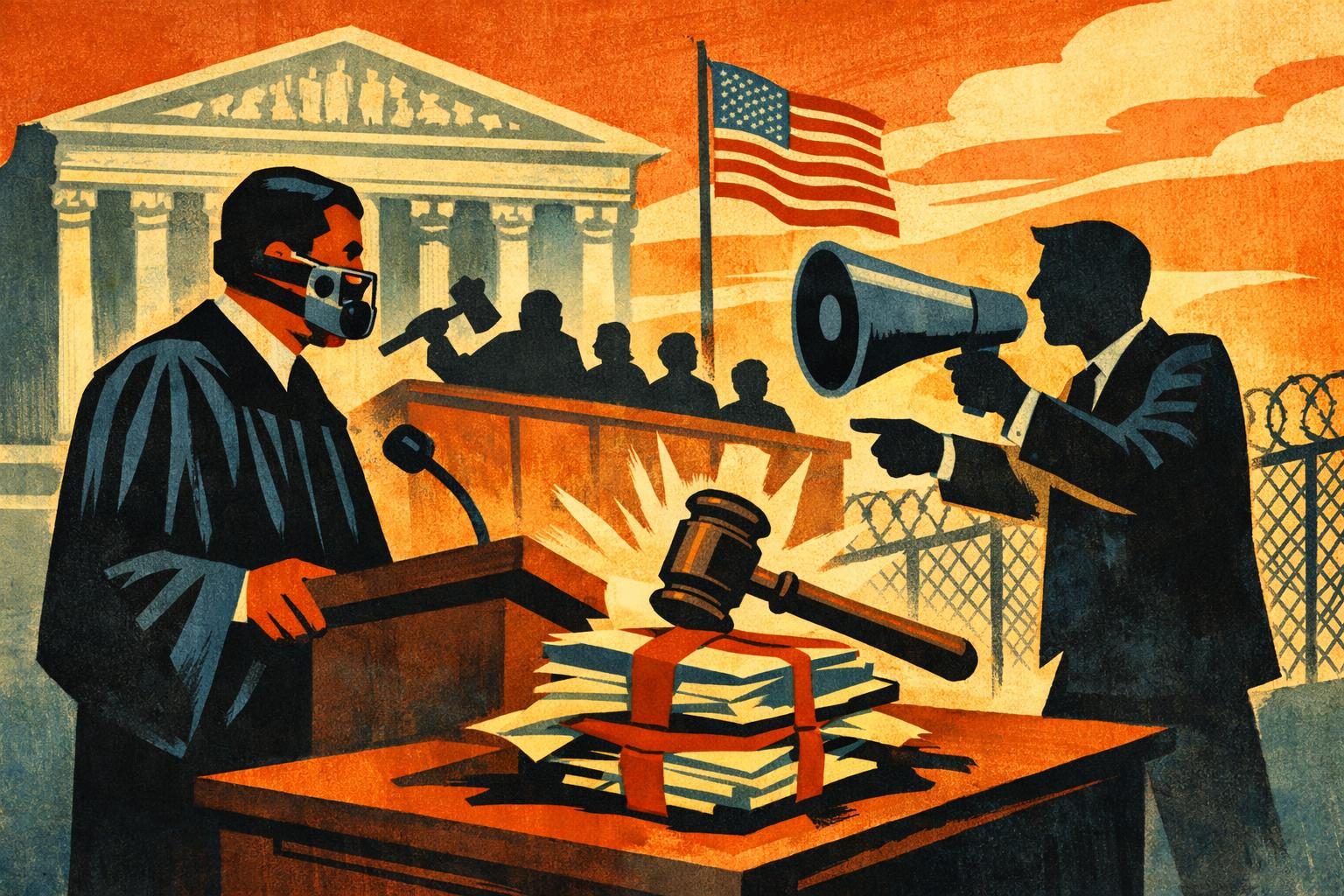
The Supreme Court on August 10 revived a challenge to restrictions on immigration judges’ public speech, undoing a lower-court approach that had pushed the dispute into the wrong procedural lane. At issue is a policy that requires immigration judges to obtain supervisory approval before giving public speeches related to their official duties. The justices did not resolve whether that rule is valid. Instead, they said the lower court had decided the case on an issue the parties themselves had not put before it, and they sent the matter back for further proceedings. That makes the ruling a procedural win for the challengers, even if it stops short of a final victory on the substance. In practical terms, the case now continues in a way that forces the government to answer the speech question directly rather than relying on a threshold maneuver to end the fight early.
The dispute sits in a familiar but still sensitive corner of federal employment law, where agency control, professional independence, and public expression collide. Immigration judges are not Article III judges, but they still occupy a role that carries significant institutional weight, especially in a system long criticized for inconsistency, pressure, and political heat. The speech restriction at issue was designed to keep judges from appearing to speak with the official imprimatur of the office when they address the public. Supporters of that approach argue that the government has a legitimate interest in maintaining clear lines of authority and avoiding confusion about whether an individual judge is speaking personally or on behalf of the agency. Critics, by contrast, see a rule that can chill lawful commentary and make judges feel they must ask permission before participating in public discussion about a system they know intimately. The Supreme Court’s decision does not settle that tension, but it does ensure that the underlying constitutional and statutory questions will remain alive.
The court’s rebuke was also procedural in a way that matters beyond this single controversy. By saying the lower court stepped outside the issues actually presented, the justices signaled that appellate courts cannot simply reframe a case to reach what they think is the cleanest or most efficient ending. That may sound technical, but in a system as politically charged as immigration adjudication, procedure often determines whether a dispute dies quietly or becomes a broader test of institutional power. The decision suggests the challengers were denied an opportunity to have their claims addressed on the terms they chose, and that is enough for the Supreme Court to order a reset. It also underscores how much modern litigation turns on whether courts respect the boundaries set by the parties, rather than substituting their own preferred path. For the government, the immediate benefit of an early procedural victory evaporated. For the challengers, the key achievement is simply that the case remains in play and must be defended more squarely.
The broader political context makes the fight more than a narrow personnel dispute. Immigration courts have become one of the most contested institutions in the federal government, with debates over enforcement, delays, backlog, and independence frequently overlapping. Any rule that governs who may speak publicly, when they may speak, and under whose approval inevitably gets read as part of that larger struggle over who controls the narrative inside the immigration system. The administration’s interest is not hard to understand: when public-facing officials speak about their work, the government wants to prevent anything that could be mistaken for an official policy statement or undercut internal discipline. But challengers argue that blanket or burdensome approval regimes can have the opposite effect, making judges look less like independent decision-makers and more like carefully managed messengers. That is why a rule that might seem administrative on its face can carry outsized symbolic weight. It is not only about one speech policy; it is about whether the institution is being run with enough trust in its own professionals to tolerate ordinary public engagement.
What happens next will depend on how the lower court handles the case on remand and whether the government can justify the policy on the merits. For now, the Supreme Court has made clear that the dispute should not be dismissed or narrowed by a theory the parties never had a chance to argue. That is a modest-looking correction, but it has real consequences in a system where process often decides substance long before anyone reaches a final ruling. The challengers have preserved a live path for contesting a rule they say muzzles immigration judges. The government, meanwhile, will have to defend a policy that is easy to describe as housekeeping but harder to justify if a court concludes it burdens protected speech without enough cause. In that sense, the decision is both a rebuke and a reminder: the immigration system is still being shaped not just by formal policy choices, but by constant fights over who gets to speak, when they get to speak, and who has the power to decide.
Comments
Threaded replies, voting, and reports are live. New users still go through screening on their first approved comments.
Log in to comment
No comments yet. Be the first reasonably on-topic person here.