
Pentagon keeps National Guard on D.C. streets and the blowback keeps growing
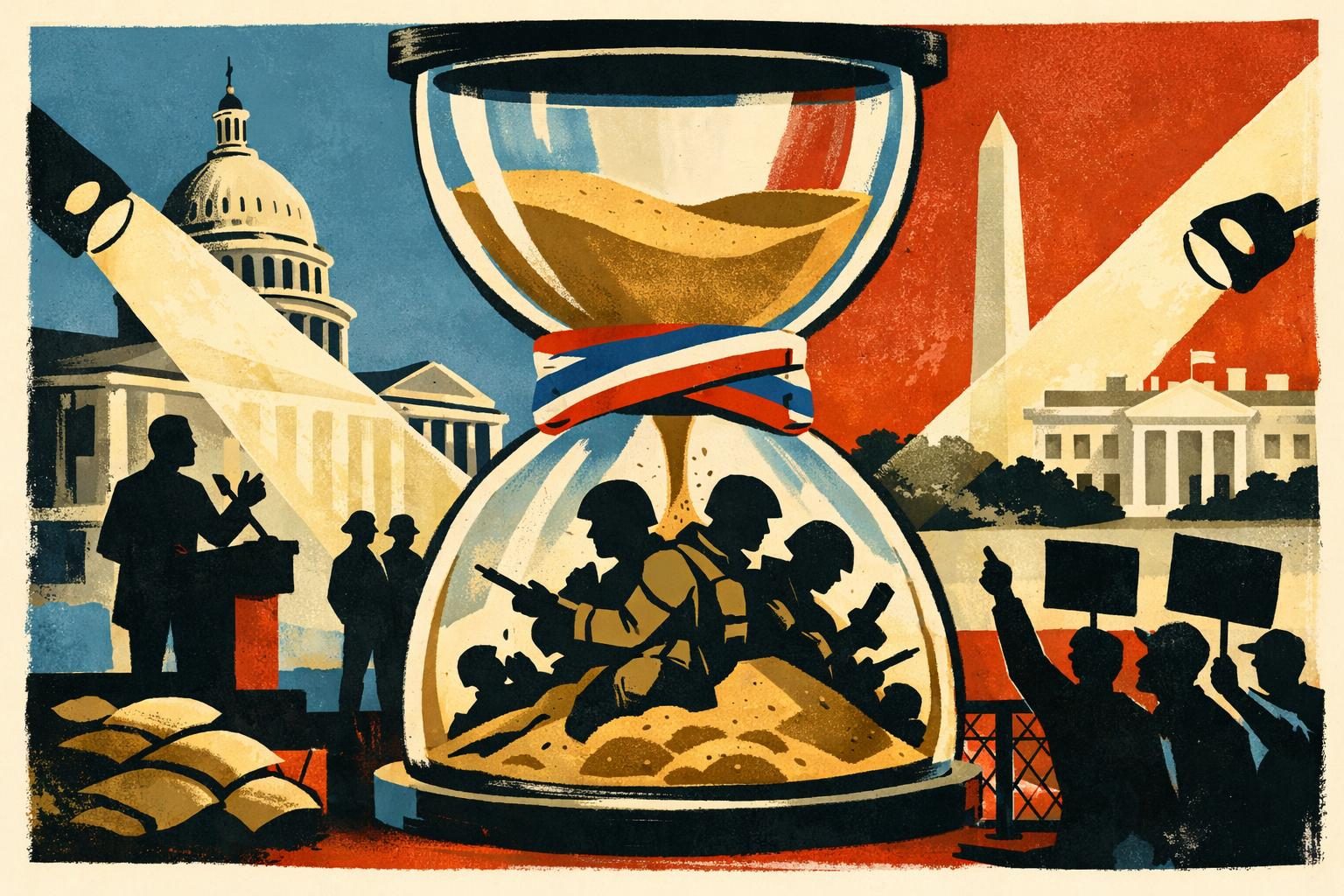
Defense officials have moved to keep National Guard troops stationed in Washington through the end of 2026, extending a deployment that has already become a focal point in the administration’s broader push to project toughness on crime and disorder. The decision, set out in a memo on August 10, does not simply preserve the status quo for a few more weeks or months. It locks in a federal military presence on city streets for the remainder of the year and signals that the White House intends to treat the deployment as an ongoing feature of life in the capital rather than a short-lived emergency measure. That alone makes the extension politically significant. It also makes it harder for officials to argue that the intervention is narrowly targeted, temporary, or clearly tied to a specific and measurable public-safety threat.
The administration has framed the Guard presence as a necessary response to public-safety concerns, but that justification has become increasingly contested as the deployment stretches on. Washington is not being treated like an ordinary city with local police, elected leadership, and a normal chain of authority; it is being treated like a stage for federal demonstrations of power. Critics say that is the point, or close to it, and that the longer troops remain visible in the city the more the operation resembles a political statement than a public-safety strategy. The federal government can insist that the deployment serves a practical purpose, but the optics have been working against that message from the start. The sight of troops on the streets of a heavily Democratic city is easy to read as an occupation, and once that image takes hold it is difficult to dislodge. The administration is now facing the burden that comes with every additional week of presence: it has to prove not just that the deployment was justified at the outset, but that the justification still holds.
That burden matters because the extension raises broader questions about authority, scope, and precedent. If Washington can be kept under a prolonged Guard posture with only a loose public-safety rationale, opponents argue, then the line between emergency response and political theater gets dangerously blurred. Local officials and civil-liberties advocates have warned that troops are a poor substitute for ordinary city policing and an even poorer fit for democratic norms. Their concern is not merely that the deployment is unwelcome, but that it normalizes a way of governing in which federal force becomes a standing tool for managing domestic political frustration. The administration’s defenders may say the move is temporary in the grand scheme, but the calendar tells a different story. The longer a temporary measure remains in place, the more permanent it begins to look. And the more permanent it looks, the more it invites scrutiny over whether the White House is using the capital as a proving ground for broader federal intervention elsewhere.
The practical fallout is already being felt in the politics surrounding the city. The extension sharpens tensions between the federal government and local leaders who have little reason to welcome a military presence on their streets and every reason to question its necessity. It also gives critics a cleaner argument that the White House is normalizing emergency powers for partisan effect, not public safety. Court-related chatter around the scope of federal authority is likely to continue as long as the deployment does, especially if officials keep widening or clarifying the role of the Guard without offering a transparent public accounting of the threat they say they are addressing. At the same time, residents are left to reconcile the gap between official language and daily experience. If the streets do not look like a city in need of military oversight, then the administration’s insistence on one starts to look less like a safety plan and more like a performance. That disconnect is what makes the blowback so durable. It is not only that the decision is unpopular; it is that each extension strengthens the case that the federal government is borrowing the language of emergency to do politics in plain view.
Comments
Threaded replies, voting, and reports are live. New users still go through screening on their first approved comments.
Log in to comment
No comments yet. Be the first reasonably on-topic person here.